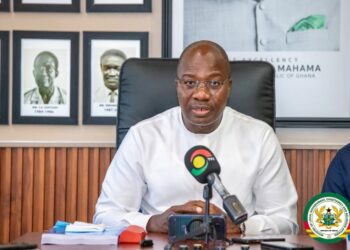
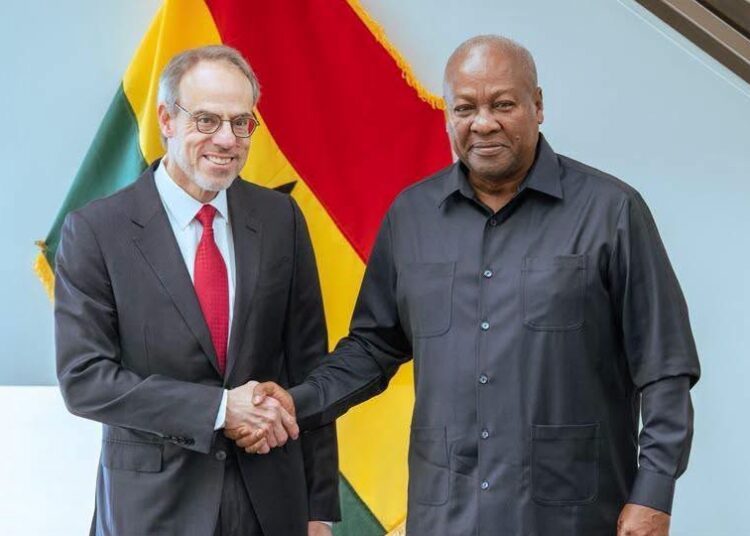
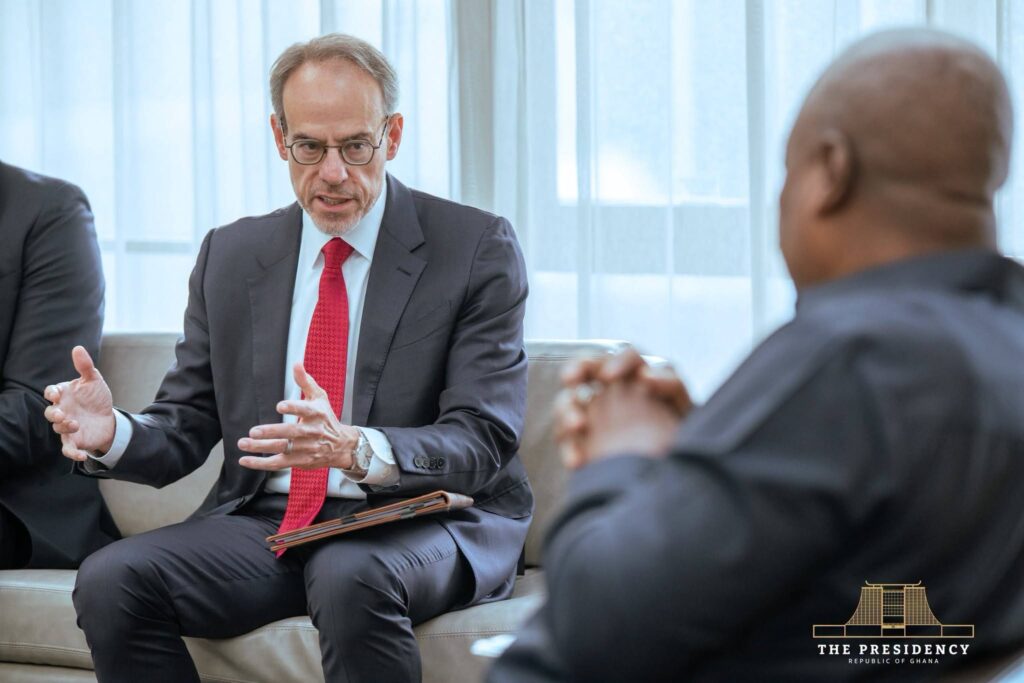
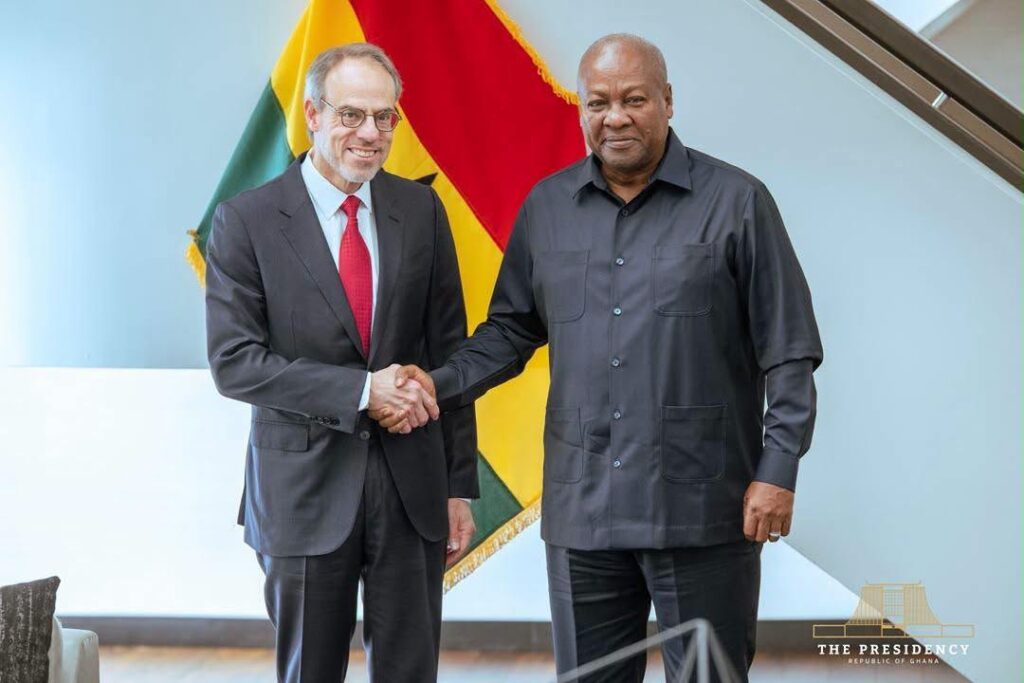
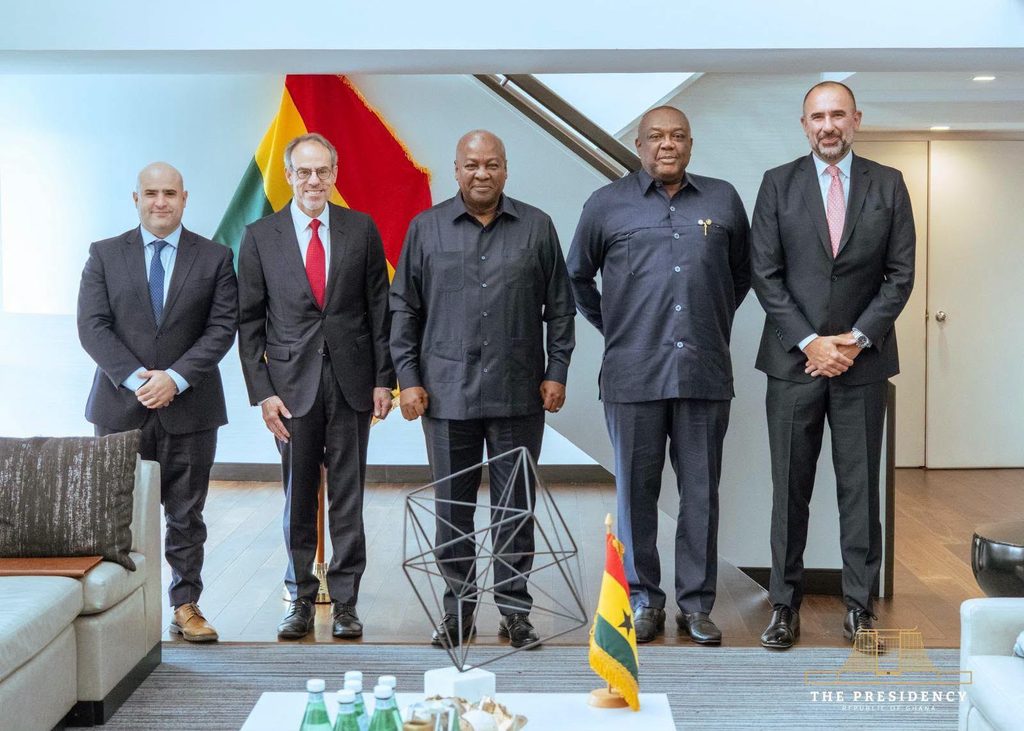
President John Dramani Mahama has held talks with senior executives of Amazon on the sidelines of the 81st United Nations General Assembly in New York, with the company signalling a possible Ghanaian role in its African broadband expansion. The Embassy of Ghana in the United States received the statement issued after the meeting.
David Zapolsky, Amazon’s Senior Vice President and Chief Global Affairs and Legal Officer, described the engagement as productive and pointed to Ghana’s potential place in the company’s efforts to widen connectivity across the continent.
The meeting forms part of a wider attempt to rebuild Ghana’s relationship with American corporations around investment, technology and jobs rather than development assistance.
Who Was In The Room
Zapolsky’s portfolio is itself a signal of what was discussed. He oversees Amazon’s legal, policy, compliance and regulatory affairs, which places him at the centre of the licensing and market-entry questions any satellite operator must settle before it can sell a service in a country.
That is a different conversation from a commercial sales meeting. Broadband delivered from orbit requires landing rights, spectrum authorisation and an agreement with the national regulator, and those are matters decided by governments rather than customers.
What Amazon Is Building In Africa
The company’s connectivity arm, rebranded Amazon Leo in November 2025 after operating as Project Kuiper, is deploying a low Earth orbit constellation designed to reach more than three thousand satellites. It had placed close to four hundred production satellites in orbit by the middle of this year.
Its African footprint has expanded quickly. Nigeria granted a seven-year landing permit running from February this year, and the company entered South Africa through a distribution arrangement with a local internet provider in July.
It applied for a licence in Kenya in April, and has partnered with the network equipment firm Vanu to use satellite backhaul for mobile towers in rural areas, starting in Southern Africa.
Ghana does not yet appear among those announced markets, which is what gives the New York meeting its significance. The country is seeking to be added to a rollout already underway rather than proposing a new one.
What Broadband Could Change
Improved high-speed access, particularly in rural and underserved communities, carries implications across several sectors. It would support digital education and healthcare delivery in places where neither reaches easily, extend financial inclusion, assist farmers with market and weather information, and open e-commerce to businesses currently cut off from it.
For young Ghanaians, reliable connectivity is the entry requirement for the global digital economy, whether in freelance software work, content production or remote employment.
The gap is largely geographic. Coverage in Accra, Kumasi and the larger towns bears little resemblance to what is available in farming districts and along the northern corridor, where terrestrial networks remain thin because the cost of laying fibre and erecting towers rarely justifies the subscriber numbers. Satellite backhaul is attractive precisely because it sidesteps that arithmetic.
The government frames it in larger terms still, as part of an ambition to make Ghana a competitive digital and technology hub for West Africa. Hosting the secretariat of the African Continental Free Trade Area gives that pitch an additional line, since a company establishing itself in Accra sits at the administrative centre of the continental market.
From Aid To Investment
The Amazon engagement fits a pattern visible throughout the week. At a United States and Ghana Presidential Roundtable held in New York, President Mahama argued that the next chapter of relations between the two countries should rest on trade, investment, technology and strategic partnership.
That reframing has been forced as much as chosen. American assistance to Ghana was withdrawn in 2025, and the government rejected the health compact offered to replace it, leaving private capital and corporate partnership as the route through which the relationship now has to be rebuilt.
What Was Not Announced
No agreement was signed, and the statement contains no licence, timeline, investment figure or service commitment. Zapolsky described a productive meeting and identified potential, which is the language of an opening rather than a decision.
Any service would still require authorisation from the National Communications Authority, and Amazon’s own constellation remains under construction, with its deployment deadlines already extended once by American regulators.
The meeting nonetheless puts Ghana in a conversation it was not previously part of, at a moment when three of the continent’s larger markets have moved first. Whether that translates into coverage over Ghanaian villages depends on regulatory decisions in Accra and commercial ones in Seattle, neither of which was settled in New York.