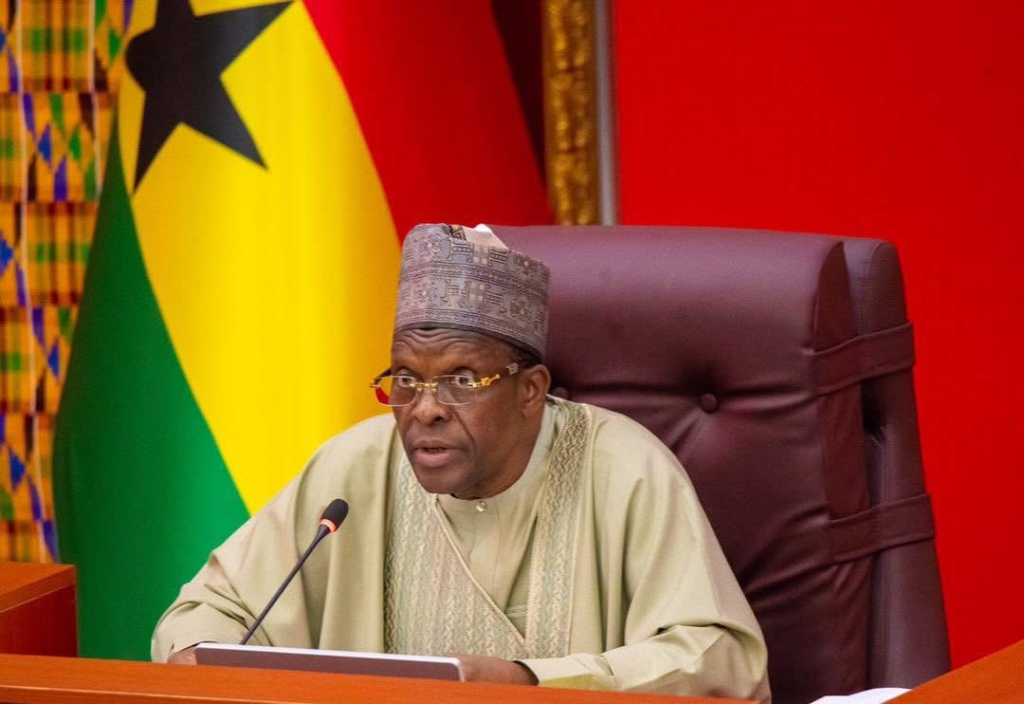
The Minority in Parliament has vowed to keep pressing for accountability over a string of major cocaine seizures linked to Ghana after Speaker Alban Sumana Kingsford Bagbin rejected its motion for a parliamentary probe.
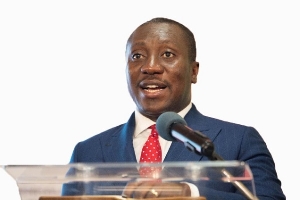
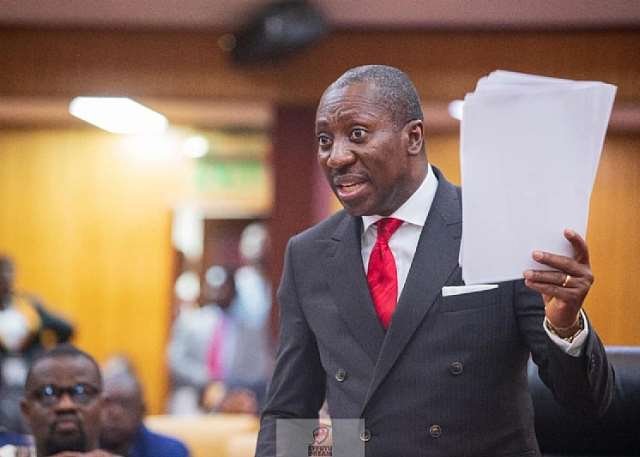
Minority Leader and Effutu MP Alexander Kwamena Afenyo-Markin announced the resolve at a press briefing in Accra on Tuesday, shortly after the ruling. Mr Afenyo-Markin said the Minority would pursue another option within the Constitution and the Standing Orders to put the narcotics issue back on the front burner.
He argued that the scale of the seizures, including roughly 3.9 tonnes of cocaine intercepted in France after reportedly leaving Ghana and more than 3.3 tonnes seized at Pedu junction, demands scrutiny of the institutions meant to stop them.
Minority Plans Next Move After Speaker Rejects Probe
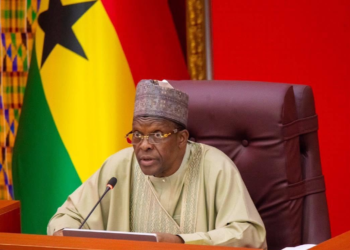
The Speaker dismissed the motion on the grounds that related matters are pending before the courts. Hon Afenyo-Markin said the Minority was disappointed but not deterred, and told journalists the caucus would not let the matter rest.

He did not reveal what the Minority’s next step would be. He said only that the caucus would act at the right time and then brief Ghanaians, and he presented the campaign as driven by concern for democracy and not by party interest.
“We act in the national interests,” he said. He also called on the public to join the Minority in what he described as an effort to sanitise the system.
Cocaine Seizures Put Ghana’s Image on Trial
The seizures prompted the Speaker to recall Parliament for September 29. According to Hon Afenyo-Markin, the recall request itself identified the incidents as raising questions about national security, border integrity, institutional accountability and Ghana’s standing abroad.
Beyond the France and Pedu cases, he pointed to other significant seizures at Ghanaian ports and airports and to international interceptions of consignments traced to the country.
“The image of our country is on trial,” he said. He added that the narcotics problem had gotten out of hand and earned Ghana notoriety as a transshipment point, the reputation the Minority now wants Parliament to confront.
Hon Afenyo-Markin drew on remarks he attributed to the Minister for the Interior. According to him, the minister had earlier said foreign intelligence agencies no longer respect Ghana. On Tuesday afternoon, he said, the minister repeated on the floor that compromised officials in various institutions had undermined the integrity of intelligence.
The Minority Leader stressed that the assessment came from a cabinet minister and not from the opposition. For the Minority, that admission alone justified a parliamentary inquiry.
Institutions, Not Suspects, Should Face Scrutiny
Hon Afenyo-Markin insisted that the Minority never sought to try anyone accused in court. Its target, he said, was the state machinery responsible for keeping drugs out of Ghana’s supply routes. “The scanning regime at our port is not on trial. The effectiveness of customs risk profiling is not on trial,” he said.
He named inter-agency intelligence sharing, the capacity of the Narcotics Control Commission (NACOC) and the country’s export control system as other areas squarely within Parliament’s oversight mandate. The Majority, for its part, has pointed to a NACOC forensic laboratory under construction as part of the government’s response to the drug busts.
The Minority Leader said the Speaker denied the Minority a hearing while the Majority offered no argument of its own. He compared Majority members to the woman in the biblical story of King Solomon and accused them of rushing to hail the Speaker’s ruling.
“They were quick to rise for an adjournment because they don’t want scrutiny,” he said. He then turned the government’s flagship policy against it. “All of a sudden, the 24-hour economy has turned into a 24-hour cocaine economy,” he said.
Strong Parliament Needs Effective Minority, Afenyo-Markin Says
Mr Afenyo-Markin warned that the NDC’s supermajority must never become a tool to weaken the Minority, silence scrutiny or shrink Parliament’s oversight role. A weakened Parliament, he argued, weakens accountability and leaves state institutions with fewer checks on their power.
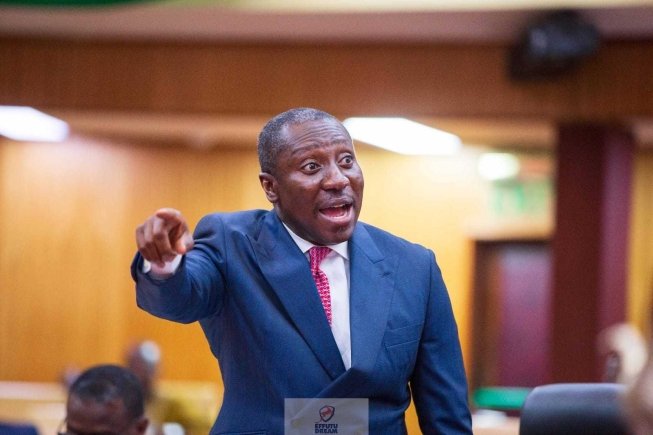
“Democracy requires a strong parliament. A strong parliament requires an effective minority,” he said.
He summed up the caucus’s position by insisting that no agency stands above the Constitution and no public institution may exercise power outside the law. He also urged the Speaker to read the Standing Orders more carefully when ruling on sensitive motions.
For now, the Speaker’s ruling stands, and the ad hoc committee the Minority wanted will not sit. Whatever option the caucus reaches for next will test whether an outnumbered opposition can still force a public accounting on how cocaine consignments of this size keep turning up with links to Ghana.
READ ALSO: BYD Seagull Shocks EV Market With Rear-Wheel Drive