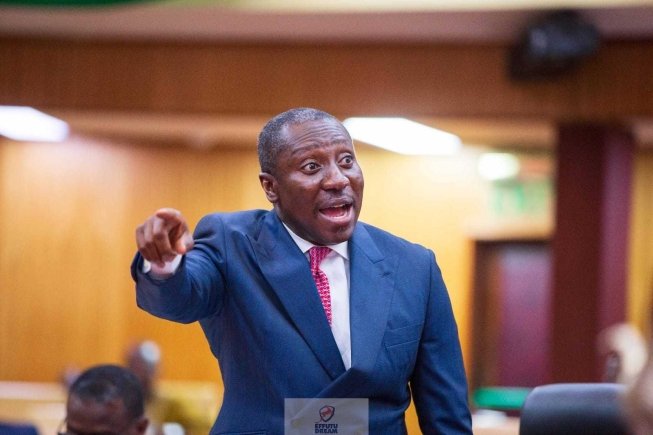
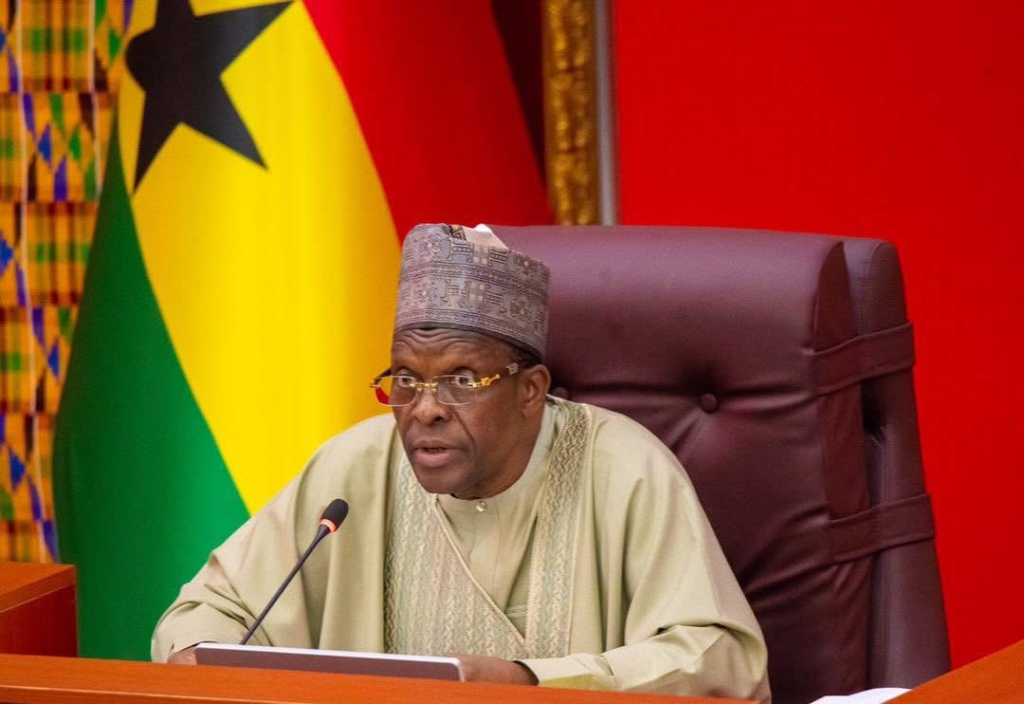
The Minority in Parliament has accused Speaker Alban Sumana Kingsford Bagbin of weakening parliamentary oversight after he dismissed its motion seeking a probe into a string of major narcotics seizures linked to Ghana. Minority Leader and Effutu MP Alexander Kwamena Afenyo-Markin made the charge at a press briefing in Accra on Tuesday, shortly after the ruling.
The Speaker had declined the motion on the grounds that related matters are pending before the courts. Hon Afenyo-Markin argued that the courts deal with the criminal liability of accused persons while Parliament examines how public institutions perform, and that the ruling wrongly collapses the two functions into one.
“Today is a sad day for parliamentary oversight,” he told journalists.
The Minority Leader said the NDC Majority had once again used its supermajority, with the Speaker’s support, to weaken Parliament. In his view, Speaker Bagbin pointed to cases in court without explaining how those cases remove Parliament’s constitutional authority to inquire into the conduct, administration and effectiveness of the institutions involved.
“Clearly the NDC government is afraid of its own failures,” he said. He added that the ruling had failed the integrity test Parliament must meet in discharging its duties.
Minority Cites Constitution on Parliamentary Oversight
Hon. Afenyo-Markin anchored the Minority’s case in Article 93(2), which vests the legislative power of Ghana in Parliament, and in Article 103, which empowers Parliament to set up committees, allows those committees to investigate the activities and administration of ministries, departments and agencies, and grants them the powers of the High Court to summon witnesses and compel the production of documents.
The motion, he said, never asked Parliament to try any accused person, determine criminal liability, or weigh the credibility of prosecution witnesses.
Its aim was institutional oversight: whether the agencies responsible for narcotics control, customs, port and airport security, intelligence, maritime surveillance and border protection have done their jobs in the face of repeated drug incidents since January 2025.
“Parliament is concerned with the performance, administration and accountability of public institutions,” he said.
Test Is Prejudice, Not the Mere Existence of a Case
The Minority Leader argued that the sub judice rule operates within Parliament’s own constitutional power to regulate its procedure through Standing Orders. Those Standing Orders, he explained, do not impose an absolute bar on any subject connected to pending litigation.
The relevant test is whether a matter is raised in a way that could prejudice the interests of parties in a case. Had the committee been set up, he said, counsel for any affected party could have raised a preliminary objection whenever an issue threatened to prejudice a case in court, and the matter could have been determined at that point.
“Therefore, the proper question is not simply whether there is a case in court,” he said.
Minority Proposed Afor Narcotics Probe
Hon. Afenyo-Markin said the Speaker could have admitted the motion with clear limits.
The committee, he proposed, could have been barred from making findings on the guilt of any accused person or pronouncing on evidence before a court, directed to avoid disclosures that might prejudice ongoing proceedings, and permitted to sit in camera where national security or active investigations demanded it.
Within those limits, he said, the inquiry could still have examined container scanning, customs control, port access systems, cargo inspection, intelligence sharing, freight forwarding regulation, export controls, warehouse security, maritime supervision and progress in identifying the financiers and organisers of large narcotics networks.
“This Mr. Speaker could have done in the interest of democracy,” he said.
Parliament’s Independence at Stake
The Minority Leader also pointed to Article 115, which guarantees freedom of speech, debate and proceedings in Parliament. He conceded that such protections give Parliament no licence to interfere with the administration of justice, but said they show the Constitution treats Parliament as an independent institution with its own oversight duties.
He agreed with the Speaker that sovereignty resides in the people, adding that parliamentary oversight is one of the principal means through which that sovereignty is exercised.
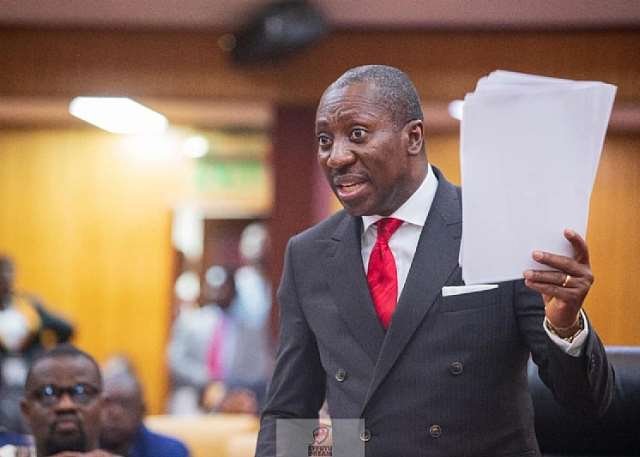
His sharpest warning concerned precedent. If a pending prosecution can shut down parliamentary scrutiny of every related institutional failure, he argued, then the mere start of criminal proceedings could place entire public institutions beyond Parliament’s reach for as long as the cases last.
The Minority says it will pursue another option within the Constitution and the Standing Orders. That promise sets up a wider contest over how far the sub judice rule extends, and whether pending court cases can limit Parliament’s power to question the institutions it funds and oversees.
READ ALSO: Ghana-India Deepen Agribusiness Partnership