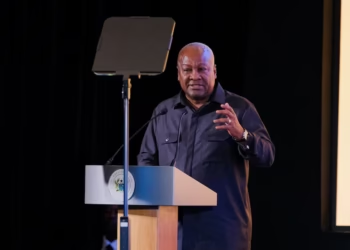
The Member of Parliament for Tolon, Honourable Habib Iddrisu, has expressed surprise at Speaker Alban Bagbin’s decision to reject his motion seeking a parliamentary inquiry into major narcotics seizures linked to Ghana.
The First Deputy Minority Whip explained that he expected the motion to be admitted because its substance was already contained in the memorandum that prompted the recall of Parliament. Referencing the Speaker’s prior knowledge of the reasons for the recall, Honourable Iddrisu argued that the motion should therefore have been considered.
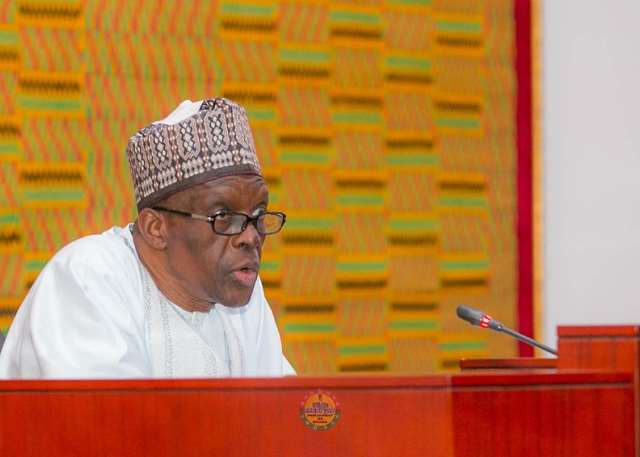
“I was very convinced that the Speaker was going to admit the motion, but he didn’t. The motion was exactly what I put in the memorandum for the recall, so there was no way I could think that the Speaker would not admit the motion.”
Honourable Habib Iddrisu
Nonetheless, the Tolon MP acknowledged that the authority to admit or reject a motion rests with the Speaker under Parliament’s Standing Orders. He, however, disagreed with the reasoning that a parliamentary inquiry could prejudice matters already before the courts.
Directing attention to the constitutional basis of his submission, Honourable Iddrisu cited Article 103, particularly provisions empowering parliamentary committees to conduct investigations and inquiries into the activities and administration of ministries and departments. He argued that this constitutional mandate should not be displaced by the Standing Orders.
The Minority lawmaker further pointed to the proposed terms of reference, arguing that they were designed to examine institutional and administrative issues rather than determine the guilt or innocence of persons before the courts. He explained that the proposed inquiry would cover the processing, inspection, clearance and export of narcotics consignments.
On this point, Honourable Iddrisu questioned which part of the proposed inquiry would interfere with pending judicial proceedings. He highlighted port procedures, intelligence profiling, scanning, physical inspection, customs clearance and the effectiveness of security systems at entry and exit points.
Referencing Parliament’s previous handling of matters before the courts, the Tolon MP cited the Assin North case as an example of Parliament exercising its constitutional responsibilities despite related litigation.

He therefore contended that the Speaker’s reliance on Standing Order 103(f), which restricts motions capable of prejudicing matters before the courts, should not prevent Parliament from examining administrative questions within its oversight mandate.
The Speaker has ruled that the proposed inquiry is inadmissible because of its overlap with ongoing criminal proceedings and the potential to prejudice parties before the courts.
Tolon MP Defends Ad Hoc Probe, Questions Executive Investigation
The Member of Parliament for Tolon, Honourable Habib Iddrisu also defended his call for an ad hoc parliamentary committee, arguing that the narcotics cases require scrutiny across several government institutions.
The First Deputy Minority Whip explained that the proposed inquiry cannot be confined to one sector because the movement of consignments involves different agencies with separate responsibilities. Directing attention to the chain of operations, he identified the Interior and Transport portfolios, the Finance Ministry, the Customs Division and other relevant institutions.
According to Honourable Iddrisu, an ad hoc committee would provide a single platform to examine how shipments were booked, documented, cleared and exported, while establishing the roles of companies and institutions involved in those processes.
“If I am going to ship something out, number one, you book a container. Who booked the container? There is a name, there is a company. So there is a consignee to that.”
Honourable Habib Iddrisu
Referencing the institutional spread involved, the Tolon MP argued that even a regular parliamentary committee would struggle to cover all the relevant areas. He therefore favoured an ad hoc arrangement capable of bringing together the necessary expertise and examining the matter from several angles.
Honourable Iddrisu also questioned the adequacy of relying on investigations initiated by the Executive, particularly where officials from institutions connected to the processes under scrutiny may have information relevant to the inquiry.
He pointed to the involvement of several public agencies and the arrests of officials in connection with the narcotics investigations. On this basis, the Minority lawmaker argued that Parliament should have an oversight role separate from the Executive’s investigative process.

“The very people the Executive have set up to investigate this matter are going to be judges in their own court. Definitely, we need an independent body, and that independent body, the Constitution has given that authority to Parliament.”
Honourable Habib Iddrisu
On the question of whether Parliament itself can provide the independence required, Honourable Iddrisu maintained that a bipartisan committee remains an available constitutional mechanism. He argued that Members from both sides of the House can participate in an inquiry even where political differences exist.
Furthermore, the Tolon MP distinguished the responsibilities of the Executive from those of Parliament, stressing that an executive investigation does not remove the legislature’s oversight mandate. He insisted that both processes operate within their respective constitutional responsibilities.
Honourable Iddrisu therefore rejected the suggestion that Parliament should simply summon a sector minister to provide information. He argued that the number of institutions involved makes a broader committee necessary to examine the administrative processes, agency responsibilities and preventive measures surrounding narcotics shipments linked to Ghana.
READ ALSO: Executive Hijack of Ghana’s Policymaking Leaves Research on Shelves, Prof. Annim Warns