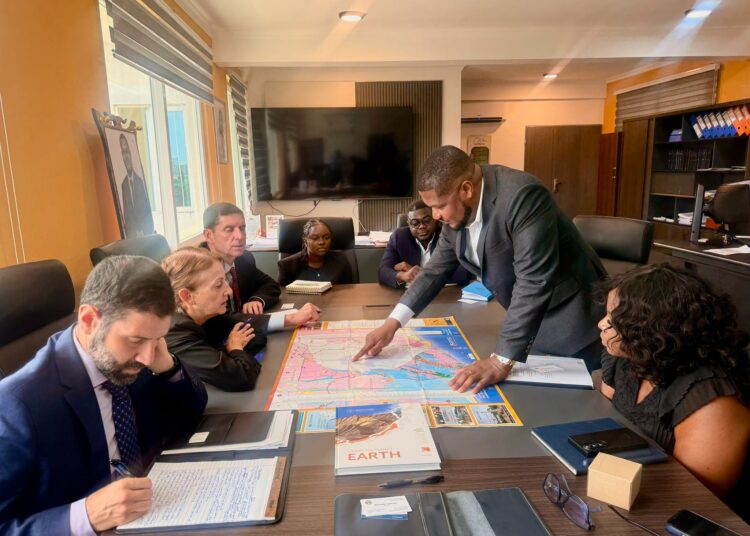
The Chief Executive Officer of the Minerals Commission, Mr. Isaac Tandoh, hosted a high-level delegation from the United States Department of the Treasury to advance bilateral economic cooperation and showcase transformative technological mechanisms in Ghana’s mining sector.
The engagement provided a key platform for both institutions to review regulatory frameworks, evaluate ongoing governance reforms, and examine broader macroeconomic trends shaping resource extraction in the country.
Led by Mr. Alex Leipziger, Director of the Office of Africa, the visiting U.S. officials engaged with domestic regulators to explore strategic alignment and institutional synergies.
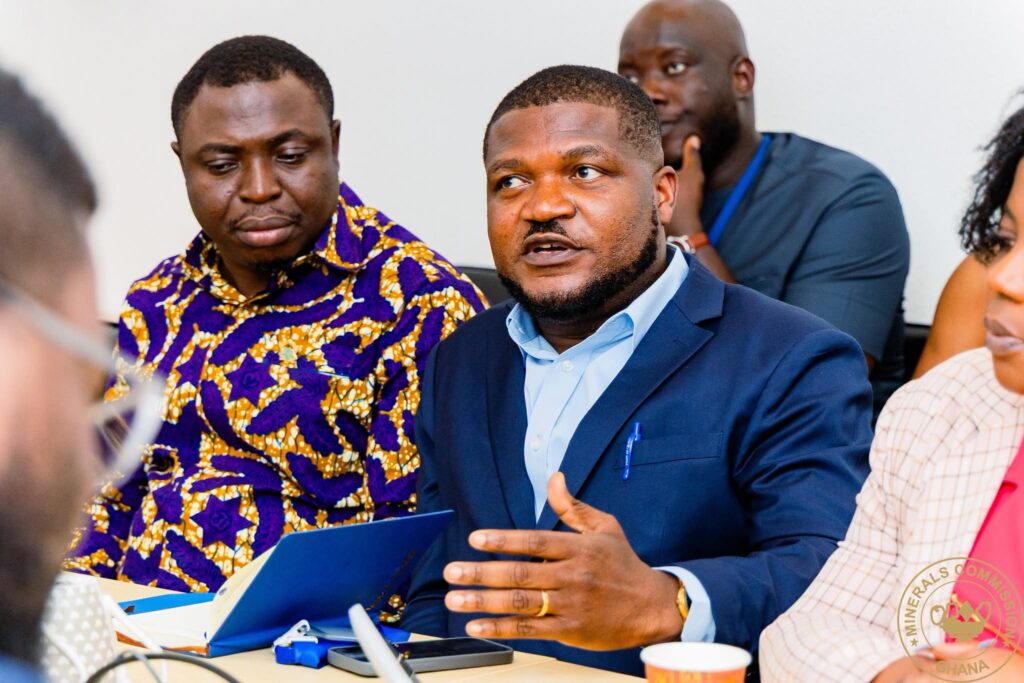
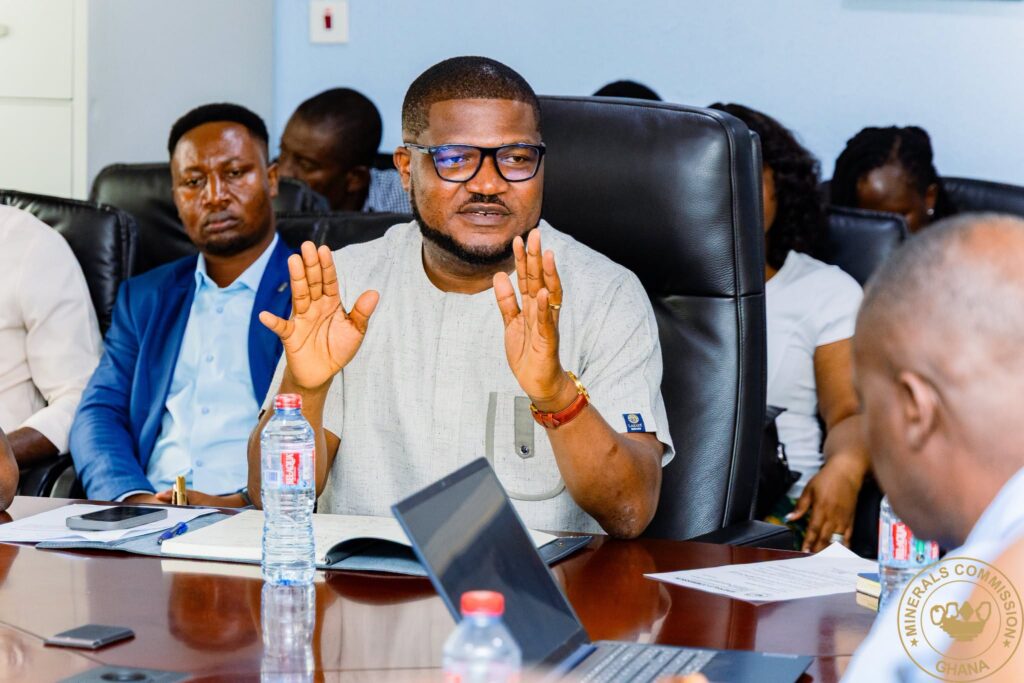
“In his remarks, Mr. Tandoh highlighted the Minerals Commission’s mandate as the statutory body responsible for regulating and promoting the sustainable development of Ghana’s mineral resources. He emphasized that continued high-level engagement on investment frameworks, responsible sourcing, policy harmonisation, and sustainable growth remains essential to maximising value along the entire mining value chain. Mr. Tandoh also explained the new regulatory reforms in the mining industry, including the tracking of all excavators and earth-moving equipment.”
Minerals Commission
While expanding on the bilateral dialogue, the Minerals Commission formally introduced its central tracking system designed to curb illicit mining activities and enhance supply chain integrity.
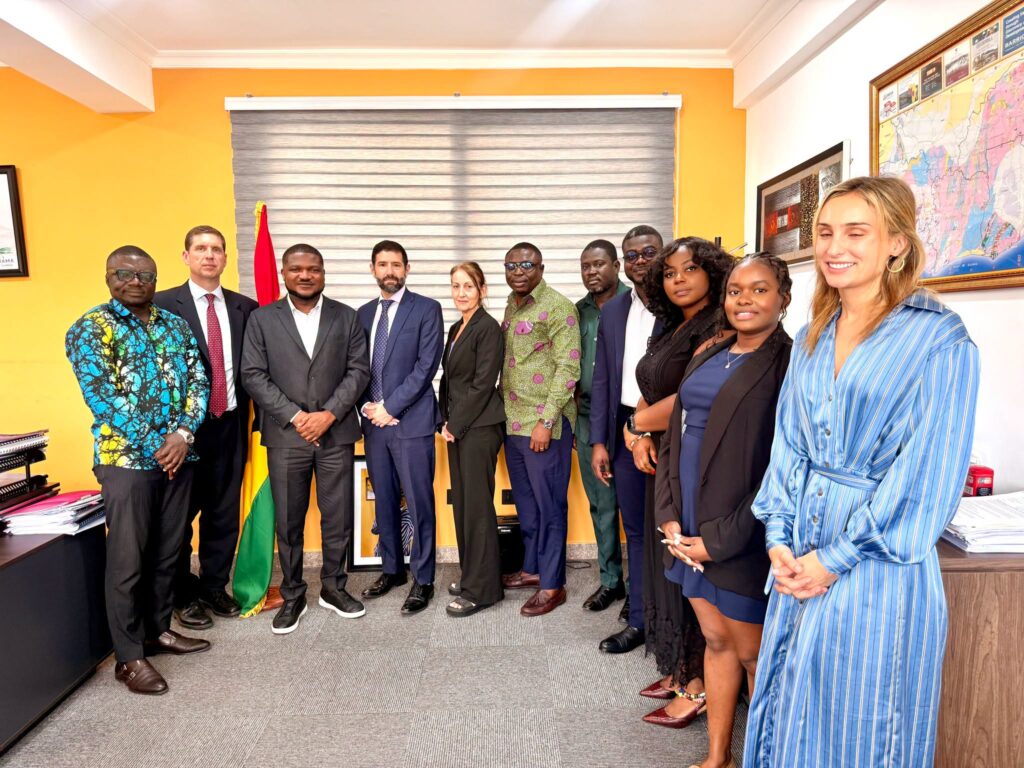
During a guided tour of the facility, Mr. Tandoh took the U.S. delegation to inspect the commission’s 24-hour tracking control room, where heavy machinery and earth-moving equipment across extraction sites are monitored in real time.
Officials demonstrated how digital oversight aligns with Ghana’s broader strategy to enforce regulatory compliance, safeguard environmental standards, and strengthen international investor confidence.
Modernizing Mining Oversight Through Technical Infrastructure
To enforce statutory oversight, the Minerals Commission has integrated telematics and digital monitoring into its daily regulatory workflow.
Mr. Tandoh indicated that, so far, 5,733 machines have been registered, with 2,058 being tracked from the control room.
This operational shift provides real-time visibility over critical earth-moving assets, ensuring that heavy equipment operates strictly within authorized concessions and legal parameters.
The deployment of digital tracking directly addresses long-standing enforcement gaps within the extractive industry.
Historically, unmonitored earth-moving equipment has enabled illegal small-scale mining operators to encroach upon protected river bodies and forest reserves.
By creating a continuous data feed from field machinery to the central command center, statutory inspectors can instantly detect unauthorized movements, pinpoint illicit operations, and deploy task forces before irreversible environmental degradation occurs.
Furthermore, transparent equipment tracking protects legitimate concessions from illegal encroachment, preserving asset value for law-abiding concessionaires.
By curbing illegal machinery deployment, the government secures critical tax revenues and mineral royalties that would otherwise be lost to illicit commerce.
Strategic U.S.-Ghana Alignment on Responsible Sourcing
Recognizing these institutional efforts, the U.S. delegation commended the regulator’s proactive leadership in implementing tech-driven reforms.
Mr. Leipziger reiterated the U.S. Treasury’s commitment to strengthening institutional partnerships, exploring areas of technical cooperation, and facilitating access to capital mechanisms that support deeper economic collaboration between the United States and Ghana.

These commitments underscore how regulatory clarity serves as a prerequisite for attracting foreign direct investment into critical minerals.
The engagement underscored the strategic importance of Ghana’s mineral resources to national economic development and reflected continued international confidence in the country’s regulatory stability and resource governance framework.
As global supply chains increasingly demand transparent, eco-friendly, and fully traceable mineral inputs, Ghana’s proactive equipment tracking places the country at the forefront of sustainable mining practices in Africa.
Safeguard Frameworks for Ghana’s Extractive Future
The necessity for continuous technical innovation stems from the evolving challenges of mineral governance in West Africa.
Unregulated mining practices degrade arable agricultural land, pollute vital water bodies with heavy metals, and destabilize local rural economies.
Establishing real-time equipment tracking gives state regulators an undeniable operational edge, transforming passive licensing regimes into active digital enforcement networks.
The deployment of automated telematics also reduces human bias and vulnerability in field inspections.
Automated alerts generated when an excavator crosses geofenced borders remove administrative opacity, ensuring uniform compliance across large-scale commercial and small-scale artisanal mining operations.
Ultimately, combining international bilateral engagement with robust technological enforcement positions Ghana as a trusted supplier of critical minerals on the global stage.
As the Minerals Commission scales up the registration and tracking of all heavy machinery nationwide, this initiative establishes a durable blueprint for responsible mining, ecological protection, and long-term macroeconomic stability.
READ ALSO: Carlos Queiroz Takes the Fall for Ghana’s Defeat Against Gambia