
President John Dramani Mahama has directed the Minister of Finance to allocate GH¢1 billion in the 2027 Budget as the government’s contribution to a proposed GH¢3 billion revolving fund for the National Housing Fund.
He announced the allocation today, October 7, 2026, while opening the National Conference on Housing Financing in commemoration of World Habitat Day. The money will be placed in the National Housing Fund and used to finance housing in a revolving manner.
President Mahama used the announcement to challenge financial institutions, developers, employers, organised labour and development partners to mobilise additional capital, arguing that public money alone cannot close the country’s housing gap.
“Our aim should be a financing system in which developers can build with confidence, lenders can invest responsibly and households can purchase without being burdened by debt.”
President John Dramani Mahama
The allocation builds on the GH¢3 billion housing fund the President unveiled earlier this year. Because the fund revolves, money repaid by beneficiaries can be lent again, extending its reach over time. President Mahama also disclosed that the government remains committed to strengthening the fund’s capacity.
He pointed to its envisaged transition from the National Home Ownership Fund Limited to the National Housing Fund Limited, a change he expects to broaden its focus to financing housing delivery and expanding affordable options for households.

Pensions, Insurers and Diaspora Investors Invited
President Mahama argued that housing needs capital suited to its long life. Pension funds, insurers, development finance institutions and diaspora investors can contribute, he stated, through structures that protect their interests while supporting viable projects.
He cited the blended finance approach envisaged under the 24-hour economy and the rated export development programme as a source of lessons. Carefully targeted public and concessional finance, he explained, can attract private investment and manage risks that would otherwise stall worthwhile projects.
He attached a condition to government’s own support: “Public support must have clear limits, transparent terms and measurable benefits for households.”
Employers, Unions and Developers Asked to Step Up
President Mahama urged partnerships with employers, labour unions and workers’ associations, which can give developers greater certainty that completed homes will find buyers. He noted that some unions hold huge funds in their accounts.
After a meeting with the Ghana National Association of Teachers, he recalled that the association had “some billions of Cedis sitting there.” He suggested that the National Housing Fund, lenders and builders work out housing ranges that suit teachers, nurses and doctors.

He also asked government, financial institutions and developers to consider guarantees and risk-sharing facilities for viable, affordable projects. Expensive short-term construction loans raise the final price of a home, he observed, so construction finance must connect to a clearer picture of who needs housing, where and at what price.
The fund’s proposed national database of prospective home buyers, he added, can help developers and lenders plan around demonstrated demand.
New Instruments Under Review
President Mahama encouraged the conference to examine mortgage refinancing and securitisation, employer-supported schemes and responsible financial technology solutions. Each instrument, he insisted, must be judged by whether it lowers costs, expands access and remains sustainable.
He urged delegates to treat rent-to-own arrangements, secure rental accommodation and incremental building loans as part of the same toolkit. The President tied the conference’s worth to what follows it. “The value of this conference will be measured by what follows it.”
He asked that the final communique set out programmes of action with clear responsibilities, timelines, financial requirements and implementation milestones. He listed concrete outcomes: commitments from at least three financial institutions to introduce or revise affordable housing loan products within six months.
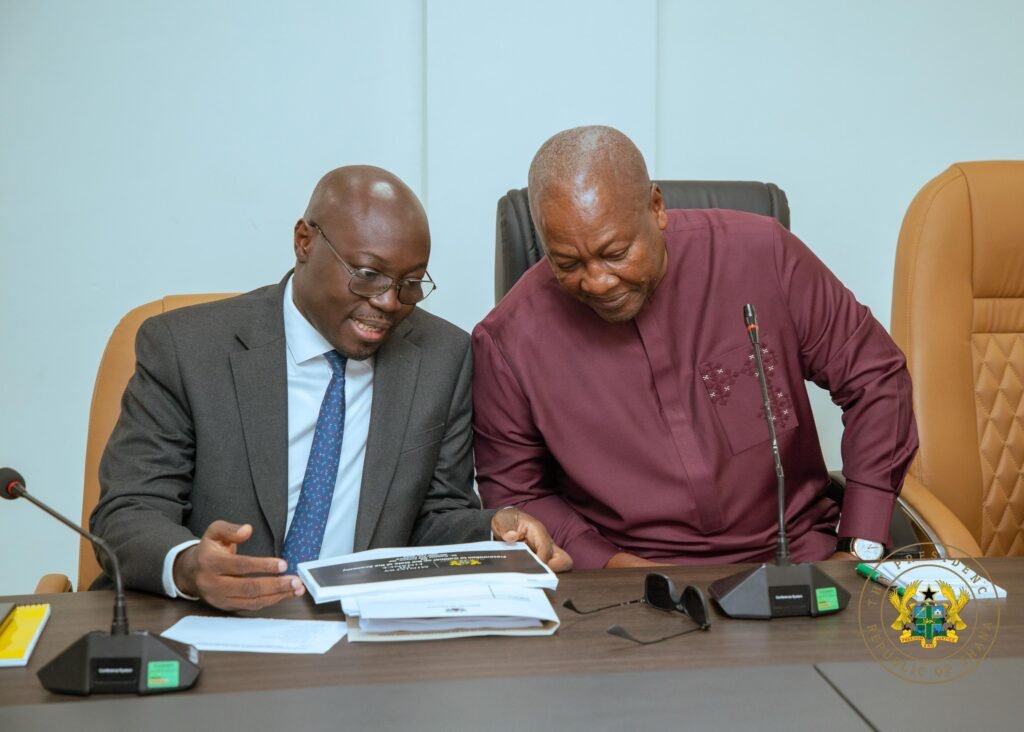
These include pilot financing partnerships among the fund, lenders and developers; a technical working group on green affordable housing finance; and a practical roadmap for the home buyer database, with safeguards for personal information and transparent eligibility criteria.
He also called for a follow-up review to assess commitments made, financing mobilised and products introduced. President Mahama pledged that the government will continue to provide leadership and support.
He then called on financial institutions, developers, employers, organised labour, communities and development partners to turn that commitment into results.
READ ALSO: GoldBod Partners UNU-INRA On Shared Sustainability Goals