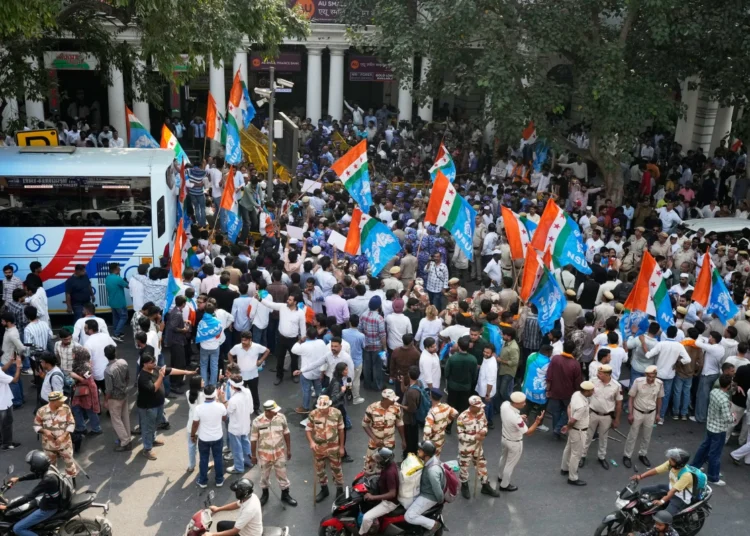
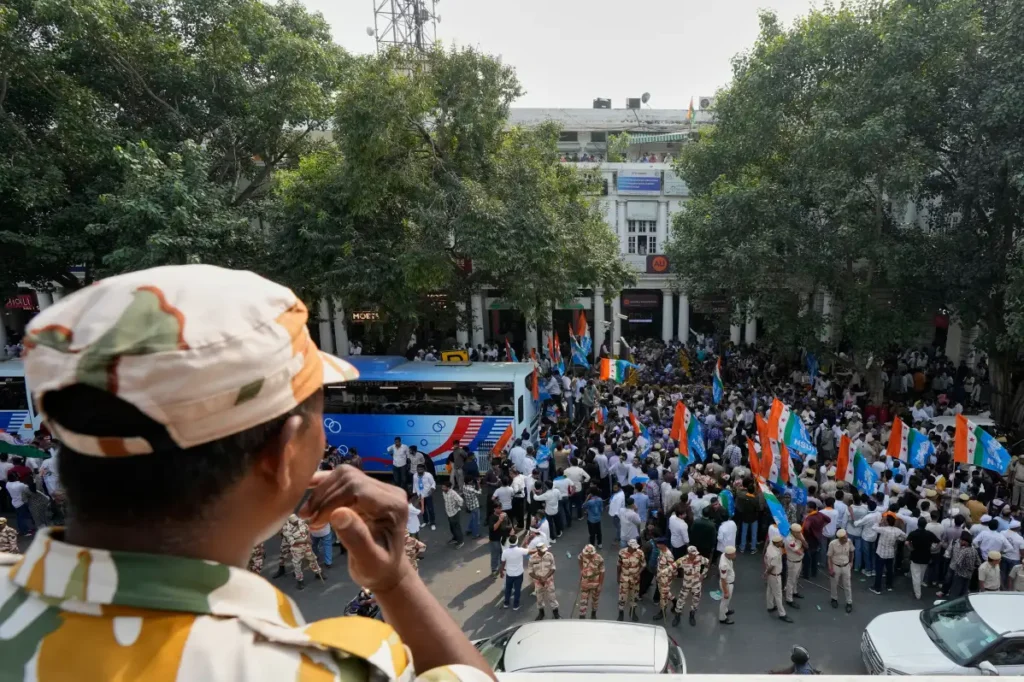
Thousands of supporters of India’s youth “Cockroach” movement and student groups took to the streets of Bengaluru today, intensifying a nationwide campaign against the country’s election authorities over a voter list revision that has removed more than 130 million names from the rolls.
The demonstration in the southern Indian city came a day after opposition leader Rahul Gandhi was briefly detained by police during a protest in New Delhi.
Images of police officers dragging Gandhi into a vehicle circulated widely on social media, giving fresh momentum to demonstrations demanding the resignation of Chief Election Commissioner Gyanesh Kumar.
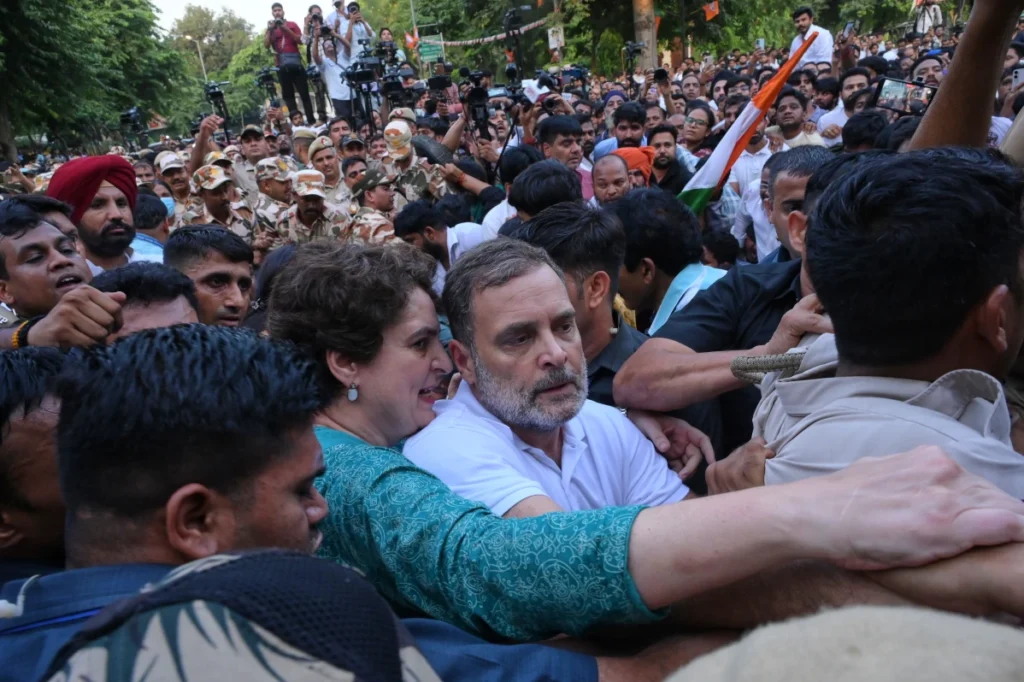
Gandhi’s Congress party has called for additional protests in New Delhi, as opposition parties seek to expand the campaign and draw greater public attention to the voter list revisions.
The nationwide review, known as the Special Intensive Revision, has been conducted across most of India’s states and federally administered territories. More than 130 million names have been removed so far, a figure exceeding the populations of countries such as Japan and Mexico.
Millions of people affected by the removals have appealed the decisions. Opposition parties, however, have raised concerns over the impact of the exercise, alleging that voters who support them have been disproportionately affected. They also claim that voters considered more likely to support Prime Minister Narendra Modi’s party have been retained or added to the electoral rolls.
The Election Commission and the Indian government have rejected those allegations. They maintain that the revision is intended to clean up the electoral register by removing duplicate and ineligible entries.
The controversy has nevertheless continued to grow, particularly over the process for people seeking to have their names restored. Individuals whose names have been removed can appeal, but critics argue that the process can be difficult because of confusing requirements and the need for documents that some voters may not possess.
Some people may lack older government records required during the appeal process, raising concerns about whether all affected voters will be able to successfully regain their place on the electoral rolls.
Public anger intensified last month following an investigation by the Indian Express newspaper, which reported that two election commissioners had raised concerns about the voter list revision process. The report added to wider criticism of the exercise and strengthened calls for greater scrutiny of the Election Commission.
The protests have been partly driven by the “Cockroach” movement, a youth-led campaign that began online in May before expanding into street demonstrations across India. The movement has previously organized nationwide demonstrations, sit-ins and hunger strikes over allegations surrounding examination paper leaks.
Those earlier protests resulted in the resignation of Modi’s education minister in July, giving the youth movement a record of political activism that has contributed to its growing visibility.
The current campaign is focused on the voter list revision and the leadership of the Election Commission. Protesters are demanding Kumar’s resignation and an end to the removal of names from the electoral rolls, warning that the process could disenfranchise millions of voters.
A Broader Political Challenge For Modi
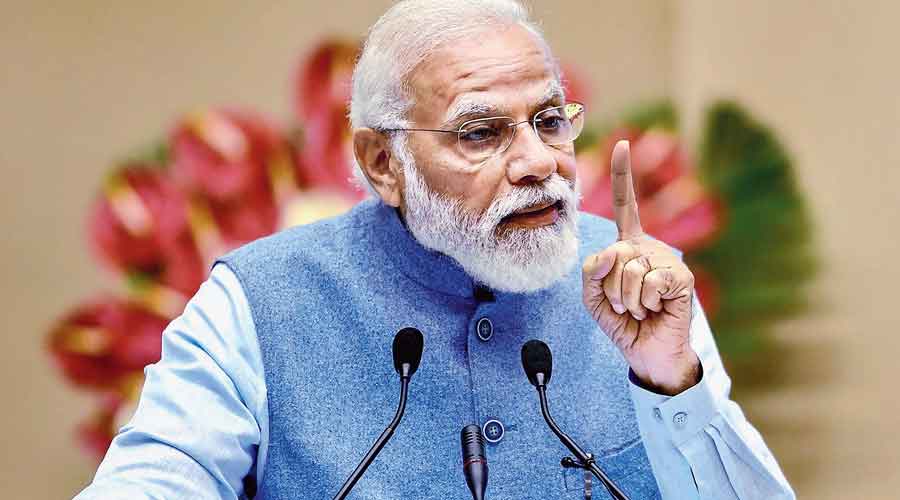
The issue has also become a broader political challenge for Modi, who is midway through his third term as Prime Minister. Opposition parties are attempting to turn public anger over the voter list revision into a national political campaign, while Gandhi has emerged as one of the most prominent figures associated with the protests.
The confrontation has brought electoral administration into sharper focus as opposition parties question whether the revision is being implemented fairly. For the government and Election Commission, the exercise remains a measure aimed at ensuring the accuracy and integrity of voter records.
Further demonstrations are expected in New Delhi. The “Cockroach” movement has called for protests beginning Saturday, with thousands expected to march towards Jantar Mantar, the capital’s designated protest site. Police have already barricaded the area ahead of the planned demonstrations.
As the protests spread, the dispute over the voter rolls is becoming an increasingly significant political issue in India. The opposition is pressing for the election chief to step down and for the removals to end, while authorities continue to defend the revision as an effort to eliminate duplicate and ineligible entries.
The scale of the voter deletions and the growing number of people appealing their removal have ensured that the controversy remains at the centre of the opposition’s campaign, with further protests likely to keep pressure on the government and election authorities.
READ ALSO: DHS Proposes $70,000 Fee for International Students Work Program