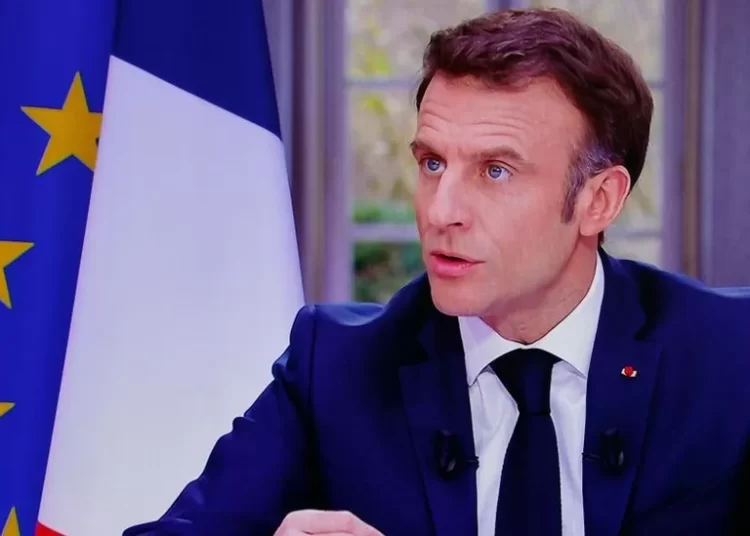
French President Emmanuel Macron is expected to address the nation later today following nationwide protests that drew more than half a million people on Saturday and descended into violence in several cities.
Macron was due to hold an emergency meeting with senior government officials before delivering an address at 8 p.m. local time, his office said.
The protests brought together a monthlong student movement and broader public anger over rising living costs and deteriorating public services, particularly conditions in schools. While thousands of demonstrators participated in peaceful marches, separate groups set buildings ablaze, looted businesses and clashed with police.
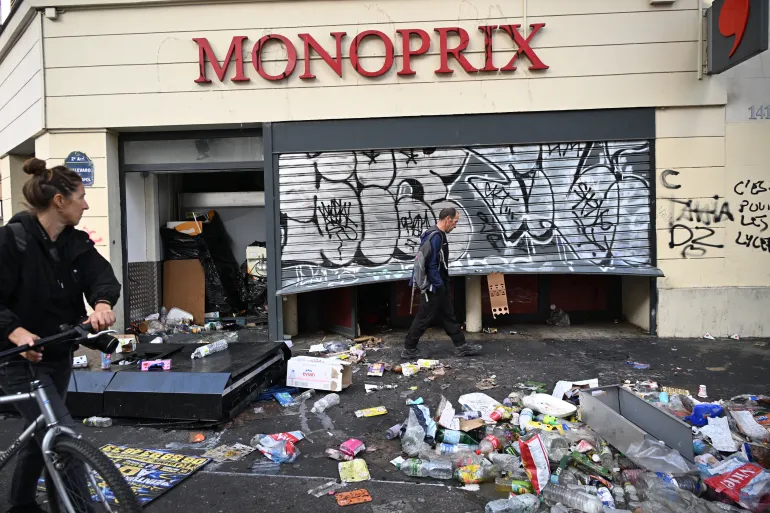
Interior Minister Laurent Nuñez said that more than 2,000 arrests had been made across France, while more than 600 police officers, firefighters and gendarmes were injured. One protester died after suffering a cardiac arrest during demonstrations in Paris.
The unrest caused significant damage to businesses and public infrastructure across the country. In Limoges, southwestern France, the city’s 143-year-old town hall was set ablaze and largely destroyed in an arson attack.
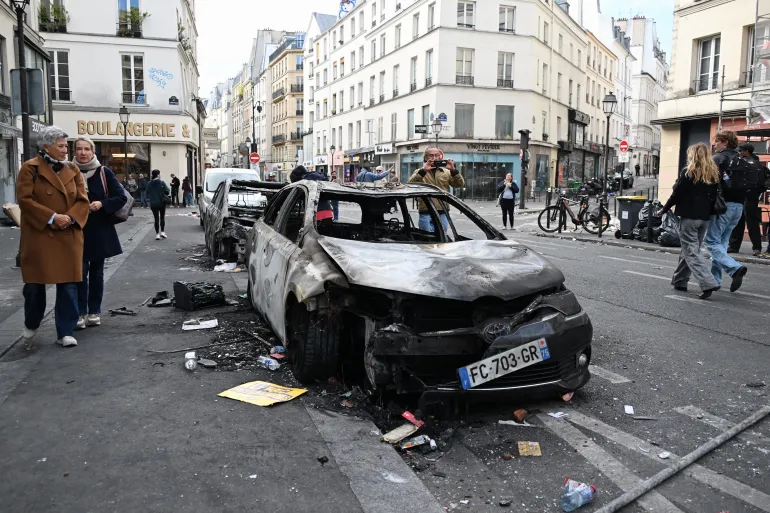
1500 Shops Damaged
The head of the Retail and Trade Federation told a France television that approximately 1,500 shops and retailers had been damaged during the demonstrations.
The violence unfolded alongside peaceful marches attended by students, parents, teachers, grandparents and workers in major cities, including Paris. Protesters called for more teachers, repairs to deteriorating school buildings and increased funding for public services.
The marches followed four weeks of street demonstrations and school barricades. Participants carried banners accusing the government of ignoring their concerns, while broader demonstrations reflected frustration over the rising cost of living.
However, separate groups organised moving gatherings, barricaded streets, started fires and confronted police in cities including Paris, Bordeaux, Nice and Marseille. Masked looters also took advantage of the disorder to smash shopfronts and steal merchandise.
Hundreds of protesters gathered again at Place de la République in Paris on Sunday, as police maintained a heavy presence. Officers deployed tear gas when tensions flared intermittently.
Referring to the looting of businesses in cities including Paris, Marseille, Lyon and Bordeaux, Nuñez wrote on X, “The right to protest is a fundamental right. Deliberately and collectively sowing disorder through violence is not.”
The Interior Minister’s comments came as authorities faced the challenge of distinguishing peaceful demonstrations from violent incidents involving smaller groups and people seeking to exploit the unrest.
Political Leaders Trade Blame Over Unrest
The violence triggered a political dispute over responsibility for the disorder, with Macron’s centrist government and far-right leader Marine Le Pen blaming groups they described as the “ultra-left.”
Prime Minister Sébastien Lecornu said that the government would not be “intimidated” by violence and attributed the unrest to radical-left groups and criminals.
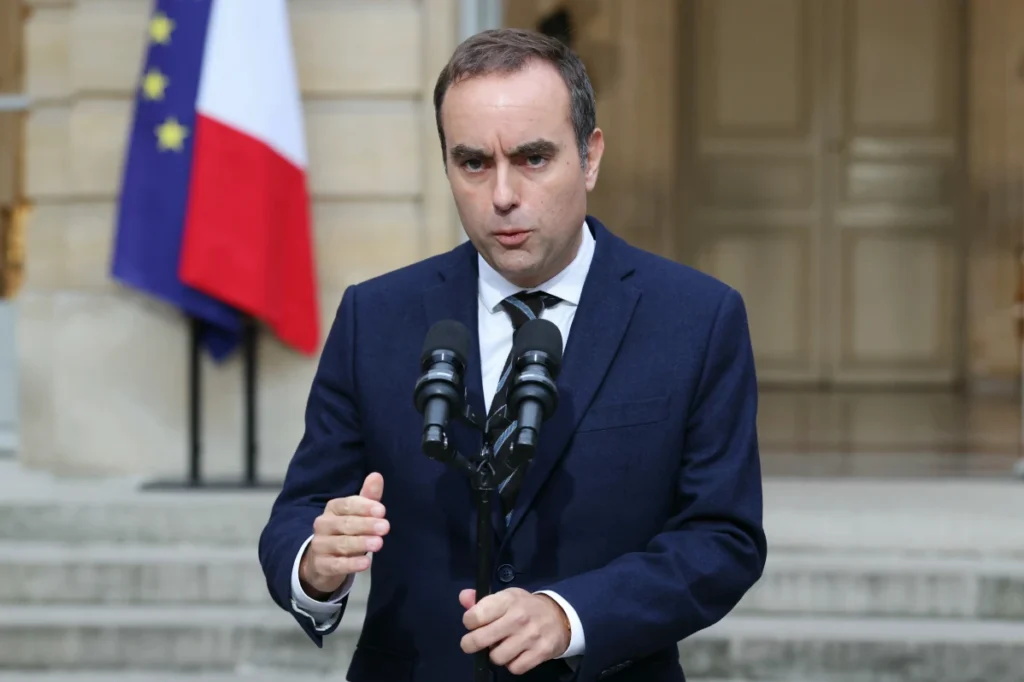
Lecornu also rejected criticism directed at police leadership, writing on social media; “Laying the responsibility for violence on heads of police is a dangerous and cynical reversal of responsibilities.”
Le Pen, a presidential hopeful, criticised her far-left rival Jean-Luc Mélenchon, who attended Saturday’s peaceful demonstration in Paris. “Looting, ransacking, destroying and attacking law enforcement: Rioters have again spoiled the Oct. 17 demonstrations,” Le Pen wrote on X.
Her running mate, Jordan Bardella, also addressed the unrest, saying on X that “if the silent majority of French decide it, we will reestablish order for the long term.”
Mélenchon, meanwhile, accused Lecornu of “playing with fire,” arguing that the government’s approach had united young people and workers’ unions. “By banking on degradation, you have only succeeded in uniting all youths and workers’ unions,” he said.
The radical-left presidential candidate also sought to distinguish the movement’s objectives from the violence, insisting, “My message is clear: those who share our fight have no business in looting or destruction.”
Mélenchon separately accused the government of organisational failures that had “opened the door to chaos,” prompting Lecornu’s response defending the handling of the unrest.
Trump Links Violence To Immigration
The demonstrations also drew comment from US President Donald Trump, who posted “France is burning!” on his Truth Social platform and appeared to link the violence to immigration. This is not the first time the US President linked the protests to immigration. “Close your Borders and take control, before it is too late!” Trump wrote.
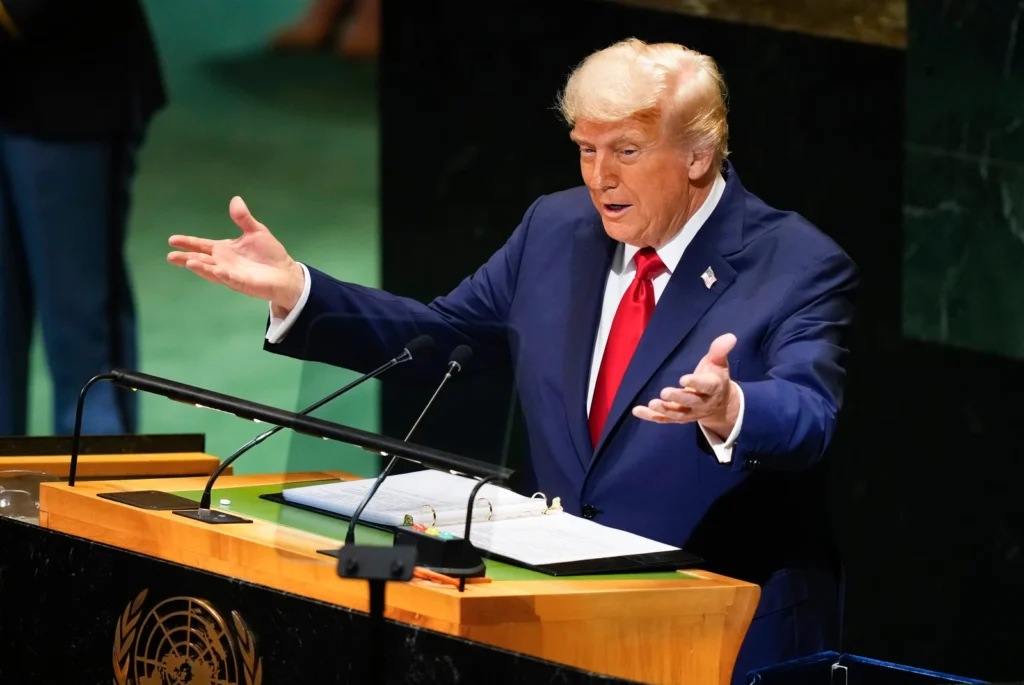
French authorities and police, however, have not linked immigrants to the rioting. Officials have instead attributed some of the violence to groups they describe as radical far-left organisations and other individuals who joined the demonstrations to loot businesses.
Macron’s planned address comes as the government faces pressure to respond to public concerns over living costs, school conditions and public services while addressing the damage and violence that accompanied Saturday’s protests.