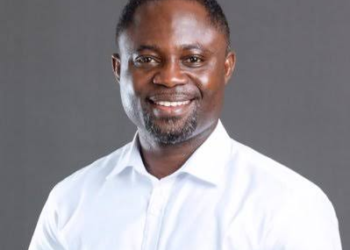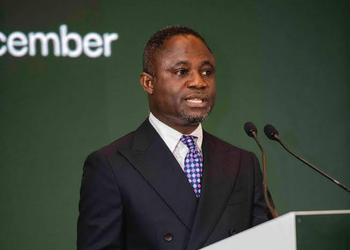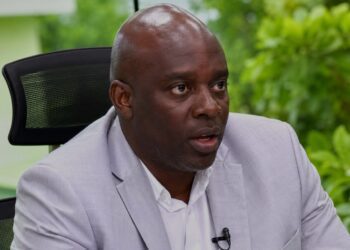
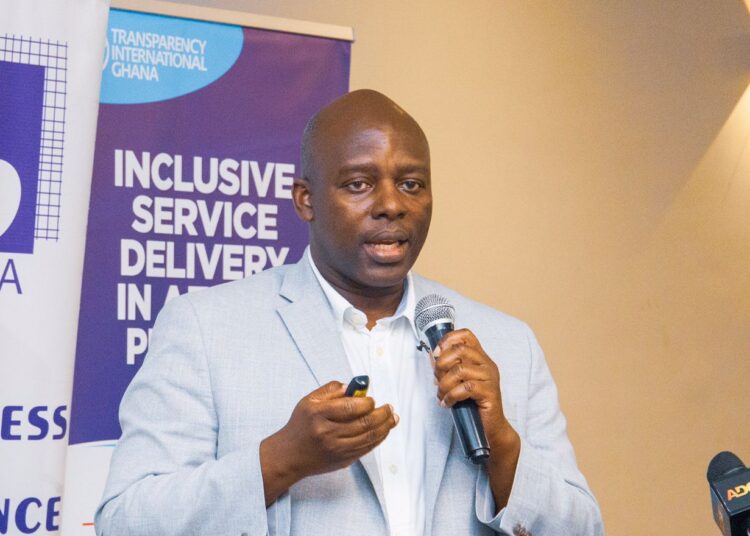
A political scientist and CDD-Ghana Fellow, Dr John Osae-Kwapong, has warned against using partisan considerations to justify appointments to Ghana’s independent constitutional institutions, arguing that attempts to balance perceived political influence could undermine democratic standards.
His comments follow the appointment of two new Deputy Chairpersons of the Electoral Commission (EC) by President John Dramani Mahama, which has triggered debate over political neutrality and institutional independence.
In an exclusive interview with The Vaultz News, Dr Osae-Kwapong, who is also Director of the Democracy Project, questioned the government’s defence that a political “reset” could involve appointing individuals aligned with the governing National Democratic Congress (NDC) to balance an institution allegedly populated by members of the opposition New Patriotic Party (NPP).
“I don’t think that is a path that we want to go down when our democracy is concerned. That’s why I find the explanation of reset meaning tilting the balance worrying.”
Dr John Osae-Kwapong, Political Scientist, CDD-Ghana Fellow, and Director of the Democracy Project
Political Balancing Raises Concerns About Independent Institutions
Dr Osae-Kwapong argued that justifying appointments on the basis of perceived partisan dominance could establish a precedent in which successive governments seek to counterbalance the political affiliations of officials appointed by their predecessors.

He explained that vacancies arise periodically across Ghana’s independent constitutional institutions and are filled through established appointment processes involving presidential nominations and advice from the Council of State.
His concern, he noted, is that interpreting appointments as an opportunity to correct an alleged partisan imbalance could encourage successive administrations to appoint individuals perceived as political allies rather than prioritise the independence expected of these institutions.
“If we say that because a president appointed certain persons and we think that that particular independent institution is filled with, let’s say, persons appointed by an NPP President and therefore we have to tilt the balance.”
Dr John Osae-Kwapong, Political Scientist, CDD-Ghana Fellow, and Director of the Democracy Project
The political scientist extended the argument beyond the Electoral Commission, pointing to the possibility that similar reasoning could influence appointments to the Supreme Court and other independent constitutional bodies.
He warned that a government could justify appointing individuals considered aligned with its party simply because it believed the previous administration had appointed people associated with the opposing side.
For Dr Osae-Kwapong, such an approach risks normalising partisan considerations in institutions whose credibility depends on their ability to operate independently of the political interests of the government of the day.
Mahama’s EC Appointments Trigger Partisan Debate
President Mahama on Monday, October 12, 2026, swore in Dr Joseph Kwaku Asamoah and Emelia Afi Agbenyo as Deputy Chairpersons of the Electoral Commission. Their appointments filled vacancies created by the resignation of Dr Bossman Eric Asare and the retirement of Samuel Tettey.
At the swearing-in ceremony, the President urged the new appointees to discharge their constitutional responsibilities fairly and impartially, emphasising that neither his administration nor the governing NDC should receive preferential treatment.

However, Ms Agbenyo’s appointment has drawn criticism from the opposition NPP, which has questioned whether her alleged political affiliations could affect public confidence in the Commission’s neutrality.
The party’s Director of Communications, Dennis Miracles Aboagye, has cited Facebook posts and messages attributed to Agbenyo that he argues demonstrate support for the NDC during the 2024 general election campaign. He has also referenced alleged previous political and campaign-related roles in challenging her suitability for the position.
These allegations have featured prominently in the political debate, although the claims themselves do not establish that Agbenyo would perform her official duties in a partisan manner.
NDC Defends Appointees as Debate Shifts to Consistency
The governing NDC has defended the appointments, with its Deputy Director of IT and Elections, Rashid Tanko, maintaining that the appointees are competent and qualified for their positions.
The party’s defence has also drawn comparisons with appointments made during the administration of former President Nana Akufo-Addo, particularly those of Dr Bossman Asare and Dr Peter Appiahene, whose alleged links to the NPP were previously questioned by NDC figures.

The competing arguments have revived a broader debate about whether political parties apply consistent standards when assessing appointments to institutions expected to operate independently of partisan interests.
For Dr Osae-Kwapong, however, perceived imbalances should not become the basis for appointing individuals regarded as political representatives within independent institutions. His concern centres on the precedent such reasoning could establish for future administrations and their own appointment decisions.
The debate therefore extends beyond the suitability of individual appointees to the principles governing appointments, institutional credibility and public confidence in democratic processes.
Institutional Independence Beyond Party Interests
The controversy highlights the tension between political parties’ competing claims about appointments and the expectation that independent constitutional bodies operate without partisan interference.
Dr Osae-Kwapong’s warning suggests that using political affiliation as a justification for balancing appointments could make institutional composition increasingly dependent on changes in government.
Rather than treating appointments as opportunities to counter perceived party influence, his argument places emphasis on maintaining standards that can endure across successive administrations.

With the Electoral Commission responsible for administering Ghana’s elections, public confidence in its independence remains central to the debate surrounding the new appointments.
The question raised by the controversy is whether the principles applied to appointments under one administration will be maintained when political power changes hands. For Dr Osae-Kwapong, normalising partisan balancing could make that consistency more difficult to sustain.