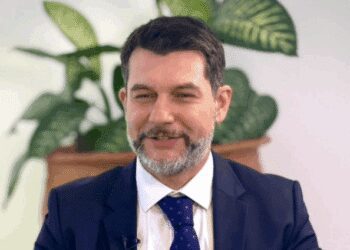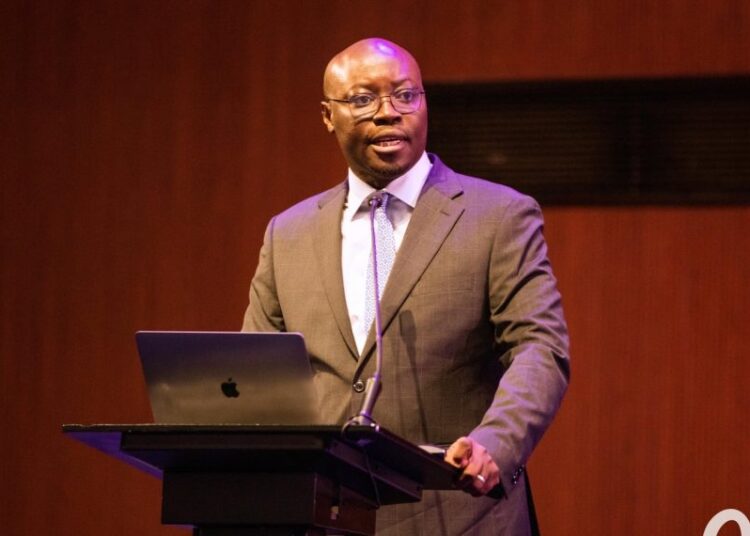
Finance Minister Dr Cassiel Ato Forson has challenged Ghana to move beyond economic stabilisation and confront the deeper structural problems that have repeatedly weakened the country’s economic progress, warning that the decisions taken today will determine the opportunities available to future generations.
Speaking during his New Economy engagement with faculty and students at the University of Ghana, Dr Forson argued that stabilising the economy is only the beginning of a much bigger task. He said Ghana must now pursue fundamental changes that strengthen domestic production, create decent jobs, raise incomes and build lasting prosperity.
His remarks signal a renewed emphasis on structural transformation as the country seeks to turn economic stability into tangible improvements in the lives of ordinary Ghanaians.
While stabilisation remains necessary to restore confidence and ease economic pressures, the Finance Minister believes the next phase requires a different approach, one that addresses the underlying weaknesses that have repeatedly exposed the economy to difficulties.
Ghana’s Next Economic Battle
Dr Forson described Ghana’s current economic moment as an opportunity to break away from longstanding policy patterns that have limited the country’s ability to achieve sustained prosperity.
“We have stabilised the present. Now we must secure the future,” he declared.
The statement captures the challenge facing policymakers as they seek to ensure that improvements in economic conditions translate into a stronger productive base, more employment opportunities and better living standards.
Stabilisation can help restore confidence, ease uncertainty and create room for economic activity. However, without changes to the structure of production, the benefits may prove difficult to sustain over the long term.
Ghana has considerable natural resources, an expanding services sector and a large population of young people seeking employment. Yet, the ability to transform these advantages into broad-based prosperity depends on how effectively the country produces, processes and exports goods while creating opportunities for businesses to expand.
Dr Forson’s position suggests that the government wants to place these questions at the centre of its economic policy discussions.
The challenge is no longer limited to containing immediate pressures. It also involves changing the conditions that allow economic difficulties to return.
‘History Does Not Wait’ as Forson Pushes Tough Decisions
The Finance Minister also warned against hesitation at a time when Ghana needs decisive choices to reshape its economic direction.
“History does not wait for countries that are afraid to decide,” he said.
The remark reflects the urgency surrounding efforts to build an economy capable of sustaining growth without repeatedly falling into familiar cycles of economic distress.
Ghana’s economic history has demonstrated the difficulties of maintaining stability when underlying weaknesses remain unresolved. Periods of recovery can create optimism, but lasting progress requires policies that improve productivity, strengthen domestic industries and reduce the economy’s exposure to recurring shocks.
Dr Forson argued that the country must be prepared to move away from approaches that merely address immediate problems without tackling their causes.
“There are moments when a nation must make a clear break with old patterns. There are moments when public policy must stop managing symptoms and start changing structures. This is such a moment for Ghana.”
Ato Forson
His comments place structural reform at the heart of the New Economy agenda, suggesting that economic policy must deliver more than short-term relief.
The effectiveness of this approach will ultimately depend on the policies introduced, their implementation and the extent to which they create measurable improvements in productivity, employment and household incomes.

Production and Value Addition Take Centre Stage
A major part of the transformation Dr Forson envisions involves increasing what Ghana produces locally and capturing more value from its natural resources.
The Finance Minister’s remarks point towards an economy that relies less on exporting raw commodities and more on processing, manufacturing and developing competitive domestic industries.
Ghana produces cocoa, gold and other valuable resources, but expanding the economic benefits of these sectors requires stronger links between extraction, processing, manufacturing and local enterprise development.
Adding value to agricultural and mineral resources can create employment beyond the initial stages of production. It can also open opportunities for local suppliers, transport operators, manufacturers and service providers.
Increasing domestic production could similarly help businesses develop stronger supply chains while creating more opportunities for workers.
However, achieving these outcomes requires more than political declarations. Businesses need reliable infrastructure, access to affordable financing, predictable regulations, appropriate technology and a workforce equipped with relevant skills.
Small and medium-sized enterprises, in particular, need an environment that allows them to expand operations, improve efficiency and compete with imported products.
The government’s ability to translate the New Economy vision into practical support for productive businesses will therefore be crucial.
Jobs and Incomes Will Test the New Economy Agenda
Beyond production and industrial development, the ultimate test of structural transformation will be whether ordinary Ghanaians experience meaningful improvements in their economic circumstances.
Dr Forson placed decent jobs and higher incomes among the central objectives of the transition, highlighting the connection between economic policy and the daily concerns of households.
For many Ghanaians, economic recovery is measured not only by headline indicators but also by the availability of employment, the ability to meet household expenses and the prospects of building a more secure future.
Young people entering the labour market need opportunities that offer stable earnings and room for professional growth. Businesses need conditions that encourage investment and expansion rather than forcing them to focus solely on survival.
A productive economy can help address these concerns by creating sustainable employment and expanding opportunities across different sectors.
Nevertheless, job creation must keep pace with the number of people entering the labour market. Growth that fails to generate sufficient employment or distribute its benefits widely could leave many households struggling despite improvements in overall economic performance.
This makes the link between structural reforms, private-sector development and employment particularly important.
Ghana’s Economic Reset Faces a Defining Test
Dr Forson’s intervention at the University of Ghana places the country’s next economic phase within a broader debate about how to convert stability into lasting development.
His argument is that Ghana cannot rely indefinitely on measures designed to manage immediate economic pressures. The country must also address the structural weaknesses that prevent businesses from producing more, industries from expanding and workers from earning better incomes.
The ambition is significant, but implementation will determine whether the vision delivers meaningful results.
Policymakers will need to ensure that reforms support productive investment, improve the competitiveness of local industries and create an environment in which businesses can generate sustainable employment.
There will also be questions about the pace of implementation, the availability of financing and the ability to maintain policy consistency as economic priorities evolve.
Ultimately, the success of Ghana’s economic reset will depend on whether the country can build a stronger productive base and sustain improvements in living standards beyond the immediate period of stabilisation.
Dr Forson’s challenge is therefore directed at more than economic managers. It concerns the country’s willingness to make difficult decisions today in pursuit of a more secure and prosperous tomorrow.
READ ALSO: Government Facilitates Health Workers Abroad to Create Space – Hon. AKandoh