
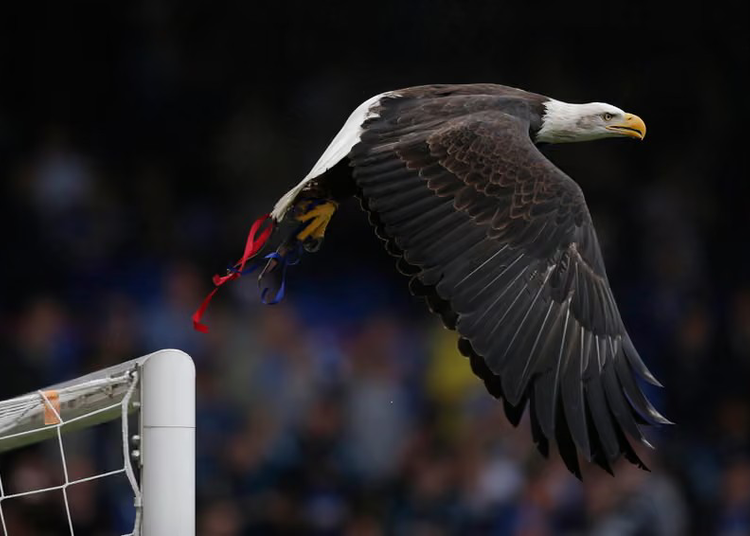
Crystal Palace’s tradition of featuring a live bald eagle before matches has come under renewed scrutiny, with animal rights organisation People for the Ethical Treatment of Animals (PETA) questioning whether the practice is compatible with animal welfare and spectator safety.
The organisation has written to the Premier League club’s chief executive, Sharon Lacey, calling for an end to Phoenix’s appearances at Selhurst Park and urging Palace to abandon the use of live animals as mascots permanently.
The intervention has also raised questions about the balance between football traditions and the responsibility clubs have to protect animals from potentially distressing environments.
The eagle named Phoenix, who made her first appearance in August 2024, has not returned to the stadium since her debut, while plans for her to perform a pre-match flight this season were abandoned. “Bald eagles are revered as symbols of freedom, yet Phoenix is being used as little more than a prop to entertain football fans,” said Dr Carys Bennett, PETA’s senior corporate projects manager.
She argued that Palace already had a human mascot capable of engaging supporters without exposing a wild animal to the pressures of a football stadium.
The risks behind a football tradition
Palace’s association with eagles dates back to 1973, when former manager Malcolm Allison changed the club’s nickname from the Glaziers to the Eagles. The live mascot tradition followed decades later, with Kayla introduced in 2010 as part of the club’s matchday entertainment.
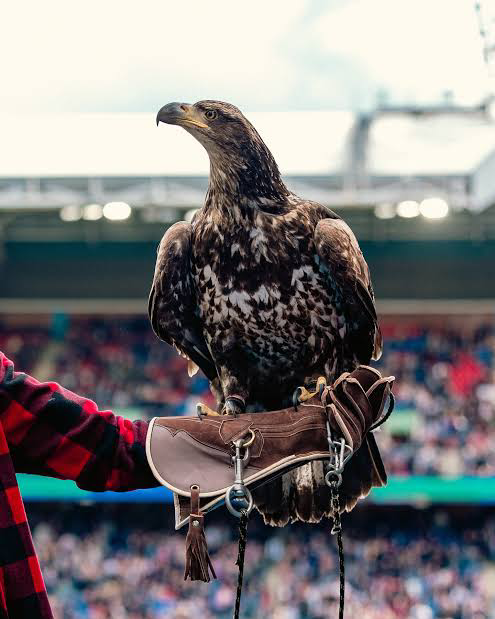
Kayla became a familiar presence at Selhurst Park, often flying across the pitch before kick-off. Her death in 2020 ended a decade-long association with the club, but Phoenix subsequently took over the role, making her debut against West Ham in August 2024 when she was just four months old.
Phoenix is based at Eagle Heights Wildlife Foundation in Kent. When she was introduced, the foundation said she had been prepared for her role as the club’s official live mascot from the time she hatched.
However, PETA contends that the excitement surrounding football matches can create conditions that are unsuitable for birds of prey. Stadiums combine loud chanting, sudden noise, bright lighting and large crowds, potentially triggering fear or disorientation in animals.
The organisation cited incidents involving birds that had collided with walls or glass windows, as well as a falcon that landed on a spectator’s head and embedded its talons in the man’s scalp.
It also recalled an incident involving Kayla in 2015, when a Charlton Athletic supporter was found guilty of attempting to punch the eagle during a League Cup match affected by crowd trouble.
These examples highlight a broader concern: even when a club intends to provide a controlled environment, unexpected movements, noise or crowd behaviour can create risks that are difficult to eliminate.
Also, PETA argues that captivity does not remove an eagle’s natural instincts. Such birds are adapted to wide-ranging movement and generally avoid close human contact in the wild. Restricting their ability to engage in natural behaviours, the organisation maintains, can contribute to frustration and stress.
Palace had not responded to Peta’s letter or a subsequent request for comment at the time of reporting. The Guardian also reported receiving no response to questions directed to Eagle Heights concerning Phoenix’s welfare.
Should clubs reconsider live animal mascots?
The controversy presents Crystal Palace with a difficult question about the future of a tradition closely associated with its identity.
Although the eagle offers a distinctive spectacle, its symbolic value does not necessarily justify the continued use of a live bird in a crowded sporting environment.
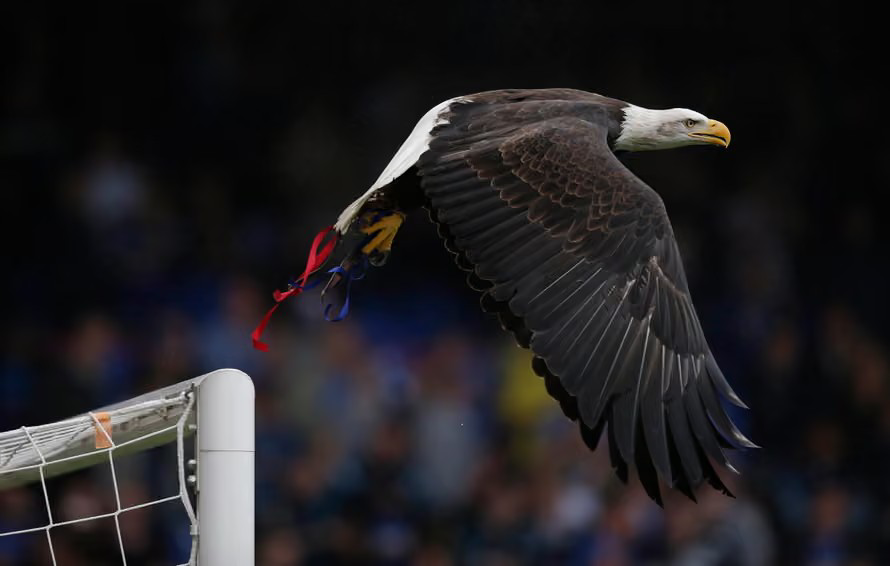
There is an important distinction between protecting an animal’s welfare and simply ensuring that it can perform a particular role. A bird may be trained to tolerate human contact or prepared for public appearances, but that does not automatically establish that the experience is beneficial to its welfare.
For Palace, replacing Phoenix with a symbolic eagle, a costumed performer or a digital pre-match display could preserve the club’s identity without exposing a live animal to the uncertainties of matchday conditions. Such alternatives could also maintain the entertainment value supporters associate with the tradition.
The issue extends beyond English football. Portuguese giants Benfica have featured a bald eagle known as Águia Vitória at home matches since the opening of their Estádio da Luz in 2003.
The practice demonstrates how live birds have become part of some clubs’ sporting identities, but its longevity alone does not settle questions about animal welfare.
Ultimately, the strongest argument for retaining a live mascot must go beyond tradition and spectacle. Clubs should be able to demonstrate that the animal’s welfare takes priority, that appropriate safeguards are in place and that its participation does not expose spectators to avoidable risks.
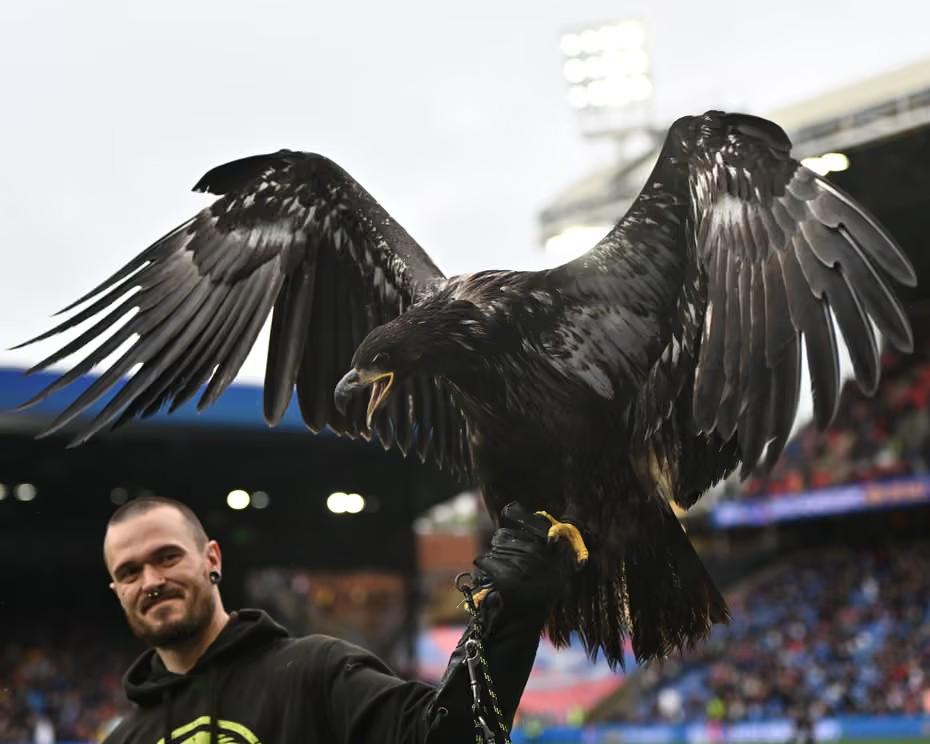
Until those concerns are adequately addressed, Palace faces a legitimate question over whether Phoenix should continue appearing at Selhurst Park. Football can celebrate its traditions without assuming that every tradition must remain unchanged.
READ ALSO: Government Facilitates Health Workers Abroad to Create Space – Hon. AKandoh