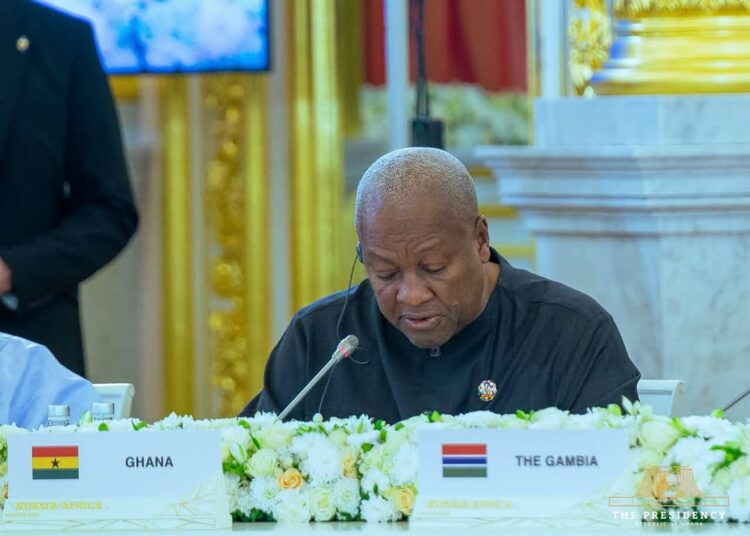
President John Dramani Mahama has highlighted Russia as a potential strategic partner in Ghana’s quest to expand electricity supply and advance its nuclear power programme, linking the country’s industrialisation ambitions to deeper cooperation in renewable energy and the peaceful use of nuclear technology.
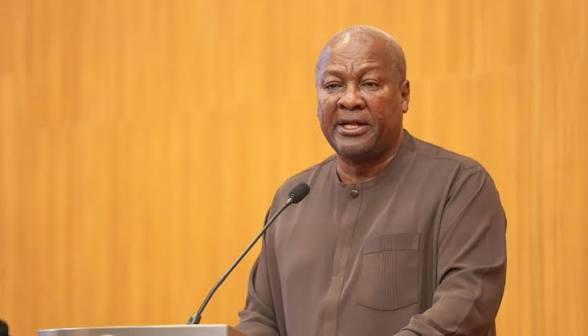
Speaking at the Russia-Africa Summit in Moscow on October 29, 2026, the President identified inadequate electricity supply as one of the major constraints on Africa’s development and argued that cooperation with Russia could help address the continent’s energy challenges.
His remarks place Ghana’s nuclear ambitions within a broader energy-security strategy that recognises the need for a diversified energy mix, combining renewable energy with other sources capable of providing reliable and affordable electricity.
The President also pointed to Ghana’s historical relationship with Russia in nuclear science, recalling that the Soviet Union provided the country with a 2-megawatt nuclear research reactor in 1964 and helped train Ghanaian scientists to operate it.
That history, he suggested, provides a foundation on which the two countries can build as Ghana considers the establishment of its first nuclear power station.
“One major obstacle to Africa’s progress is a lack of adequate electric power. Russia has a comparative advantage in the field of renewable energy and nuclear power. And this is one area where Russia and Africa’s cooperation can yield tangible results.”
The remarks signal Ghana’s interest in using its relationship with Russia to advance a major component of its long-term electricity strategy.
However, the President’s reference to discussions with Rosatom indicates that the nuclear power project remains at the stage of engagement and development rather than an operational commitment.
From A Research Reactor To Nuclear Power Ambitions
Ghana’s nuclear relationship with Russia dates back more than six decades, when the Soviet Union provided the country with a 2-megawatt reactor in 1964 for scientific and research purposes.
The facility formed part of Ghana’s early efforts to develop nuclear science and technical expertise. According to President Mahama, several Ghanaian nuclear scientists received training in Russia to operate the reactor.
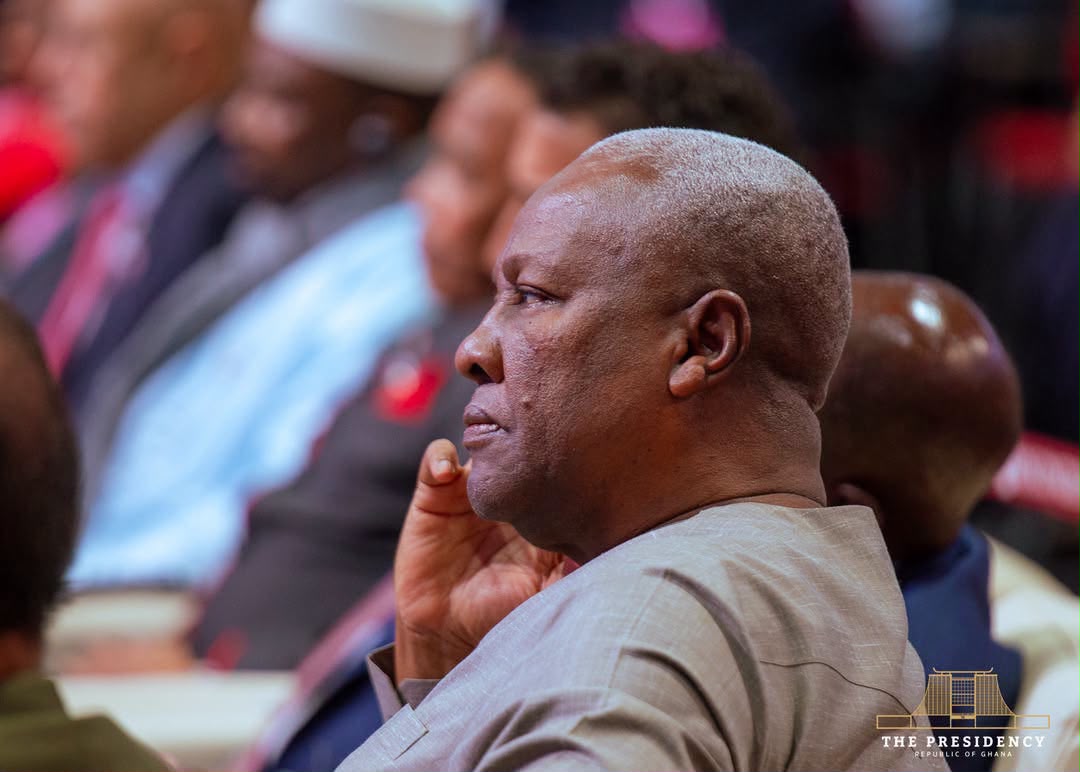
That history is significant because nuclear power development requires more than the decision to construct a generating facility.
It depends on a foundation of scientific knowledge, specialised human resources and institutional capacity capable of supporting the technology throughout its operating life.
The transition from a research reactor to a commercial nuclear power station, however, represents a substantial change in scale and responsibility.
A research reactor supports scientific and technical activities, while a nuclear power station is intended to generate electricity for the national grid.
The latter requires extensive planning, regulatory oversight, financing, infrastructure, technical expertise and long-term arrangements for safety and waste management.
Ghana’s historical experience therefore provides a starting point for its nuclear ambitions, but it does not by itself establish readiness for commercial nuclear generation.
The challenge will be to translate the expertise accumulated over the years into the institutional and technical capabilities required to manage a nuclear power programme.
Rosatom Discussions Put Nuclear Power Back In Focus
President Mahama disclosed that Ghana has initiated discussions with Russia’s state nuclear corporation, Rosatom, on the establishment of the country’s first nuclear power station.
“We have initiated discussions with Rosatom on the establishment of Ghana’s first nuclear power station.”
The statement identifies Rosatom as a potential partner in Ghana’s nuclear power ambitions, although it does not disclose the proposed plant’s capacity, location, financing structure, construction timetable or expected contribution to the national electricity mix.
Those details will be central to determining the feasibility and economic implications of the project.
Nuclear power stations typically involve substantial upfront capital requirements and long development periods.
Their construction also requires regulatory institutions with the technical independence and capacity to oversee safety, licensing and compliance.
For Ghana, the decision must therefore extend beyond securing a technology partner. It will involve assessing the affordability of the project, the long-term cost of electricity generation, the capacity of the national grid to accommodate the plant and the country’s ability to manage the associated technical and institutional responsibilities.
The discussions with Rosatom could provide a route for exploring these requirements, but the announcement does not establish that a final investment decision or construction agreement has been reached.
The distinction matters because nuclear power is a long-term infrastructure commitment. The benefits of additional generation capacity must be weighed against the financial, regulatory and operational obligations that continue throughout the life of a plant.
Industrialisation Raises The Stakes For Reliable Power
The President’s argument for nuclear cooperation is closely connected to Ghana’s industrialisation ambitions.
Electricity is a fundamental input for manufacturing, processing, mining, commercial activity and other productive sectors. Where supply is unreliable or expensive, businesses face higher operating costs, production disruptions and constraints on investment.
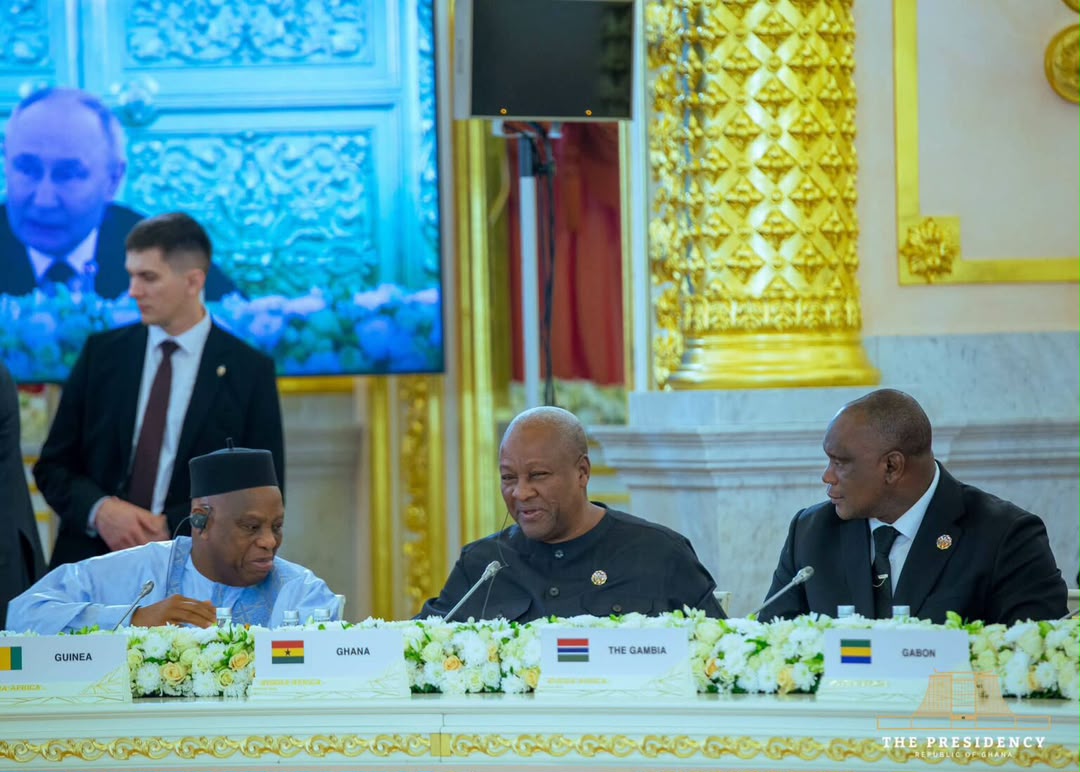
Mahama therefore framed the need for reliable and affordable electricity as a condition for industrial development.
“Industrialization requires reliable and affordable electricity, and so Ghana is pursuing a diversified energy mix, including renewables, while advancing the foundations for the peaceful use of nuclear energy.”
The statement reflects an approach in which nuclear power is being considered alongside renewable energy rather than as a replacement for it.
For Ghana, diversification is intended to broaden the sources available to meet electricity demand and reduce dependence on any single generation option.
Renewable energy can contribute to a more sustainable electricity system, while nuclear power could provide another source of large-scale generation if the technical and economic conditions support its development.
But diversification must also be financially and operationally sustainable. Adding new generation technologies does not automatically guarantee affordable electricity.
The cost of construction, financing, fuel, maintenance, grid integration and system management will influence the final price and reliability of supply.
This makes the assessment of any proposed nuclear project inseparable from the wider question of Ghana’s electricity-sector finances and long-term demand.
Russia’s Energy Advantage And Africa’s Cooperation Agenda
Mahama also presented Russia’s capabilities in renewable energy and nuclear power as areas where cooperation with African countries could produce practical benefits.
His argument is that Africa’s electricity constraints create opportunities for partnerships that bring together technology, investment and technical expertise.
For Ghana, the relationship could extend beyond the proposed nuclear power station if discussions identify other areas where Russian capabilities align with national energy priorities.
However, the President’s remarks did not identify specific renewable energy projects or investment commitments arising from the summit.
The immediate emphasis was on the potential for cooperation and the existing historical relationship between the two countries.
The broader policy question is how such partnerships can be structured to deliver lasting benefits.
Technology transfer, local skills development, institutional capacity and commercially sustainable financing would be important considerations in determining the value of any future agreement.
For African countries pursuing industrialisation, access to energy technology is only one part of the challenge. They must also build the capacity to operate, regulate and maintain the infrastructure they acquire.
Ghana’s nuclear ambitions will be no different.
The Road From Nuclear Ambition To Electricity Supply
The President’s remarks in Moscow place nuclear energy firmly within Ghana’s long-term search for reliable and affordable electricity.
The historical relationship with Russia provides a foundation for cooperation, while the discussions with Rosatom indicate that the government is exploring the possibility of developing a commercial nuclear power station.

Yet the transition from discussions to electricity generation will require a series of technical, financial and regulatory decisions.
The country will need to demonstrate that the proposed project is affordable, that the necessary institutions and expertise are in place and that the electricity produced can be integrated into the national power system on sustainable terms.
The significance of the summit engagement will ultimately depend on whether it advances those requirements.
For now, Mahama’s message is that Ghana sees Russia as a potential partner in addressing one of Africa’s persistent development constraints: inadequate access to reliable power.
The 1964 research reactor established an early connection between the two countries in nuclear science. More than six decades later, the ambition is considerably larger.
The question is whether that historical relationship can now support a transition from nuclear research to commercial electricity generation—and whether the proposed partnership can deliver the reliable, affordable power Ghana needs to support its industrial future.