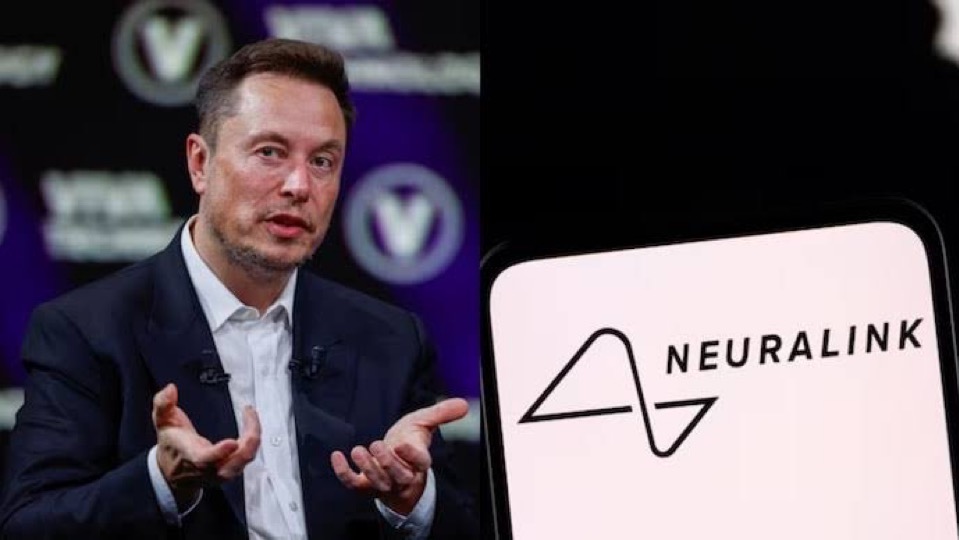
Elon Musk announced on October 30, 2026, that Neuralink’s second product, Blindsight, is ready from an engineering standpoint and is awaiting regulatory approval. The brain-computer interface is designed to restore a form of vision to people who are completely blind, including those who have never had sight.
In a post on X, Musk wrote: “Our second product is called Blindsight and it will, as the name suggests, enable even those who are completely blind or have never seen to see. It is ready from an engineering standpoint. Just waiting on regulatory approval.” The statement came shortly after he highlighted Neuralink’s first product, Telepathy, which enables high-speed thought-based communication with computers or other people.
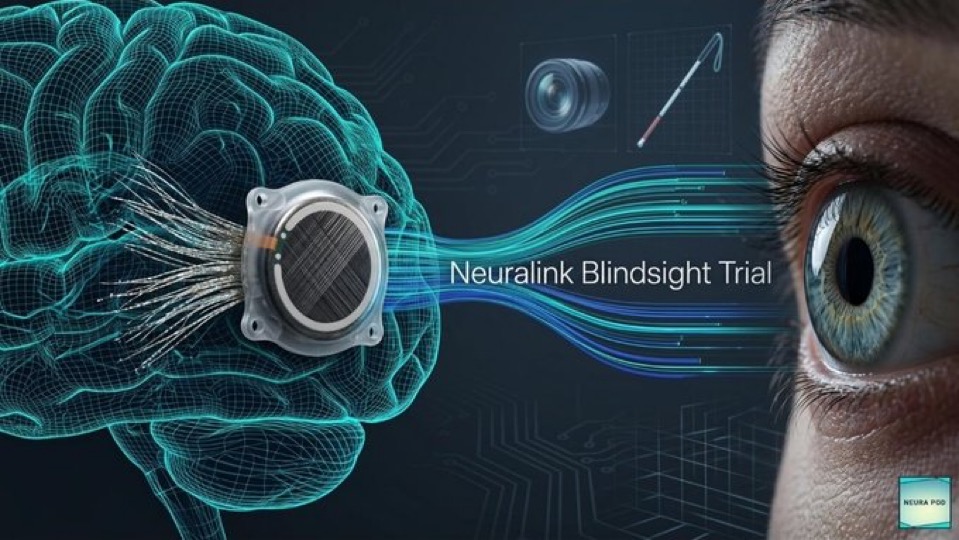
Blindsight aims to bypass damaged eyes and optic nerves entirely. A camera, typically mounted on glasses, would capture visual information from the environment. That data would be processed and transmitted wirelessly to an implant placed in the visual cortex of the brain.
The implant would then stimulate neurons to produce phosphenes points of light that the brain interprets as visual perception. Because it works directly with the brain’s visual processing areas, the technology could theoretically help individuals who lost their eyes or optic nerves, or who were born without functional vision, provided the visual cortex itself remains intact.
The device received the U.S. Food and Drug Administration’s Breakthrough Device Designation in September 2024. This status is intended to accelerate the development and review process for promising technologies that address serious conditions, giving the company more frequent interactions with regulators and priority in the review queue.
However, the designation is not an approval for commercial sale or widespread clinical use. Neuralink’s devices remain investigational, and no human implantation of Blindsight has been publicly confirmed as of late October 2026.
Musk has previously described the initial visual resolution as similar to early video-game graphics, such as those from Atari or early Nintendo systems. The longer-term goal is higher resolution that could eventually exceed natural human vision.
Preclinical work has included animal testing, with reports of implants functioning in monkeys for extended periods. Neuralink maintains a patient registry for individuals interested in future visual prosthesis trials in the United States.
About Neuralink
Neuralink, founded by Musk, has focused primarily on its N1 implant for motor control and communication. By early 2026 the company had implanted devices in multiple participants with paralysis, allowing them to control computers, cursors, and in some cases robotic arms or generate speech through thought alone.
Blindsight represents a shift toward delivering sensory information into the brain rather than only reading signals from it.
Experts note that writing information into the brain is generally more complex than decoding it, which is why progress on vision restoration has moved more slowly than the company’s motor and speech applications.
Public Reaction
The announcement has drawn attention from both medical communities and the public. Advocates for the blind see potential in any technology that could expand independence and quality of life. At the same time, researchers emphasize caution.
Restoring useful vision involves far more than creating spots of light; it requires the brain to interpret spatial relationships, movement, contrast, and eventually more complex scenes. Early results, if and when human trials begin, are expected to be limited and will require extensive training and adaptation by users.
Regulatory timelines remain uncertain. While the Breakthrough Device pathway can shorten review periods, Neuralink must still demonstrate safety and effectiveness through clinical data before any commercial deployment.
The company has not released a specific date for the first human Blindsight implant, though earlier statements had pointed to possible procedures within months of regulatory clearance. As of the latest public information, the vision study is still listed as upcoming rather than active.
Neuralink continues to expand its manufacturing capacity and surgical automation capabilities at its facilities, including work toward higher-volume production of implants and more streamlined procedures. Success with Blindsight would mark a significant milestone not only for the company but for the broader field of brain-computer interfaces, which has seen growing investment and competition in recent years.
For now, the technology sits at a pivotal but incomplete stage: engineering readiness claimed by its creator, regulatory review pending, and clinical validation in humans still ahead. If approved and successful, Blindsight could offer a new pathway for people living with total blindness.
Until then, it remains a promising investigational system whose real-world impact will be determined by the data that emerge from future trials.
READ ALSO:Chairman Wontumi Advocates Prison Expansion and Dedicated Hospital for Prisoners