

The National Identification Authority (NIA) has declared that no intermediary, reseller, or third party may sell access to its national identity verification platform.
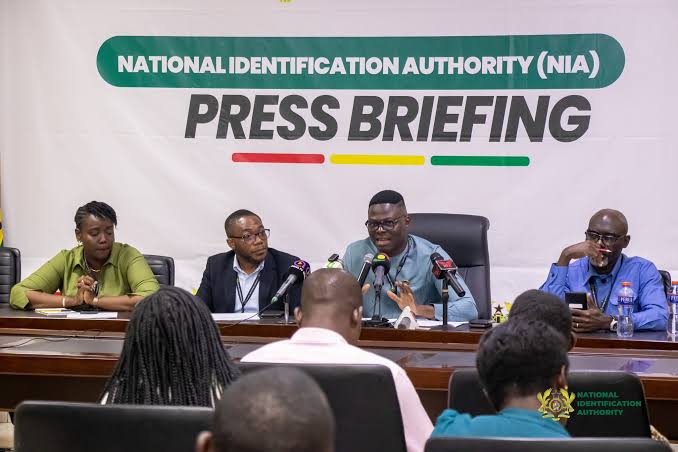
Head of Corporate Affairs Williams Ampomah Emmanuel Darlas made the declaration at a press conference at the NIA headquarters in Accra on Monday, November 2, 2026, ahead of the rollout of L.I. 2523 on November 3.
Mr Darlas explained that the law makes the NIA the only body mandated to offer the service, so every institution, public or private, must apply to the authority directly. He warned that onboarded institutions cannot sublet access to others and that violators face surcharges and punishment.
“We do not contract anybody on behalf of the National Identification Authority.”
National Identification Authority (NIA) Head of Corporate Affairs, Williams Ampomah Emmanuel Darlas
Mr Darlas used the press conference to put a position on record. The authority does not work with third-party verification providers, resellers or intermediaries to bring institutions onto its platform, he stated. Any institution that wants to access the National Identity Register for verification must deal with the NIA and go through its approved onboarding process.
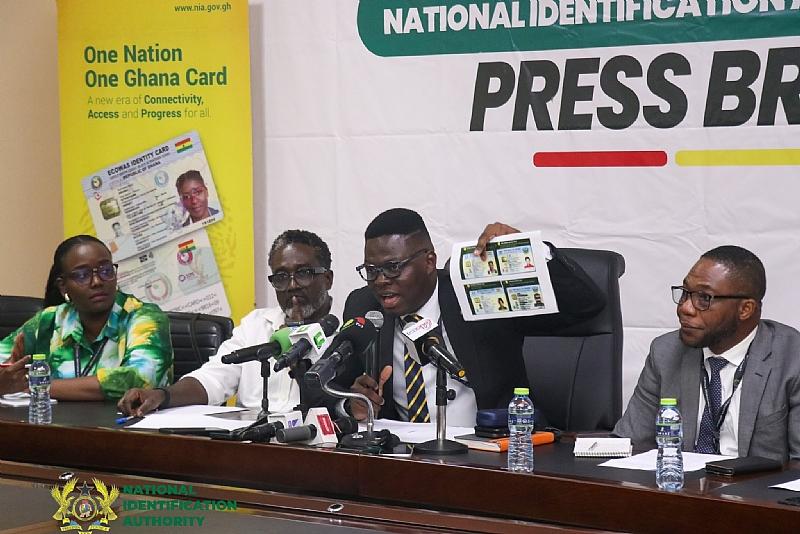
Failure to do so is an offence, he added, because the law gives the NIA alone the mandate to offer the service. The warning matters as L.I. 2523 requires institutions to verify identity biometrically in transactions where the law demands a check.
How Onboarding Works
The process starts with a request by email or through one of the authority’s hotlines. The NIA’s verification team then engages the applicant, reviews its work processes and sets out the requirements.
National Identification Authority Head of Corporate Affairs, Williams Ampomah Emmanuel Darlas, listed three. The institution must certify that it is a legally registered company doing lawful business in Ghana.
It must obtain certification from the Data Protection Commission, because the NIA will hand it the personal information of other people and needs proof that it can protect that data. Finally, the institution’s technical team and the NIA’s team connect the institution to the platform, and both sides sign a contract.
A breach of that contract carries consequences. The NIA can take the institution on and see it punished under the laws that established the authority.

No Individual May Act for the NIA
Mr Darlas extended the rule to individuals. Whether an institution is private or public, nobody may serve as an intermediary for the NIA. He disclosed that the authority has heard complaints of people moving from institution to institution and claiming to work for it.
The NIA contracts nobody on its behalf, he insisted. All meetings, he explained, take place between the authority and the institutions that want to use the platform. “Please take note, no intermediaries.”
Mr Darlas also sent a caution to institutions already on the platform. They may not hand the service to other organisations. He noted complaints that some of them let small and medium enterprises use the verification service through them.
That practice is against the law, he stated, and from tomorrow any institution that does it acts against L.I. 2523 and will be surcharged or punished.
Consequences for Offenders
An institution that refuses to use the NIA’s approved platform and is caught faces a fine of 500 to 2,000 penalty units. The NIA does not fine offenders itself. It takes them to court, which applies the penalties under the regulation.
The authority holds an administrative option as well. It can remove a culpable institution from the verification platform and make sure it is never onboarded again. The onboarding checks tie back to the data the NIA holds.
By insisting on a Data Protection certificate and a signed contract, the authority gives itself a legal hold over every institution that touches the register. That fits a wider push by government, which recently heard a call that sensitive data must be hosted on secure infrastructure.
Mr Darlas made the same point about compliance in general. Complying with L.I. 2523 is a legal obligation and not an optional requirement, he stated. From November 3, any institution that wants a verified route to the Ghana Card register has one place to apply: the NIA itself.