The Ministry of Gender, Children and Social Protection (MoGCSP) has expressed grave concern over recurring reports of indecent exposure, non-consensual recording of intimate encounters, sexual blackmail and the unauthorised circulation of intimate content, particularly on social media and other digital platforms.
The Ministry set out its position in a press statement dated Friday, November 6, 2026, issued by its Public Affairs Unit. It did not name any specific incident. It said only that it had noted the “apparent recurrence” of such practices and their implications for dignity, safety and fundamental human rights.
Ministry condemns exploitation and blackmail
The Ministry strongly condemned all forms of sexual exploitation, coercion, intimidation and blackmail. It also condemned the unauthorised recording, publication and circulation of intimate material, and warned that such practices may constitute criminal offences under Ghana’s laws.
It noted that the conduct can expose affected persons to humiliation, intimidation, psychological distress, reputational damage and other forms of exploitation.The Ministry placed particular weight on the issue of consent.
“We wish to emphasise that consent to an intimate relationship or sexual encounter does not constitute consent to recording, publication or public exposure,” it declared.
Press Release from the Ministry of Gender, Children and Social Protection
It added that no one has the right to use intimate material as a weapon. “Equally, no individual has the right to use intimate images, videos or personal information to threaten, extort, humiliate or exercise control over another person,” the statement stressed.
It closed on a similar note.”Privacy, dignity and bodily autonomy must always be respected,” it said, reiterating that no one should face humiliation, exploitation or blackmail through the misuse of intimate material.
Ministry flags ridicule on social media
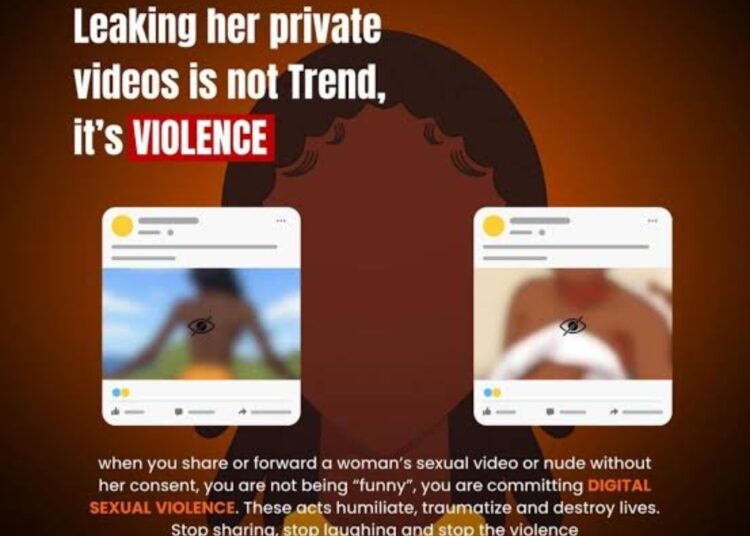
The Ministry also voiced concern about a growing tendency to circulate private and intimate material on social media, sometimes with ridicule, sensational commentary and public humiliation. It cautioned that this conduct can further violate the dignity and privacy of those affected and add to the harm they suffer.
The statement did not refer to any particular post, account or platform. It also did not give figures on the number of incidents reported or say which institutions received the reports.
Ministry warns sharers of legal consequences
The Ministry cautioned individuals against indecent exposure, sexual blackmail, non-consensual recording and the unlawful spread of intimate material. It reminded the public that deliberately circulating or republishing such material may itself attract legal consequences.
It pointed to Ghana’s legal framework, including the Criminal Offences Act, 1960 (Act 29), and the Cybersecurity Act, 2020 (Act 1038). According to the statement, these laws protect individuals against indecent conduct, sexual exploitation, sexual extortion and the non-consensual sharing of intimate images.
The statement did not cite specific sections of either Act or describe the penalties. The reminder that republishing can carry legal risk matters for ordinary social media users, who may assume that only the original poster is liable.
Ministry urges police to investigate thoroughly
The Ministry called on the Ghana Police Service and other law enforcement agencies to investigate reported incidents thoroughly and to act against those found to have broken the law. It said they should also protect victims and respect due process.
The statement did not name a police unit, give a reporting line or say whether the Ministry has been in contact with the Police Service. It also did not set out how victims would be supported if they come forward.
Ministry appeals to victims, bloggers and content creators
The Ministry urged victims and survivors, regardless of gender, not to give in to threats or intimidation. It asked them to report incidents to the appropriate authorities and to seek assistance and protection.
It also urged social media users, bloggers and content creators to show restraint and responsibility by not sharing, reposting or amplifying intimate images and videos without consent. Public interest in an incident, it argued, does not justify further violations of the privacy and dignity of those involved.
The Ministry reaffirmed its commitment to public education, responsible digital conduct and support for victims and survivors. It said it will work with relevant institutions to prevent sexual exploitation, indecent exposure, technology-facilitated abuse and related forms of violence.
Attention will turn to how the police respond to the call to investigate, and whether the Ministry follows its statement with a public education campaign or a reporting channel for victims.
READ MORE: Ghana’s Banking Sector Still Battles Elevated Credit Risks