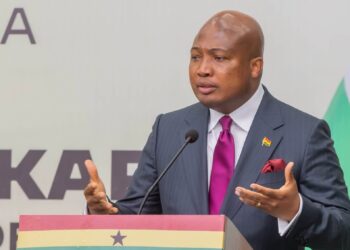
Associate Professor of Finance and Economy at the University of Cape Coast (UCC) School of Business, Seyram Kawor, has urged government to prioritise job creation, local manufacturing and productive investment in the 2027 Budget, arguing that economic growth must translate into improved living conditions for ordinary Ghanaians.
Speaking on the upcoming 2027 budget, Kawor outlined key sectors requiring targeted support, including manufacturing, agriculture, construction and services. He also called for stronger private sector participation in the proposed 24-hour economy, prudent borrowing and strict value-for-money controls on public projects.
“If we achieve economic development and macroeconomic stability without those gains reflecting in the pockets of ordinary Ghanaians, then we have not achieved anything.”
Associate Professor of Finance and Economy at the University of Cape Coast (UCC) School of Business, Seyram Kawor
Kawor argued that the budget must build on economic gains by creating opportunities for businesses and workers. He identified job creation, value addition and infrastructure development as essential drivers of stronger markets, explaining that businesses and individuals perform better when demand and commercial opportunities expand.
He expressed optimism that the 24-hour economy would increase production across the economy, while initiatives such as the Growth Ghana programme and the entertainment centre could help generate employment.

However, he stressed that macroeconomic stability alone would not be enough if households did not experience tangible improvements. The Finance Minister’s proposed new economy, he maintained, must deliver practical benefits to citizens.
Manufacturing and Agriculture Need Targeted Investment
Kawor urged government to prioritise funding for manufacturing because local production creates opportunities to process raw materials, add value and employ more people. He argued that strengthening domestic industries could also reduce the country’s reliance on imported goods.
Agriculture, which employs a significant proportion of the population, should receive similar attention. He called for a shift beyond peasant farming towards commercial agriculture, with technology supporting more efficient production and better livelihoods for farmers.
He also highlighted post-harvest losses as a concern, explaining that reducing waste would help households save money and ease food inflation over time. Lower food prices, he noted, would leave families with more disposable income.
Infrastructure Spending Must Deliver Value
Kawor further urged government to ensure that construction spending, particularly road projects under the Big Push initiative, delivers value for money.
He argued that completed roads could open up district and municipal economies, improve access and create opportunities for residents and businesses.
He cautioned, however, that projects must meet approved specifications and use appropriate materials. Contractors, he maintained, must execute their obligations to standards that ensure infrastructure remains durable rather than deteriorating within a few years.
“Every amount spent must deliver value for money,” he emphasised, warning that government could not afford reckless expenditure while managing its debt obligations.
Borrowing Must Support Productive Investment
On public debt, Kawor argued that borrowing was not inherently problematic, since governments and individuals routinely carry financial obligations. The critical issue, he explained, was how borrowed funds were used and whether investments generated returns.
He cautioned against borrowing to finance consumption or spending that failed to expand productive capacity. Instead, funds should support ventures capable of generating sufficient returns to repay loans, create jobs and strengthen the economy.
He maintained that government could continue borrowing for productive activities while managing debt, provided expenditure delivered measurable economic value.
Private Sector Should Drive 24-Hour Economy
Kawor also called for a stronger private sector role in job creation, arguing that government should concentrate on creating an enabling environment rather than taking responsibility for establishing markets and productive facilities.
He questioned whether government should be expected to create the market for the 24-hour economy, pointing to economies where private businesses lead the development of round-the-clock commercial activity.
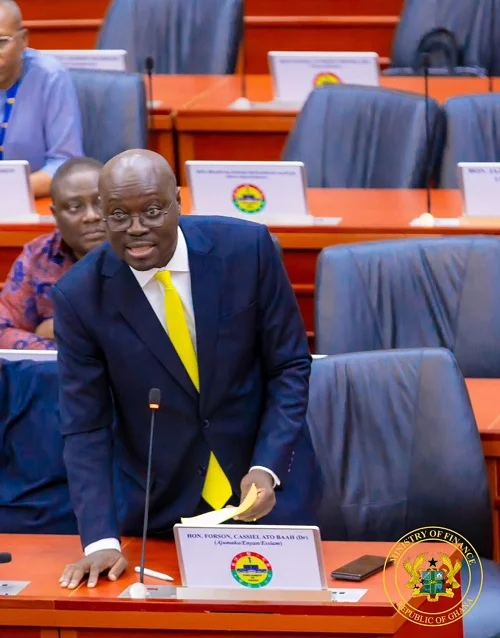
“Creating markets is not the business of government; it is the responsibility of the private sector,”
Prof. Seyram Kawor
He explained that businesses should invest, expand operations and employ workers, while government provides conditions that allow them to thrive. In return, growing enterprises would pay taxes and generate revenue for public services.
Kawor added that a stronger private sector would give government greater fiscal room to focus on essential responsibilities, including the provision of schools and hospitals.
He also stressed that banking, insurance, pensions, accounting and marketing firms remained important parts of the service sector and must support the wider economy.
He maintained that coordinated investment across productive sectors, supported by disciplined public spending, would help create jobs and ensure economic progress improves household welfare. He urged sustained attention to these priorities.
READ MORE: Bonsu Advocates Stronger Focus on Local Language Media