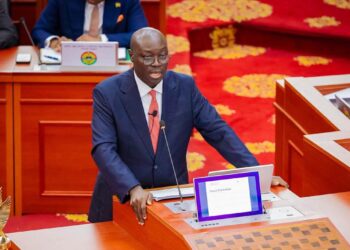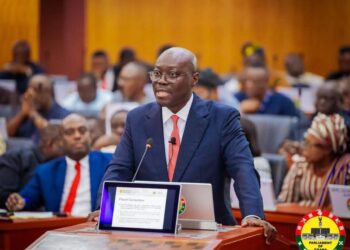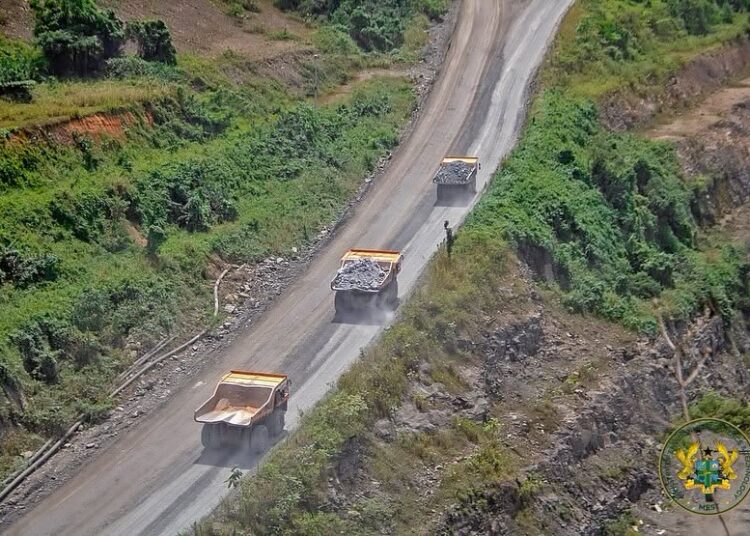
Finance Minister, Dr. Cassiel Ato Forson has announced that the Ghana Integrated Iron and Steel Development Corporation (GIISDEC) has successfully wrapped up exploration activities at the Sheini Iron Ore Project, paving the way for the government to officially launch commercial mining operations in 2027.
Delivering the 2027 Budget Statement and Economic Policy to Parliament, the Minister revealed that the state corporation has achieved pivotal operational milestones that transition Ghana’s nascent iron and steel sector from preliminary geological assessments into active industrial extraction.
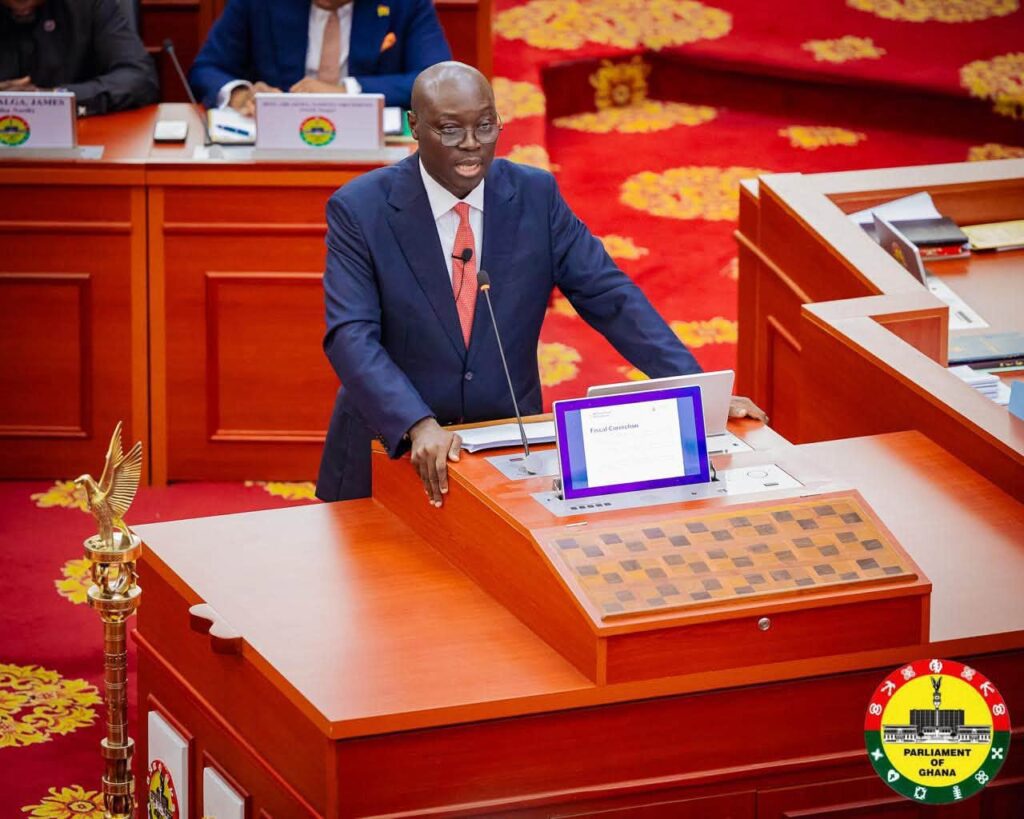
“Mr. Speaker, the 2027 outlook for the iron and steel sector includes the completion and commissioning of the GIISDEC Data Center and the formal signing of Memoranda of Understanding with new strategic partners for advanced Mineral Resource Estimations. Government will officially launch the Sheini Iron Ore mining operations and implement the Scrap Metal Policy to regulate the industry.”
Finance Minister, Dr. Cassiel Ato Forson
Beyond the landmark breakthrough at Sheini in the Tatale-Sanguli District of the Northern Region, the Finance Minister detailed sweeping progress across multiple mineral blocks and institutional infrastructure.
Specifically, GIISDEC has reached 75 percent completion on its central Data Center and successfully onboarded strategic partners to accelerate project execution.
In the Oti Region, Mineral Resource Estimation (MRE) at the Gyamurume Block has hit 92 percent completion, confirming high-grade iron ore deposits enriched with traces of nickel and copper, while a contract extension secured for Bodada Block II has verified an impressive 82 percent iron oxide concentration.
Expanding Geological Frontiers and Data Infrastructure
The transition from exploration to extraction marks a watershed moment for Ghana’s extractive industry, which has historically leaned heavily on gold, bauxite, and manganese while leaving vast domestic iron ore reserves untapped.
According to Dr. Forson, the near-completion of the GIISDEC Data Center now standing at three-quarters finished will serve as the digital nerve center for geological mapping, investor due diligence, and resource governance.
Once commissioned next year, the facility will centralize critical mineralogical datasets, significantly reducing exploration risk for international capital.
Meanwhile, the high-grade findings in the Oti Region underscore the commercial viability of Ghana’s broader iron belt.
Confirming 82 percent iron oxide at Bodada Block II alongside multi-mineral traces of nickel and copper at Gyamurume positions these concessions as prime assets for integrated steelmaking and battery-metal supply chains.
To maintain this momentum, Dr. Forson noted that the state corporation will formalize new Memoranda of Understanding with incoming strategic investors in 2027 to conduct advanced Mineral Resource Estimations across additional prospective zones.
Why Domestic Iron and Steel Development Matters
Establishing a self-sustaining iron and steel value chain is widely recognized by industrial economists as a foundational pillar for Ghana’s structural economic transformation.
For decades, the country has expended hundreds of millions of dollars annually importing finished steel products, iron rods, and heavy machinery components to feed its booming real estate, road construction, and energy sectors.
Developing local mines like Sheini directly addresses this trade imbalance by substituting expensive foreign imports with domestically mined and processed raw materials, thereby conserving foreign exchange reserves and easing persistent pressure on the Ghana Cedi.
Furthermore, an integrated domestic steel industry creates powerful multiplier effects across the broader economy.

Unlike raw mineral exports that ship value abroad, local iron ore beneficiation and smelting anchor downstream manufacturing ranging from fabrication workshops and railway infrastructure to automotive assembly and heavy engineering.
By pairing active mining at Sheini with reliable energy and rail transport expansion outlined under the government’s 2027 economic blueprint, the initiative promises to generate thousands of direct and indirect technical jobs while insulating local construction firms from volatile global supply chain shocks.
Regulating the Scrap Metal Ecosystem for Value Retention
Alongside upstream mining, the government is moving decisively to bring order and structure to the downstream secondary steel market.
Dr. Forson disclosed that the administration will roll out and enforce the Scrap Metal Policy in 2027 to properly regulate collection, trading, and smelting activities across the country. For years, local steel mills have grappled with acute raw material shortages fueled by the unregulated export of ferrous scrap and rampant vandalism of public utility infrastructure.

By institutionalizing strict licensing regimes, export controls, and quality standards under the new policy, authorities aim to guarantee a steady supply of feedstock for domestic foundries while curbing illicit trade.
Combined with the commissioning of the GIISDEC Data Center and the commencement of extraction at Sheini, the regulatory overhaul signals a cohesive national strategy to build a resilient, end-to-end iron and steel industry capable of anchoring Ghana’s next phase of industrial growth.
READ ALSO: Achimota School Celebrates Recognition on Ghana’s New Cedi Notes