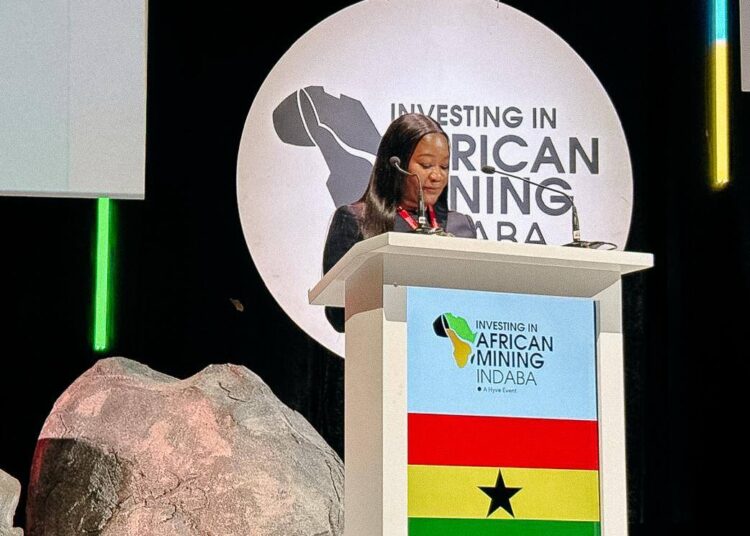
Mrs. Justina Nelson, Chief Executive Officer of the Minerals Income Investment Fund (MIIF), has disclosed that the sovereign wealth fund mobilized over GH¢9 billion in mineral royalty receipts by October 2026, surpassing its GH¢6.9 billion annual target two months ahead of schedule, while calling for deeper strategic collaborations to accelerate downstream processing and value addition across Ghana’s mining value chain.
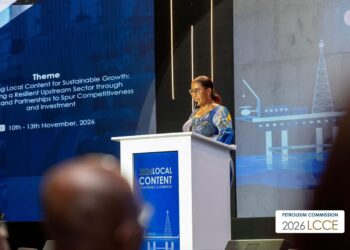
Delivering her keynote address at the Invest Ghana Summit 2026 in Accra, Mrs. Nelson attributed the milestone which exceeds the initial projection by more than GH¢2.1 billion to tighter compliance monitoring, favorable international gold prices, and Ghana’s sliding-scale royalty regime.
Having already recorded GH¢7.82 billion in the first nine months of the year, the Fund’s ten-month surge underscores a decisive turnaround in state mineral revenue collection, positioning MIIF to deploy capital into local industrial capacity rather than relying solely on raw commodity extraction.
“The Minerals Income Investment Fund (MIIF) has recorded over GH¢9 billion in mineral royalty receipts by October 2026, exceeding its annual target of GH¢6.9 billion, two months ahead of the close of the year. She also called for stronger investment partnerships to support mineral processing, value addition and the growth of Ghana’s mining industry.”
MIIF
Tightening Compliance and Maximizing Sovereign Returns
Mrs. Nelson emphasized that the Fund’s aggressive revenue performance reflects deliberate institutional reforms aimed at plugging leakages across large-scale, medium-scale, and industrial mineral operations.
Under the Minerals Income Investment Fund Act, 2018 (Act 978), MIIF is mandated to maximize the value of dividend and royalty income accruing to the Republic and manage those inflows in an accountable manner for long-term fiscal resilience.
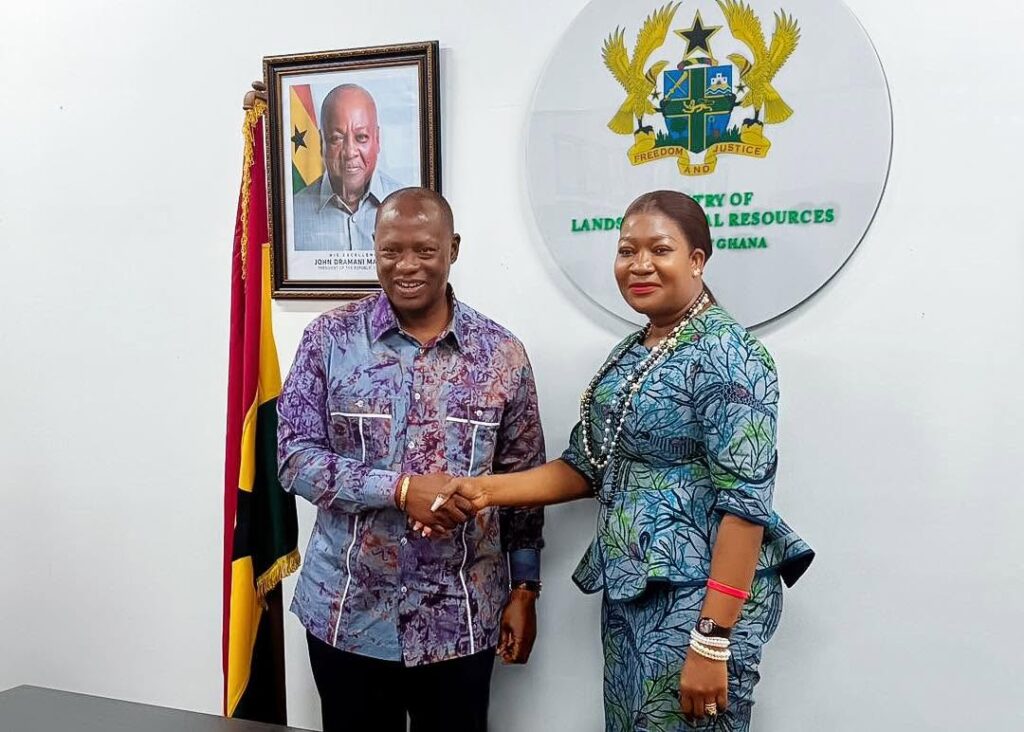
To sustain this trajectory, the Fund has enforced stricter regulatory coordination with the Minerals Commission, notably requiring quarry, sand, and salt operators to obtain MIIF clearance letters prior to permit issuance.
Speaking on the broader governance imperative, Mrs. Nelson noted that “strengthening revenue mobilisation” remains central to ensuring that finite natural resources translate into generational economic assets.
In previous financial disclosures, she similarly stressed that “enhanced stakeholder engagement, strengthened enforcement, and continued compliance interventions” are indispensable for insulating public finances against commodity price volatility and operational disruptions.
Bridging the Value-Addition Deficit in Ghana’s Extractive Sector
Despite remaining Africa’s leading gold producer and holding significant deposits of bauxite, manganese, lithium, and industrial salts, Ghana has historically captured only a fraction of its mineral wealth due to the export of unprocessed raw ores.
Industry analyses consistently show that exporting raw gold doré, bauxite, and manganese forfeits billions of dollars in potential domestic refining margins, industrial job creation, and ancillary manufacturing linkages.
Policy analysts at the Africa Center for Energy Policy (ACEP) and the Ghana Extractive Industries Transparency Initiative (GHEITI) have long argued that fiscal windfalls from elevated global commodity prices provide a narrow window to restructure the extractive economy.
Without domestic refineries, alumina smelters, and battery-grade mineral processing plants, the national economy remains vulnerable to external price shocks and imported inflation.
By channeling excess royalty inflows into co-investment vehicles, MIIF aims to de-risk capital-intensive downstream projects that private financiers often hesitate to fund alone.
Mobilizing Capital for Downstream Industrialization
Against this backdrop, Mrs. Nelson urged institutional investors, global mining houses, and domestic financial players at the summit to forge equity partnerships with MIIF across high-impact industrial segments.
She outlined priority areas including domestic gold refining, commercial iron and steel production, local manufacturing of mining consumables, and the processing of battery-grade lithium and manganese.
In her engagement with prospective financiers, the MIIF Chief Executive reiterated that “stronger investment partnerships” are vital to unlocking capital and technical expertise for local value addition.
She further observed in recent sector engagements that “deeper partnerships with international investors are key to unlocking Ghana’s mineral potential” and transforming the country from a raw material enclave into a regional industrial hub.
As Ghana consolidates its macroeconomic recovery heading into 2027, MIIF’s overperformance signals robust liquidity within the state’s mineral investment arm.
However, sector watchers note that translating the GH¢9 billion milestone into tangible economic transformation will depend on how swiftly these mobilized funds catalyze bankable processing facilities, empower indigenous mining service firms, and anchor sustainable development across host communities.
READ ALSO: Ghana Ready to Produce More and Export Globally – Ato Forson