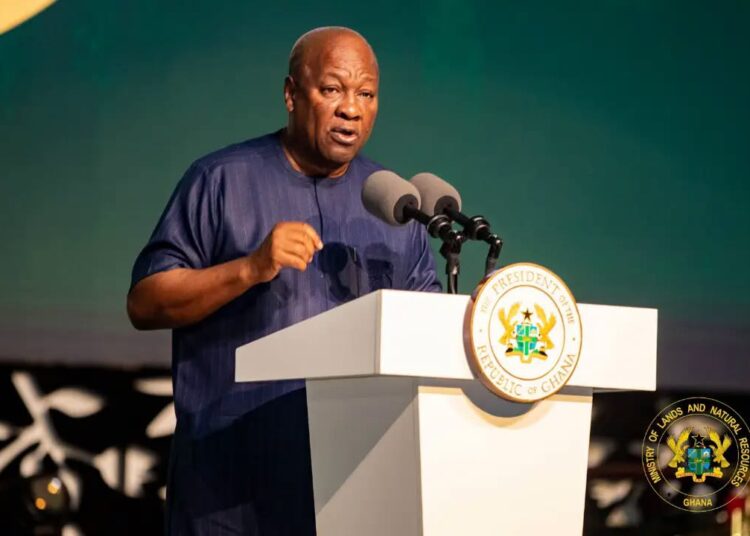
President John Dramani Mahama has highlighted the transformative financial gains of Ghana’s Gold Board (GoldBod) while urging Sierra Leone and the wider African continent to overhaul extractive governance to capture maximum economic value from their natural endowments.
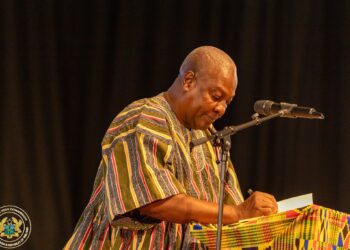
Delivering a keynote address at the inaugural West Africa Integration and Investment Summit (WAIIS) 2026 in Freetown, the Ghanaian leader emphasized that mineral wealth must transition from fueling foreign balance sheets to driving domestic prosperity.
“Sierra Leone is rich in minerals, including critical minerals, iron ore and diamonds. These resources must serve the people of Sierra Leone rather than foreign interests. When I speak about minerals, I am not referring only to Sierra Leone. I am also talking about my own country, Ghana, and the wider African continent.”
President John Dramani Mahama
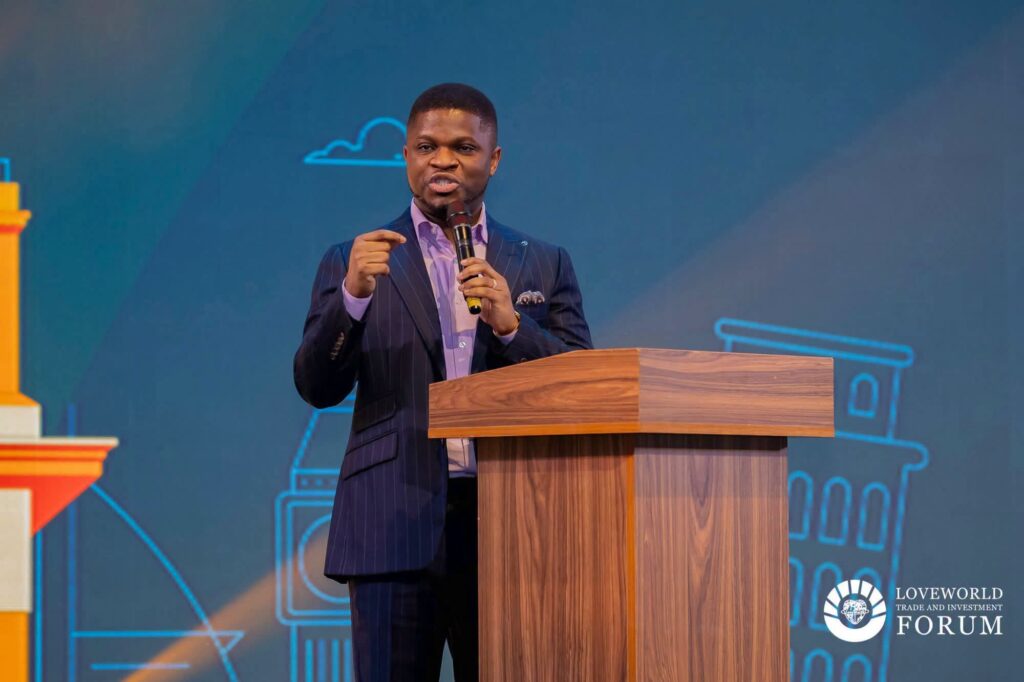
Addressing Heads of State, development finance institutions, and global investors gathered under the auspices of Sierra Leonean President Julius Maada Bio, Mahama spotlighted how regulatory reform in Ghana’s artisanal and small-scale mining (ASM) sector more than doubled official gold export revenues within a single year.
With Sierra Leone possessing vast reserves of critical minerals, iron ore, and diamonds, the Ghanaian president positioned Ghana’s centralized gold trading framework as a replicable blueprint for regional resource sovereignty and local value retention across West Africa.
Breaking the Colonial Concession Trap
For decades, mineral-rich economies across West Africa have struggled with structural leakages embedded in legacy mining frameworks.
President Mahama noted that traditional agreements often locking host nations into rigid, multi-decade concessions lasting up to 30 years have systematically exported wealth while leaving mining host communities impoverished.

He pointed out the stark inequality visible in many extractive enclaves, observing that a profitable mine often features “senior officers enjoy[ing] recreation grounds, lawn tennis courts, swimming pools and gyms, while the communities surrounding the same mine remain impoverished.”
In the artisanal and small-scale mining space, the absence of state-backed aggregation and strict export controls historically created porous borders and rampant illicit financial flows.
Prior to recent regulatory interventions, informal gold syndicates and unlicensed buyers routinely smuggled unrefined bullion out of producer nations, depriving central banks of vital foreign exchange reserves and starving national budgets of royalties and tax revenues.
The urgency for structural reform stemmed from the realization that without sovereign control over mineral supply chains, West African nations would remain trapped at the lowest tier of global value chains, exporting raw wealth while importing finished goods and battling currency volatility.
The GoldBod Turnaround: From 64 to 104 Tonnes
To arrest this hemorrhage of national wealth, Accra established the Ghana Gold Board, a centralized regulatory and trading authority designed to formalize small-scale gold production and monopolize exports.
Mahama acknowledged that when the initiative was first rolled out in 2024, it met fierce resistance from entrenched market players accustomed to moving gold across borders without state oversight.

“When we introduced the initiative in 2024, it was very unpopular,” he recounted, explaining that legislation had to be overhauled so “that no gold could be exported from Ghana without going through the Gold Board,” backed by strict punitive measures including asset confiscation and prison sentences.
The empirical results of enforcing state-led formalization have proven decisive for Ghana’s macroeconomic stability. According to figures presented by the President, Ghana’s artisanal and small-scale mining sector recorded an output of 64 tonnes of gold valued at US$4.6 billion in 2024.
Following the full enforcement of the Gold Board statutory regime, recorded production surged to 104 tonnes, injecting a remarkable US$10.8 billion directly into the Ghanaian economy.
By channeling previously unaccounted output through official state corridors, the initiative drastically curtailed smuggling, bolstered foreign currency inflows, and demonstrated that strict regulatory enforcement yields immediate fiscal dividends.
A Continental Blueprint for Resource Sovereignty
Beyond fiscal metrics, Mahama framed mineral governance as a fundamental question of national dignity and intergenerational stewardship.
Reminding delegates at the Freetown summit which convenes regional leaders around a $180 billion West African investment pipeline that natural endowments are a sovereign birthright, he declared that “African minerals must become a source of wealth and prosperity for African people”.
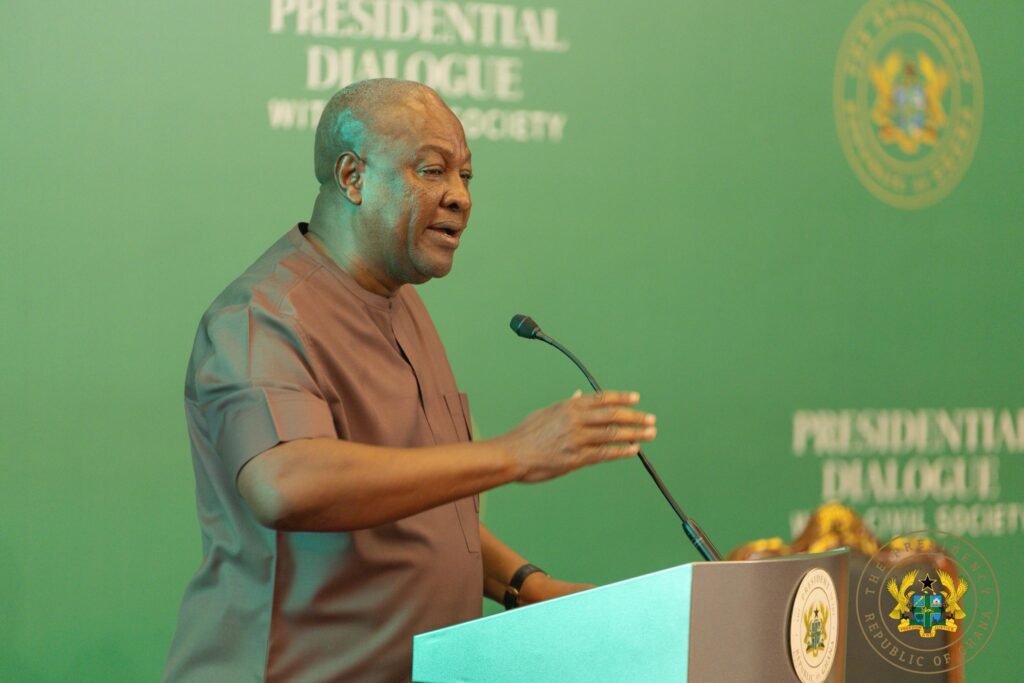
He stressed that exercising sovereignty over natural resources requires political courage to rewrite outdated laws and enforce domestic value retention. “We did not put the gold there. God gave it to us.
He gave us the diamonds, and our people must benefit from those resources,” Mahama asserted.
As West African nations seek to mobilize capital for green industrialization and strategic mineral development, Ghana’s GoldBod model stands as compelling evidence that assertive local governance can transform raw geological endowment into resilient, homegrown economic power.
READ ALSO: Ghana’s Stock Market Sheds Momentum Despite 58% Annual Gains