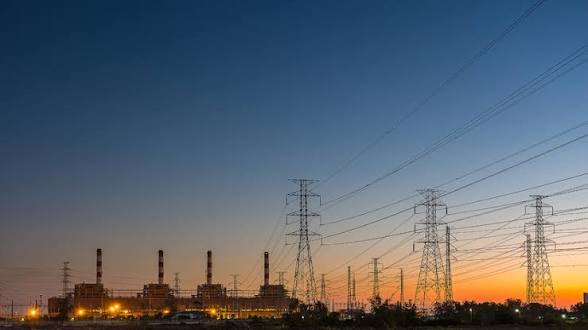
The growing demand for air conditioning is emerging as a major challenge for electricity systems worldwide, with the International Energy Agency (IEA) reporting that energy demand for cooling buildings has overtaken demand for heating for the first time in history.
The development, highlighted in the IEA’s World Energy Outlook 2026, reflects rising temperatures, more frequent heatwaves and higher incomes that are enabling more households and businesses to acquire air-conditioning systems.
The agency estimates that global cooling demand will increase by 1,700 terawatt-hours (TWh) by 2035 under its Stated Policies Scenario.
Under a more severe heatwave scenario, the increase could be 40% higher, adding another 700 TWh and placing additional pressure on peak electricity demand.
“Already today, for the first time in energy history, demand for cooling in buildings is overtaking that for heating,”
For Ghana, where cooling is becoming increasingly important in homes, offices, commercial facilities and public institutions, the findings raise an important energy-policy question: how can the country expand access to cooling without allowing inefficient air conditioners to deepen electricity demand and increase costs?
The issue is particularly significant because Ghana’s cooling challenge is not simply about generating more electricity.
It also concerns the efficiency of appliances, the cost of electricity consumed and the environmental impact of refrigerants used in cooling systems.
Ghana’s Growing Cooling Challenge
An Energy Commission report on green public procurement estimates that Ghana has approximately 1.5 million air conditioners, with about 77% of imported units falling within the lowest energy-efficiency categories.
The report also indicates that air conditioning accounts for between 60% and 80% of electricity consumption in public and commercial buildings.
These figures point to a significant opportunity for reducing electricity demand through more efficient cooling technologies.
The Energy Commission has warned that inefficient electrical appliances increase the country’s electricity requirements and can necessitate additional generation capacity, with associated fuel costs.
Its stated regulatory objective is:
“To save the economy by reducing electricity demand which necessitates additional generation capacity with its associated fuel cost.”
The implication is that Ghana could face rising electricity demand even without a corresponding expansion in industrial production or household consumption of other appliances, simply because more people require cooling and existing equipment consumes substantial amounts of power.
For an electricity system already balancing generation costs, transmission constraints and growing demand, inefficient cooling represents an avoidable source of pressure.
Efficiency Could Be Cheaper Than More Generation
The IEA’s findings strengthen the case for treating energy efficiency as a central component of electricity planning rather than a secondary environmental consideration.
Ghana has introduced minimum energy performance standards and labelling requirements for air conditioners and other electrical appliances under its energy-efficiency regulations.
The Energy Commission’s regulations require regulated appliances to meet specified efficiency standards before they can be imported and sold in the country.
However, the existence of regulations does not automatically guarantee that the market will be free of inefficient products. Effective enforcement at ports, distribution outlets and retail markets remains essential.
The Commission has consequently been working with the Customs Division of the Ghana Revenue Authority to strengthen the identification and prevention of non-compliant appliances entering the country.
In October 2026, the Commission reiterated that reducing electricity consumption through efficient appliances would help improve power reliability and reduce pressure on the national supply system.
The financial implications are also considerable. The Commission’s green public procurement report estimates that shifting to higher-efficiency air conditioners could save Ghana approximately 10,400 GWh of electricity and US$1.96 billion by 2030.
Such savings would reduce the need for additional electricity generation and help consumers manage their energy bills.
Cooling Must Also Become Cleaner
Electricity efficiency is only one part of the problem. Air-conditioning systems also use refrigerants that can contribute significantly to global warming when released into the atmosphere.
Ghana launched its Green Cooling Programme in August 2025 to encourage the adoption of more energy-efficient air conditioners using refrigerants with lower global warming potential.
At the programme’s launch, EPA Head of Climate Change and Ozone Department Francis Addo-Okyireh explained that emissions from the air-conditioning sector arise from both electricity consumption and refrigerant leakage.
“However, this growing demand comes with a significant environmental cost. The new programme aims to fundamentally shift Ghana’s air-conditioning sector towards low-carbon cooling,”
The transition therefore requires attention to appliance efficiency, refrigerant selection, installation standards, servicing and the safe disposal of cooling equipment.
Without these measures, greater access to air conditioning could increase electricity consumption while also contributing to emissions through inefficient equipment and refrigerant leakage.
Planning For A Hotter, More Electricity-Intensive Future
The IEA’s findings suggest that cooling will become an increasingly important determinant of electricity demand in the coming years.
Executive Director Fatih Birol has warned that the global energy system is undergoing structural change, saying:
“I don’t see any credible pathway for the energy world to return to the way it was before.”
For Ghana, the implications extend beyond the purchase of more efficient air conditioners. Urban planning, building design, public procurement and electricity demand management will all influence how much energy the country needs to keep buildings comfortable.
Government institutions, hospitals, schools, shopping centres and businesses could reduce their electricity requirements through better building ventilation, shading, insulation and the adoption of efficient cooling systems.
The country’s response must also consider affordability. Efficient air conditioners can reduce electricity bills over time, but their higher initial purchase prices may discourage households and small businesses from choosing them.
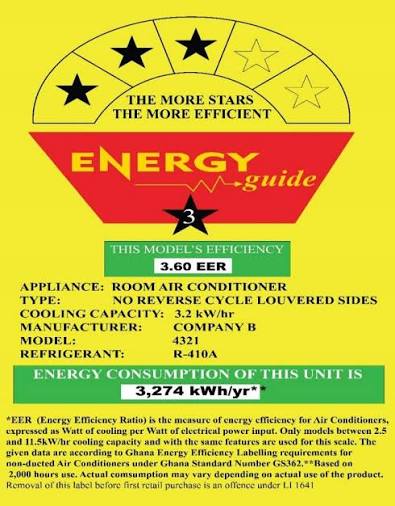
This makes access to financing, consumer education and stronger market enforcement important parts of the transition.
Ghana cannot ignore the growing need for cooling as temperatures rise and urban populations expand. But meeting that need through inefficient equipment would create additional costs for consumers and the electricity system.
The emerging challenge is therefore not simply how to provide more cooling, but how to deliver it using less electricity and with lower environmental impact.
The IEA’s latest findings offer a warning that Ghana’s future electricity planning must take that demand seriously before it becomes a more expensive problem to manage.
READ ALSO: Amputee World Cup: Ghana Beat Egypt To Reach Semis