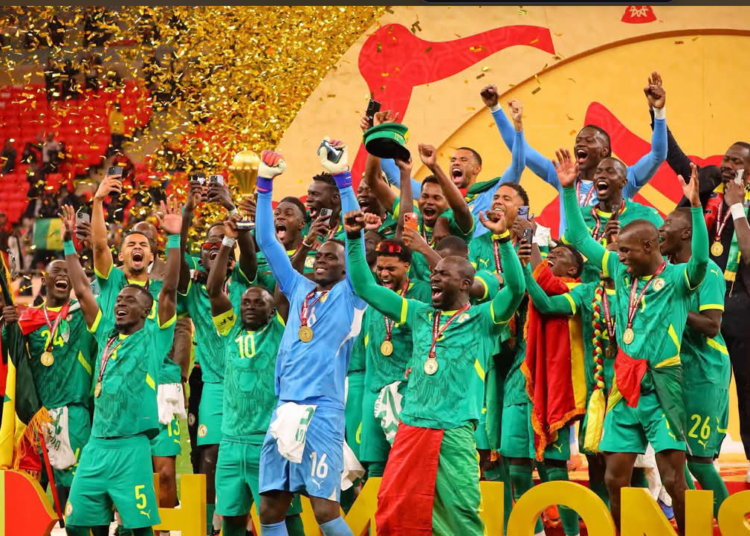
The 2025 Africa Cup of Nations (AFCON) final has produced an extraordinary sequence of decisions, with the continental title changing hands three times after the Court of Arbitration for Sport (CAS) delivered its verdict restoring Senegal as champions.
Beyond settling the dispute between Senegal and Morocco, the ruling has raised important questions about football governance, the interpretation of competition regulations and the authority of match officials in African football.
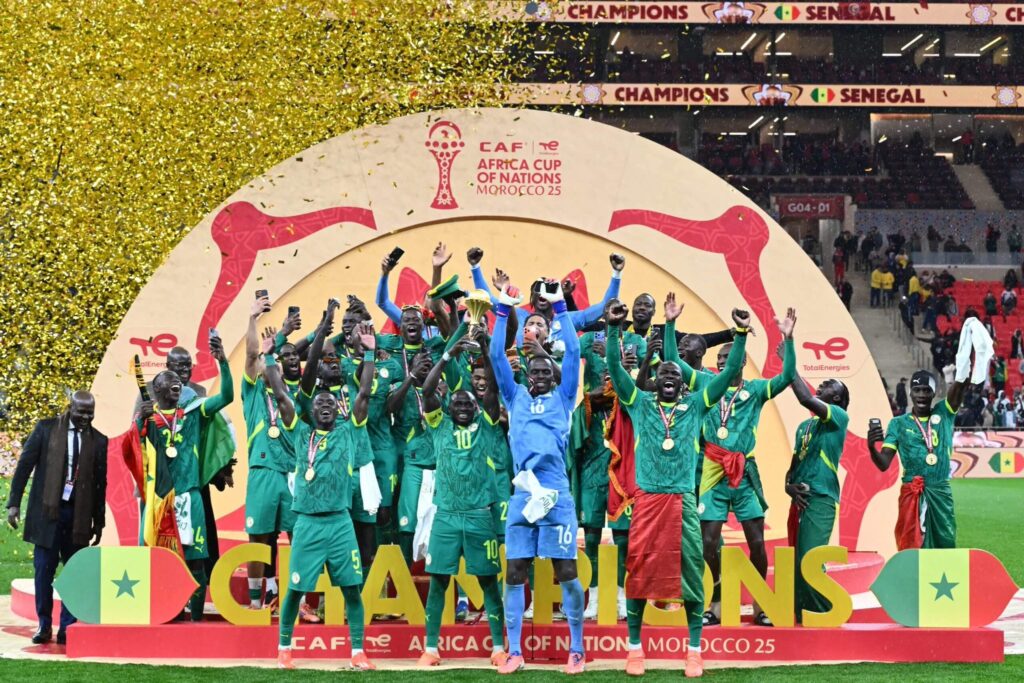
Senegal initially secured the trophy with a 1-0 victory over hosts Morocco at the Prince Moulay Abdellah Stadium in Rabat on January 18, 2026, thanks to Pape Gueye’s extra-time strike.
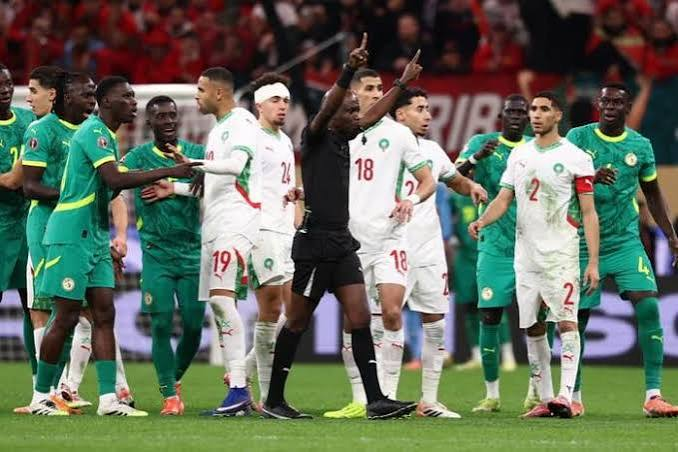
However, Morocco challenged the result, arguing that Senegal had forfeited the match after their players temporarily left the pitch in protest against a late penalty awarded to the Atlas Lions.
CAF’s Disciplinary Board dismissed the Moroccan federation’s complaint, but its Appeals Board subsequently overturned that decision, declared Senegal losers by forfeiture and awarded Morocco a 3-0 victory.
Senegal then took the matter to CAS, which on Tuesday, November 24, overturned the Appeals Board’s ruling and reinstated the original result.
Morocco has expressed dissatisfaction with the decision and vowed to pursue available legal avenues, while CAF has accepted the verdict and promised to implement it. The continental governing body confirmed that it would take the necessary measures to recognise Senegal as champions.
The ruling has divided opinion among football observers, with some questioning the legal reasoning while others believe CAS protected the integrity of the competition by refusing to replace a result achieved on the pitch with an administrative decision.
The Legal Argument Behind Senegal’s Reinstatement
At the centre of the controversy is the interpretation of the AFCON regulations governing a team’s refusal to continue a match or its departure from the field without the referee’s permission.
CAS concluded that the referee’s decision to resume or permanently abandon the final fell within his exclusive authority. Since both teams had returned to the pitch and expressed their willingness to continue before the referee restarted play, the panel determined that the match had not been abandoned.
Consequently, Articles 82 and 84 of the competition regulations, which address circumstances leading to the permanent abandonment of a match, were deemed inapplicable.

But, Lawyer Kofi Ampah disagrees with that interpretation. He argues that Senegal’s decision to leave the pitch should have triggered the “forfeiture provisions,” regardless of whether the players subsequently returned.
His position raises an important question about the relationship between a referee’s authority under the Laws of the Game and the disciplinary obligations imposed by tournament regulations. While CAS placed considerable weight on the referee’s decision to restart the contest, Ampah believes the players’ initial conduct should have carried consequences under the competition rules.
The distinction is significant. The verdict does not establish that walking off a pitch is acceptable, nor does it absolve Senegalese officials and players of responsibility. CAS acknowledged that separate disciplinary sanctions had already been imposed by CAF over the incident.
‘Football Is Won on the Pitch’
Football analyst Vitor Kwahu, speaking to The Vaultz News, welcomed the CAS decision, maintaining that the outcome of a football match should ordinarily be determined by events on the field rather than administrative proceedings.
His position reflects a fundamental principle of sporting competition: teams prepare and compete to win matches, and governing bodies must be cautious about overturning completed results unless the applicable regulations clearly justify such intervention.
Kwahu’s argument is particularly relevant because Senegal eventually returned to the pitch, the referee restarted the match and the contest reached its conclusion. Morocco had an opportunity to take the lead from the penalty spot but Brahim Diaz failed to convert, before Gueye scored the decisive goal in extra time.
For Kwahu, awarding Morocco the championship after those events would have created an “extraordinary precedent in international football.” He also believes “Senegal deserved to retain the trophy based on their performance in the final.”
That position, however, should not be confused with an endorsement of Senegal’s walk-off. The team could have faced serious disciplinary consequences while the match result remained intact. Indeed, CAS’s decision preserves that distinction.
Questions Over CAF’s Handling of the Dispute
Football enthusiast Benjamin Tetteh Ayitey offered a more critical interpretation of the controversy, suggesting that CAF’s decision to award Morocco the trophy was influenced by the country’s previous support for the continental governing body.
He believes Morocco’s alleged role in “assisting CAF on several occasions” may have contributed to what he perceives as favourable treatment.
Although the suggestion of a return favour remains Tetteh’s opinion rather than an established fact, it points to a broader concern about the independence and credibility of football’s governing institutions.
CAF’s Disciplinary Board and Appeals Board reached opposing conclusions on the same incident, with the latter’s decision ultimately being overturned by an external arbitration body. That sequence raises questions about consistency, legal expertise and the quality of decision-making within CAF’s judicial structures.
For an organisation responsible for governing football across 54 member associations, the controversy should prompt serious reflection on how its regulations are interpreted and applied.
Lessons for African Football Governance
The most important lesson from the CAS verdict is that football regulations must be clear, consistently interpreted and applied without ambiguity. Competition rules should not leave room for conflicting interpretations that allow the identity of a champion to change months after a final has been played.
The dispute also demonstrates the importance of independent arbitration in resolving conflicts between football associations and governing bodies. CAS’s intervention has reinforced the principle that decisions taken within football administration remain subject to scrutiny when challenged through the appropriate legal processes.
However, African football must not rely on external arbitration to resolve disputes that could be prevented through stronger internal governance.
CAF must examine the circumstances that allowed its two judicial bodies to reach opposing conclusions and consider whether its regulations require clarification. Member associations, meanwhile, must understand that disciplinary rules apply even when they disagree with refereeing decisions.
Senegal have their title back, but the controversy has left African football with more than a question of who deserved the trophy. It has exposed the cost of inconsistent administration and demonstrated that credibility depends not only on the decisions made but also on the fairness and consistency of the processes behind them.
The CAS verdict may have settled the 2025 AFCON final, but its biggest significance could lie in the reforms it should inspire across African football.
READ ALSO: FDA Targets Global Regulatory Recognition Through WHO Listing