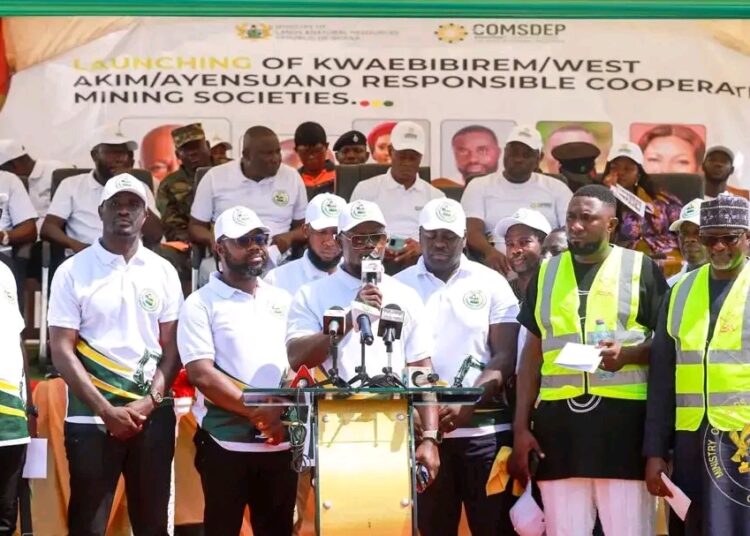
The Ministry of Lands and Natural Resources has commissioned four Responsible Cooperative Mining Societies in the Eastern Region, urging members to uphold responsible mining practices, protect the environment and ensure their host communities benefit from their operations.
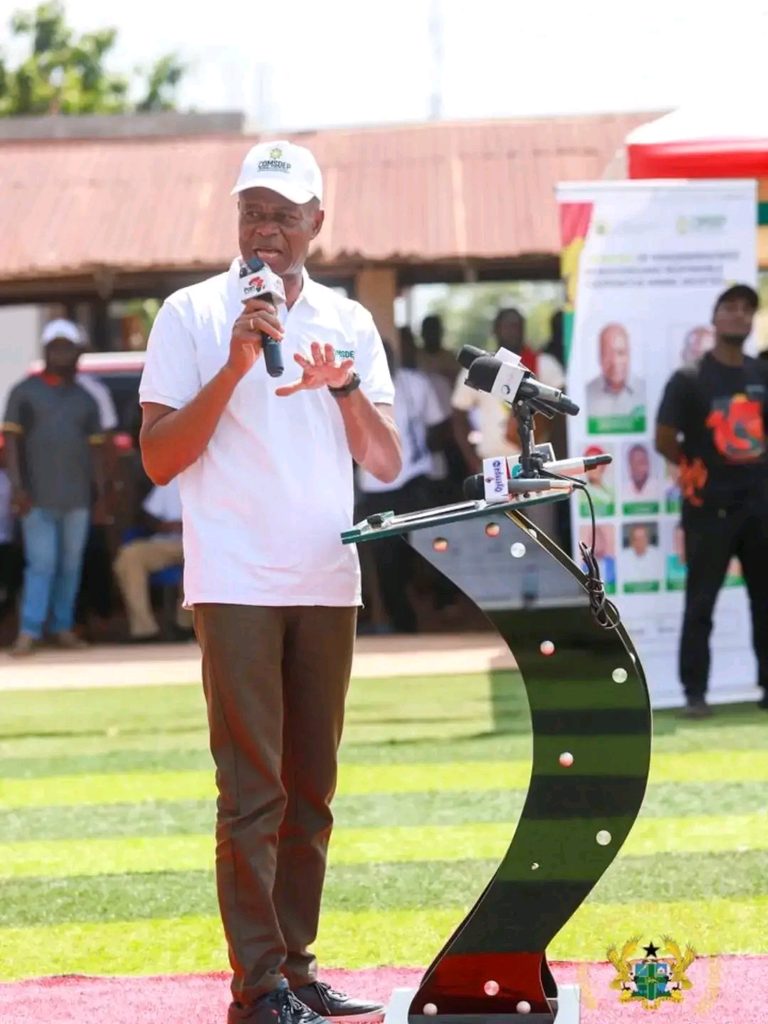
Deputy Minister for Lands and Natural Resources, Dr Yusif Sulemana, delivered the call on November 25, 2026, at a commissioning ceremony held at Akyem Abodom on behalf of the sector Minister, Emmanuel Armah-Kofi Buah.
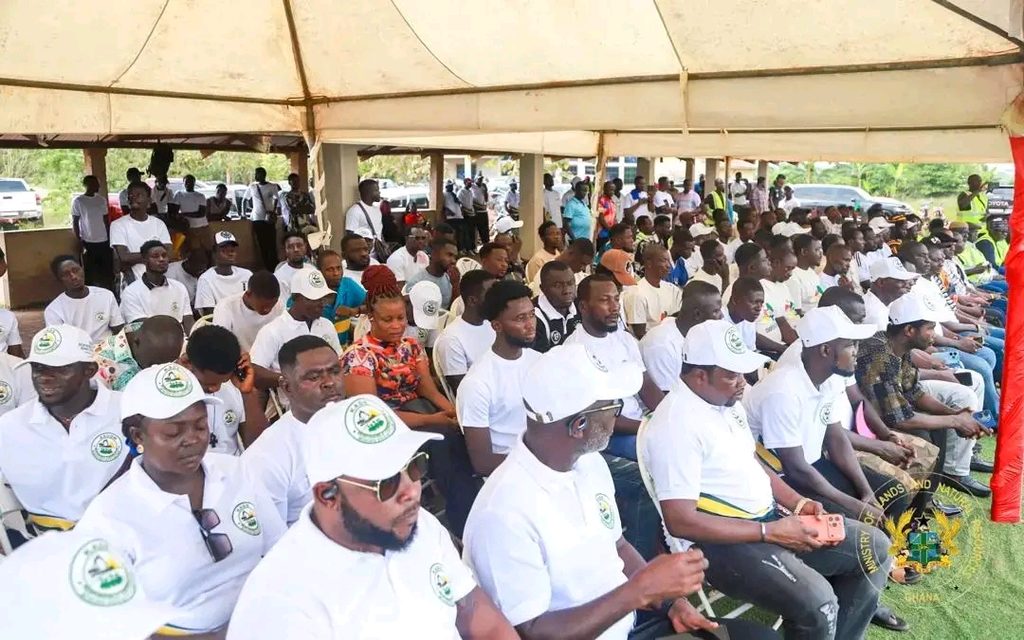
The ceremony brought together traditional authorities from the beneficiary communities, government officials and stakeholders in the mining sector, marking another step in government’s efforts to formalise small-scale mining through organised cooperative structures.
Addressing the beneficiaries, Dr. Sulemana stressed that the initiative was designed to promote lawful mining, improve accountability and create opportunities for local participation in the sector. He urged members to treat their newly acquired status as a responsibility to operate within approved concessions and avoid activities that could threaten forests, water bodies and surrounding communities.
“You are going to be given an area, and you are expected to stay within that area. If you go outside the area to mine, it means that you are trespassing, and the certificate will not save you,” he cautioned.
Deputy Minister for Lands and Natural Resources, Dr. Yusif Sulemana.
Four cooperatives receive recognition under responsible mining programme
The four societies commissioned are the Asamankese Responsible Cooperative Mining Society Limited, operating in the West Akim area; Asuom Responsible Cooperative Mining Society Limited; Kade Responsible Cooperative Mining Society Limited; and Kuano No. 1 Responsible Cooperative Mining Society.
Their commissioning forms part of the government’s broader strategy to reorganise artisanal and small-scale mining by bringing miners into legally recognised cooperative structures.
Under the Responsible Cooperative Mining and Skills Development Programme (rCOMSDEP), participating groups are expected to receive licences, professional training, technical assistance and access to support services to improve their operations.
The programme was approved by Cabinet in August 2025 to replace the Community Mining Scheme and the National Alternative Employment and Livelihood Programme, with a stronger focus on coordination, sustainable mining and community development.
Its objectives include promoting environmentally responsible mining, rehabilitating lands degraded by illegal mining and equipping young people and women with vocational and entrepreneurial skills for alternative livelihoods.
The initiative also seeks to improve mining practices through modern processing technologies, including systems designed to reduce or eliminate the use of harmful chemicals such as mercury.
Monthly monitoring planned to strengthen compliance and performance
Meanwhile, Acting National Coordinator of rCOMSDEP, Sheikh Shehu Siddiq, expressed appreciation to the government agencies and partner institutions that supported the cooperatives throughout their training.
He assured the newly commissioned societies of continued institutional support, emphasising that their development would require consistent guidance, supervision and capacity-building. Mr. Siddiq disclosed that the programme would conduct monthly monitoring exercises to assess the cooperatives’ activities, identify operational challenges and provide additional training where necessary.

The monitoring process is expected to reinforce compliance with approved mining concessions and encourage members to maintain the standards required for responsible operations.
The programme’s broader framework also incorporates environmental rehabilitation, agricultural value-chain development and community infrastructure, reflecting its ambition to ensure that mining contributes to lasting improvements in beneficiary communities.
Cooperative model aims to curb harmful small-scale mining
The cooperative approach is intended to address longstanding challenges associated with fragmented and poorly regulated artisanal mining, including environmental degradation, unsafe working conditions and the loss of productive land.
By organising miners into recognised groups, the programme seeks to improve regulatory oversight, strengthen operational discipline and provide access to shared facilities and modern mineral recovery technologies.
The Ministry has identified collaboration with the Minerals Commission and other relevant institutions as essential to ensuring that participating groups operate within the country’s mining regulations.
Community benefits expected to extend beyond mining operations
Beyond improving mining practices, rCOMSDEP places emphasis on creating sustainable economic opportunities for residents of mining communities. Its framework includes vocational training, entrepreneurship development, agricultural value chains and community infrastructure, with particular attention to young people and women.

The approach is intended to reduce excessive dependence on small-scale mining by equipping beneficiaries with alternative livelihood opportunities while supporting the rehabilitation of degraded environments.
The commissioning of the four societies in the Eastern Region therefore represents another step in the government’s effort to formalise artisanal mining and promote a sector that supports livelihoods without compromising environmental protection.
READ ALSO: Agbodza Threatens Termination for Underperforming Big Push Contractors