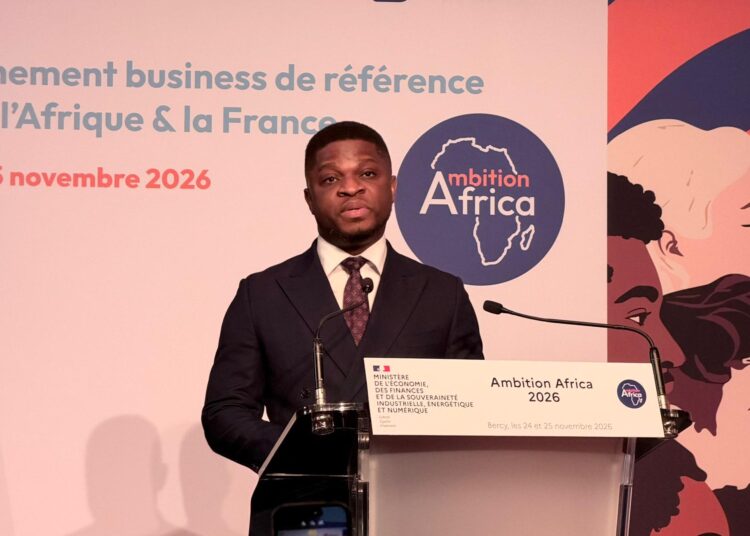
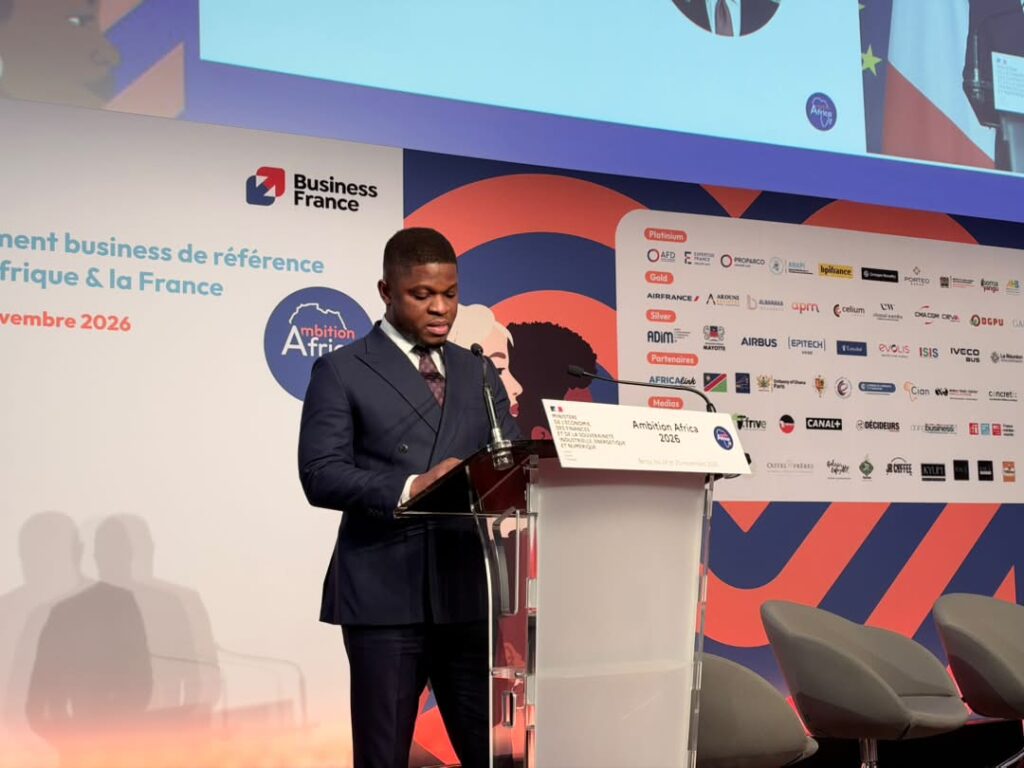
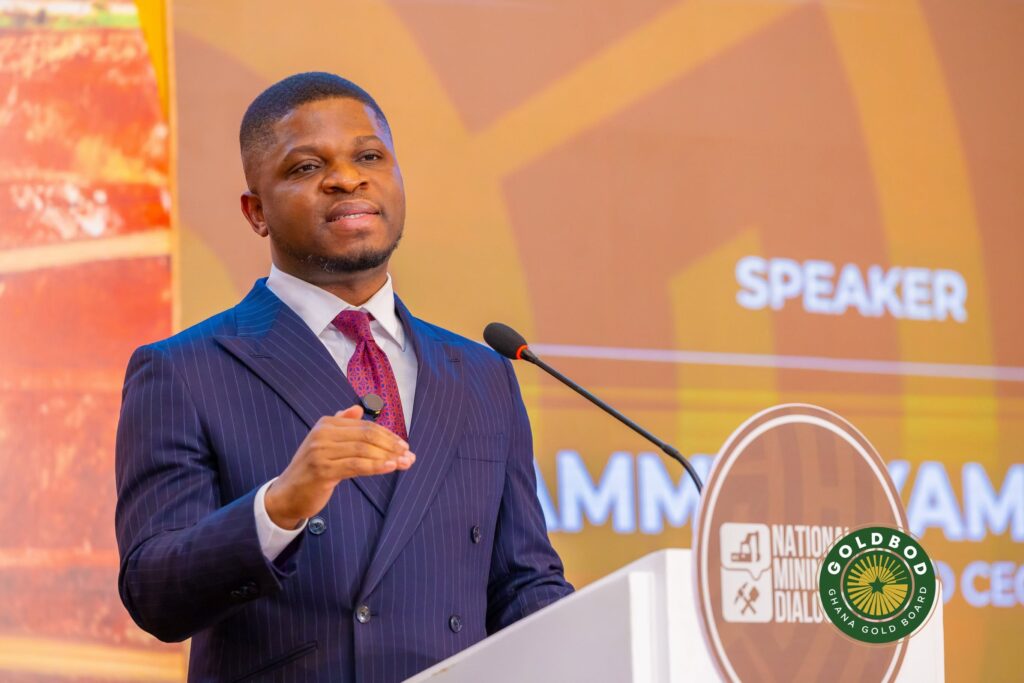
Mr. Sammy Gyamfi, Chief Executive Officer of the Ghana Gold Board (GoldBod), has issued a decisive appeal to European investors to abandon the historical model of raw mineral extraction in favor of mutually beneficial industrial value addition across the continent.
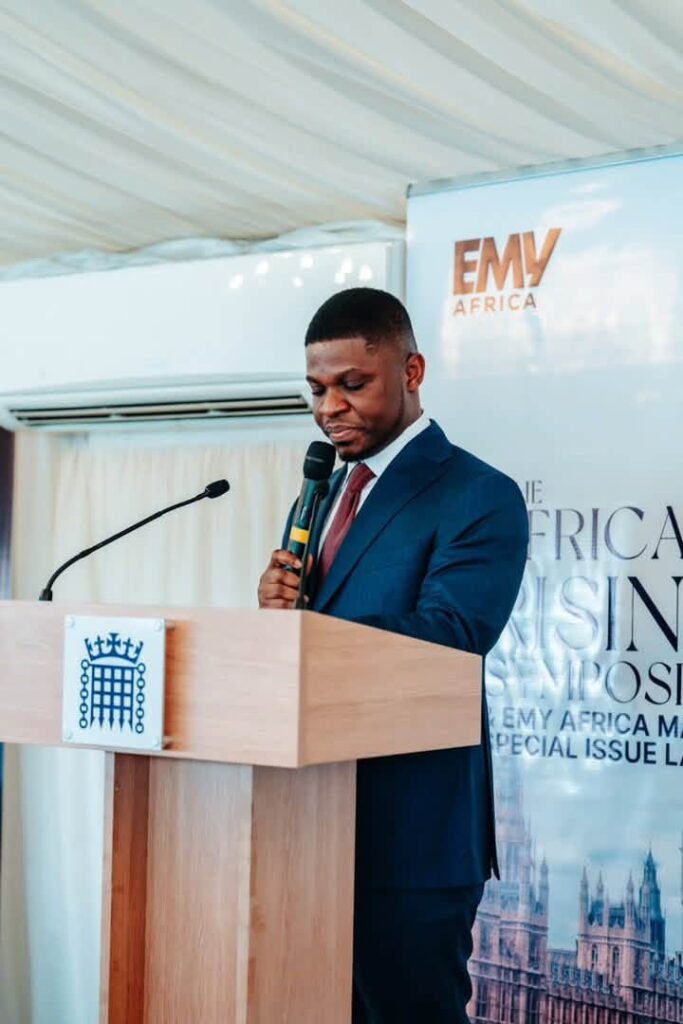
Speaking to international business leaders at the Ambition Africa Forum in Paris, France, the GoldBod chief emphasized that sustainable economic transformation requires European capital and technology to partner directly with African mineral producers rather than merely importing unrefined commodities.
This strategic push comes as Ghana accelerates regulatory and commercial reforms designed to retain maximum wealth within its domestic extractive sector.
Under the new framework, Ghana is actively transitioning from a primary exporter of raw bullion into a regional hub for refining, mercury-free processing, and high-end jewellery fabrication, opening lucrative co-investment corridors for foreign partners beginning in 2027.
“The partnership between Africa and Europe cannot only be raw materials travelling north and finished products travelling south. European capital and technology can complement African resources, skills and enterprise to build value chains that reward investors and transform our continent.”
Mr. Sammy Gyamfi,
Dismantling the Raw Export Paradigm
For decades, the structural relationship between African resource-rich nations and European industrial centers has been defined by an asymmetrical trade flow that exports jobs and fiscal upside abroad.
While bullion consistently anchors Ghana’s foreign exchange inflows, shipping unrefined gold to foreign refineries deprives the domestic economy of downstream industrial linkages and leaves state revenues exposed to external commodity price volatility.
Mr. Gyamfi acknowledged that Africa cannot achieve industrial autonomy in isolation, noting that “Africa cannot achieve true transformation without investment” because the continent urgently requires foreign capital, technical expertise, and global market access.
However, the GoldBod chief insisted that attracting foreign direct investment must no longer come at the expense of domestic industrialization.
He stressed that while investors are fully entitled to competitive financial returns within a congenial regulatory environment, “capital must understand the legitimate expectations of Africa.”
According to Mr. Gyamfi, a durable commercial alliance demands that African nations cease supplying only the raw mineral, land, and labour while high-margin processing and technological ownership accumulate exclusively in foreign jurisdictions.
Scaling Local Refining and the Ghana Gold Souk
Recent operational milestones achieved by the Ghana Gold Board demonstrate the commercial viability of domestic value retention.
Since its establishment to curb illicit smuggling and formalize artisanal and small-scale mining (ASM), GoldBod has channeled massive volumes of gold into official state-monitored pipelines, generating US$11.6 billion in small-scale exports between January and October 2026 alone.
Crucially, Mr. Gyamfi revealed that approximately 27 tonnes of ASM gold have already been refined locally in Ghana this year, a milestone accompanied by sweeping sector reforms that have generated 5,000 direct jobs.
Building on this domestic refining momentum, GoldBod is preparing to launch its next major downstream flagship: the Ghana Gold Souk initiative.
Designed as a specialized industrial hub for jewellery manufacturing and precious metal fabrication, the facility will serve as a commercial gateway for international artisans, equipment manufacturers, and luxury brands.
Extending a formal invitation to European enterprises to enter as joint-venture partners starting in 2027, Mr. Gyamfi highlighted immediate openings across responsible mining, mercury-free gold processing, refining, fabrication, and structured bullion trading.
Aligning Capital with Long-Term Industrial Legacy
The push for European partnerships aligns closely with broader macroeconomic and legislative shifts underway in Ghana’s extractive industry.
Alongside GoldBod’s commercial expansion, the government has instituted a sliding-scale gold royalty regime reaching up to 12 percent during high-price cycles and unveiled plans for dedicated 24-hour mineral processing enclaves backed by modernized rail corridors and reliable power infrastructure.
Together, these policies signal a coordinated national resolve to ensure that mineral extraction translates into permanent industrial infrastructure, technology transfer, and resilient domestic supply chains.
Addressing the broader ethos of international resource financing, Mr. Gyamfi urged European boardrooms to measure their African engagements beyond short-term balance sheet extraction.
He noted that history will ultimately judge international investors “not only by the tonnes we extracted or the huge profit we recorded on our books or in our bank accounts,” but by the enduring industries, enterprises, and thriving communities left behind.
READ ALSO: NPA–ISSER Partnership Puts Fuel Market Data in Focus