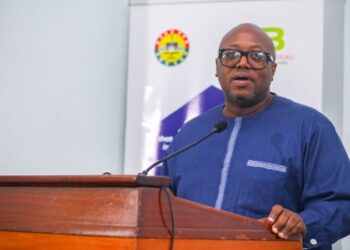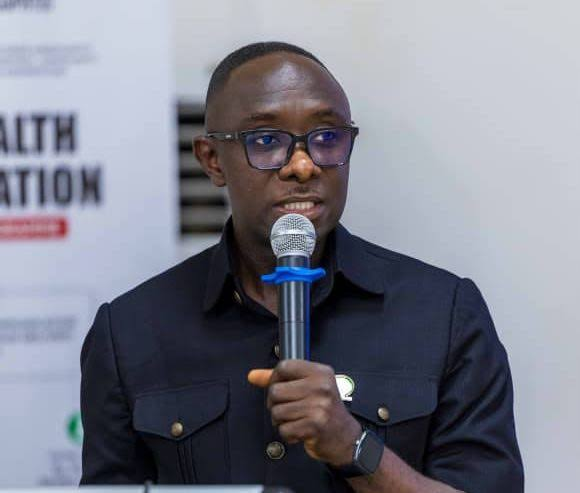
The President of the Ghana Association of Public Health Technical Officers, Joseph Owusu Asante, has urged the government to provide insurance cover and stronger welfare protection for health workers deployed to manage disease outbreaks, warning that officers continue to suffer injuries and long-term disabilities while performing official duties.
He made the appeal while highlighting the risks confronting disease control, nutrition, health information and health promotion officers during outbreak response and field campaigns.
He cited the prolonged struggle to secure assistance for a colleague injured in an official vehicle accident in 2014 as evidence of gaps in support for frontline personnel.
“The people who suffer during outbreaks are human beings. They have the same anatomical and physiological mechanisms as the very officers we are sending to control these outbreaks.”
President of the Ghana Association of Public Health Technical Officers, Joseph Owusu Asante
Mr Asante explained that officers assigned to outbreak control and surveillance operations regularly work in difficult conditions, particularly during the dry season, when they face road accidents, injuries and hospitalisation.
Outbreak response officers face field risks
He disclosed that some members had become victims while carrying out their responsibilities, with others sustaining injuries that resulted in the loss of limbs.
He questioned the availability and suitability of vehicles, motorbikes and other movement equipment for field operations, stressing that mobility must be matched with adequate protection.
“At any point in time, we should make sure that the people going to control these outbreaks are protected,” he stated, urging the government to clarify whether existing health workforce provisions include insurance for personnel deployed during public health emergencies.
Injured Officer Awaits Support for Surgery
To illustrate the consequences of inadequate protection, Mr Asante appealed for support for a colleague, Solomon Jaba, whose case had remained unresolved for about 12 years.
With the victim’s permission, he recounted that Mr Jaba was travelling in an official vehicle while supervising a campaign in 2014 when it crashed. He sustained multiple fractures, and his limbs, according to Mr Asante, had still not recovered fully as of 2026.
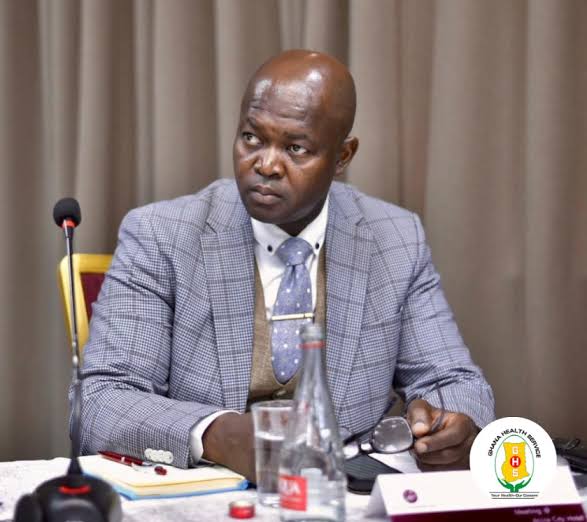
Mr Asante disclosed that Mr Jaba required approximately US$12,000 to travel to India for surgery on his leg this year. However, efforts to secure government assistance had proved difficult, leaving the association to seek support for a colleague injured while undertaking official work.
“It has not been easy even getting the government to provide support for just this single human being,”
President of the Ghana Association of Public Health Technical Officers, Joseph Owusu Asante
Government Engagements Yet to Yield Assistance
Asked whether the association had raised the matter with the Ministry, Mr Asante responded that it had made repeated representations through government channels but had received assurances that a response would follow.
He explained that the case had come before him after he assumed the association’s presidency less than a year ago, although it had circulated within government structures since the accident.
The last information available to him was that the case had been referred to MahamaCares. However, the association was still waiting for assistance.
Mr Asante questioned why an officer injured while carrying out government work should endure years of uncertainty, arguing that such experiences could weaken morale among health professionals.
He also noted that difficult working conditions and inadequate support could contribute to Ghanaian workers seeking opportunities abroad.
Public Urged to Strengthen Disease Surveillance
Beyond welfare concerns, Mr Asante urged the media, community members and local opinion leaders to support efforts to detect and contain diseases of public health importance.
He explained that diseases capable of spreading between people could become difficult to control when affected persons delayed seeking appropriate care or relied on self-medication and other forms of treatment.
The officers work at national, regional and district levels, as well as within Community-based Health Planning and Services compounds. They follow up on reported conditions, collect samples and forward them to appropriate centres for testing.
Mr Asante encouraged people experiencing possible symptoms to report to health personnel in their localities, enabling surveillance teams to identify patterns and investigate potential outbreaks promptly.
Local Reporting Can Trigger Faster Investigations
He illustrated the importance of local reporting with a hypothetical situation involving three people who developed similar conditions but attended different hospitals. Early notification allows officers to connect cases and coordinate a timely public health response across communities more effectively.

If they reported separately to Ridge Hospital, the 37 Military Hospital and Korle Bu Teaching Hospital, health personnel might treat them without immediately recognising a possible common source, he explained.
However, when people with similar conditions report to one facility within a locality, the pattern could alert surveillance officers and prompt further investigation.
“Start from your locality,” he urged, emphasising that early reporting could help activate surveillance systems and bring emerging public health threats under control. He commended public health officers nationwide and urged communities to support disease prevention.
READ MORE: Ghana TVET Reforms Target Skills, Equipment and Infrastructure