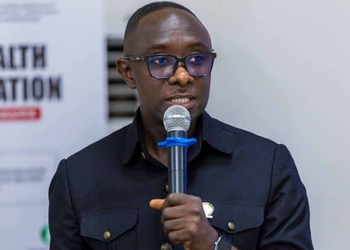
The Chief Executive Officer of the National Youth Authority (NYA), Osman Ayariga has disclosed that a lot of people applied for the maiden phase of the National Apprenticeship Programme. The overwhelming response, he explained, demonstrates the scale of demand for practical skills training among young people seeking pathways into sustainable employment.
The programme, launched by President John Dramani Mahama in April 2025, underwent stakeholder engagement and other preparatory stages before its implementation between April and October of that year. Mr Ayariga indicated that the Authority subsequently organised training across nine broad trade areas, including fashion and design, makeup artistry, carpentry, masonry and tiling.
“We had a request of over 300,000 people who were applying for the space of 10,000 people to be trained within the various trade areas.”
Osman Ayariga
Speaking in an interview, the NYA Chief Executive explained that the disparity between applications and available places reflected the considerable interest generated by the initiative. He further outlined that the training periods vary according to the trade, ranging from three months to 18 months for specialised areas such as auto mechanics and vehicle diagnostics.

To ensure consistency in the quality of instruction, the Authority engaged the Commission for Technical and Vocational Education and Training (CTVET) to conduct training for the selected master craft persons. This process included “standardising the curricula, was intended to ensure that apprentices received comparable instruction regardless of their geographical location.”
Mr Ayariga observed that uniform training standards were essential to the programme’s credibility, particularly where beneficiaries were learning similar trades in different parts of the country. Consequently, the Authority sought to establish a pool of qualified master craft persons whose expertise and certification met CTVET requirements.
Beyond the technical standards, the National Youth Authority also considered the financial circumstances of the beneficiaries, many of whom belong to vulnerable communities. The Chief Executive explained that the Authority matched apprentices with trainers within their localities to minimise transportation expenses and prevent the additional burden of relocating for training.
He illustrated this approach with the example of an apprentice living in Accra New Town, who would be linked to a qualified master craft person within the same community. This arrangement, he explained, would spare beneficiaries the cost of travelling long distances or securing accommodation elsewhere.
In addition, the government pays the master craft persons for the duration of the training, allowing them to instruct apprentices without transferring the cost of their services to beneficiaries. The Authority also recognises the tools required by trainers to facilitate practical instruction, although the transcript ends before Mr Ayariga explains the arrangements for providing them.

The programme therefore seeks to address skills deficits through structured apprenticeship training while reducing the financial barriers that could prevent vulnerable young people from participating.
NYA Outlines Measures To Tackle Youth Unemployment
In identifying economic stability as “a critical condition for reducing youth unemployment” and helping young entrepreneurs sustain their businesses, Chief Executive Officer Osman Ayariga argues that skills development and employment interventions cannot achieve their full potential.
The Authority’s position centres on the relationship between economic conditions and the capacity of young people to establish viable enterprises, particularly when inflation and currency depreciation undermine their purchasing power.
“Economic difficulties in the previous years made business very difficult for young people, and most young people had to even close down their businesses at the time.”
Osman Ayariga
The Chief Executive identified the economic environment as an important consideration in the government’s efforts to create sustainable employment. He explained that inflation could rapidly erode the value of money set aside by young entrepreneurs, leaving them unable to maintain their initial business plans.
Using the cost of importing goods as an illustration, Mr Ayariga recalled that purchasing items worth US$10,000 several years ago required approximately GH¢170,000. However, currency depreciation and the rising cost of foreign exchange could increase the amount businesses needed to secure the same goods, complicating their operations and exposing them to financial losses.
He therefore credited President John Dramani Mahama’s administration with “prioritising economic conditions that support business activity.” The Chief Executive expressed confidence that the measures taken over the preceding two years had helped establish a more favourable environment for young people seeking to operate and expand enterprises.

Meanwhile, the NYA has pursued several interventions targeting different categories of young people facing unemployment. Mr Ayariga identified the National Apprenticeship Programme as an initiative designed particularly for the vulnerable population classified as NEET, meaning those not in employment, education or training.
He explained that members of this group face considerable disadvantages when competing for job opportunities because employers frequently require educational qualifications, professional training or previous work experience. The apprenticeship initiative consequently seeks to provide practical skills to individuals who might otherwise struggle to meet conventional recruitment requirements.
In addition, the Adwumawura Programme targets young people with entrepreneurial abilities by providing training and support, including grants intended to help them establish businesses. The One Million Coders initiative, meanwhile, seeks to equip participants with competencies in coding, programming, internet operations and design.
READ ALSO: Mahama Reports Sharp Drop In Police Deaths, Pledges More Protection