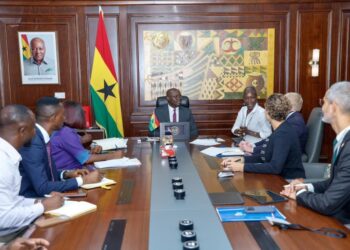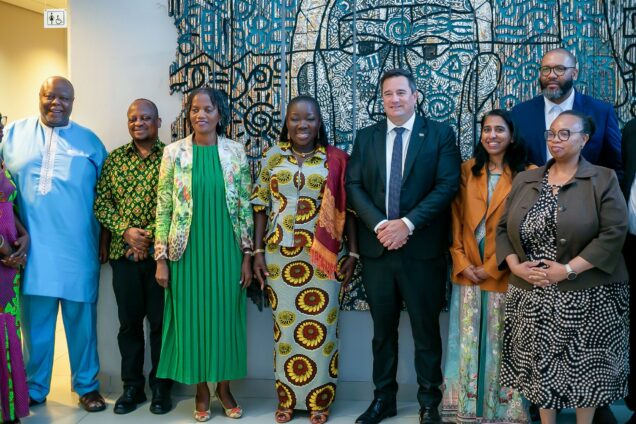
Ghana is preparing for a major investment drive as the World Bank Group, the government and development partners launch a new initiative targeting US$245 million in private investment, with job creation, trade expansion and industrial growth at its centre.
The Compact with Africa 2.0 (CwA 2.0) Ghana Pilot is designed to turn policy reforms into tangible economic opportunities by addressing longstanding obstacles confronting businesses and investors.
The initiative comes at a critical moment when Ghana faces mounting pressure to translate economic stabilisation and policy reforms into employment opportunities, stronger exports and sustainable private sector growth.
Ghana is among four countries selected for the pilot, alongside Angola, Egypt and Zambia. The programme operates under the second phase of the G20 Compact with Africa, supported by a Multi-Donor Trust Fund expected to run from 2025 to 2033.
Germany is the fund’s principal contributor, while South Africa, the G20 co-chair of the Compact with Africa, has contributed US$5 million.
World Bank Targets Investment Beyond Policy Reforms
Under a One World Bank Group approach, the initiative brings together the World Bank’s policy and reform support with the International Finance Corporation’s private sector expertise and investment capabilities.
Its four work streams are expected to mobilise approximately US$245 million in private investment, while strengthening the capacity of Ghanaian businesses to expand, compete and create employment.
Rob Taliercio, Division Director at the World Bank, stressed that the initiative would be judged by measurable economic outcomes rather than policy documents.
“The success of the pilot will not be measured by the number of reports produced. It will be measured by whether reforms become operational, investment opportunities move forward and firms, including MSMEs, are better able to grow, export and create jobs.”
Rob Taliercio
The urgency is underscored by Ghana’s employment situation. Preliminary findings from the World Bank Group’s forthcoming Country Growth and Jobs Diagnostic indicate that the country’s working-age population increased by 3.7 million between 2012 and 2024, while the economy generated only 435,000 net jobs.
This gap exposes the difficulty of converting economic growth into sufficient employment opportunities.
Trade Reforms and Investment Climate Take Centre Stage
One major component of the pilot will focus on modernising Ghana’s trade policy to reflect developments under the African Continental Free Trade Area, digital trade, services and international export standards.
The World Bank Group will support the Ministry of Trade, Agribusiness and Industry in revising the National Trade Policy, with a detailed implementation plan, performance indicators and monitoring framework.
The intervention targets significant inefficiencies. Import clearance currently takes an average of 23 days, while trade costs account for approximately 24 per cent of export value.
The investment climate work stream will also help operationalise Ghana’s new investment framework through clearer regulations, published service standards, transparent fees and improved investor services.
Together, these two interventions are expected to unlock approximately US$200 million in additional private investment.
TransVolta Corridor Emerges as Major Investment Opportunity
Another ambitious component involves preparing the proposed 762-kilometre TransVolta Logistics Network for investment.
The multimodal corridor is expected to connect Tema Port through Lake Volta to northern Ghana and markets across the Sahel.
Studies suggest the project could reduce transit times by between 25 and 30 per cent, potentially transforming the movement of goods and strengthening Ghana’s position as a regional trade and logistics hub.
The work stream targets approximately US$30 million in private investment.
Garment Industry Eyes US$1.5bn Export Opportunity
Ghana’s textile and garment industry is also expected to benefit from the initiative through IFC’s Better Work approach.
The programme will train managers and supervisors in productivity, workplace practices and labour standards while connecting manufacturing firms with potential buyers and investors.
The opportunity is substantial. Ghana’s garment exports could expand up to 43-fold, generating as much as US$1.5 billion.
Leonardo Iacovone, Practice Manager for Finance, Competition and Investment at the World Bank, emphasised accountability in delivering the programme.
“We want to be kept accountable. We look forward to being judged on the basis of the results of this work, based on the investment enabled, the jobs created, and the days and cost cut at the border.”
Leonardo Iacovone
Government Pushes Industrial Transformation Agenda
Trade Minister Elizabeth Ofosu-Adjare said the initiative supports government’s industrial ambitions, pointing to non-traditional export earnings of US 5 billion in 2025 and a target of at least US10 billion by 2030.
She also highlighted the Ghana Investment Promotion Authority Act 2026 and the proposed Business Regulatory Reform Bill.
“The compact can help our institutions apply these reforms consistently so that an investor experiences one clear process rather than many. For this partnership to succeed, businesses must feel the difference.”
Elizabeth Ofosu-Adjare
Germany’s Deputy Minister for Economic Cooperation and Development, Dr. Bärbel Kofler, called for investment that delivers meaningful social and economic benefits, particularly for women.
“It is not only about mobilizing capital; that is important, but it is also about what this capital at the end of the day is really delivering. No society can afford to leave 50 percent of their population behind, so please invest in women.”
Dr. Bärbel Kofler
The pilot ultimately faces a demanding test: whether improved regulations, cheaper trade and stronger investment translate into productive businesses and meaningful employment.
READ ALSO: GoldBod Woos Global Investors To Boost Ghana’s Gold Refining