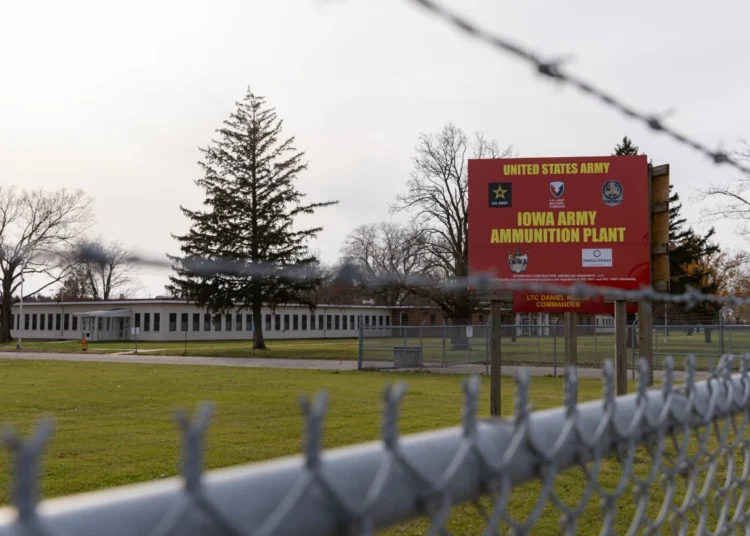
The US Army has destroyed the country’s entire stockpile of lead azide in a controlled explosion at an ammunition plant in southeastern Iowa, citing the risk that the deteriorating explosives could detonate spontaneously as temperatures fell.
The operation, which took place at the Iowa Army Ammunition Plant in Middletown, involved approximately five tons (4.54 metric tonnes) of lead azide, a chemical used in the production of munitions.
The controlled detonation followed months of planning and legal challenges over potential health and environmental consequences, particularly the risk of lead dust spreading into nearby communities.
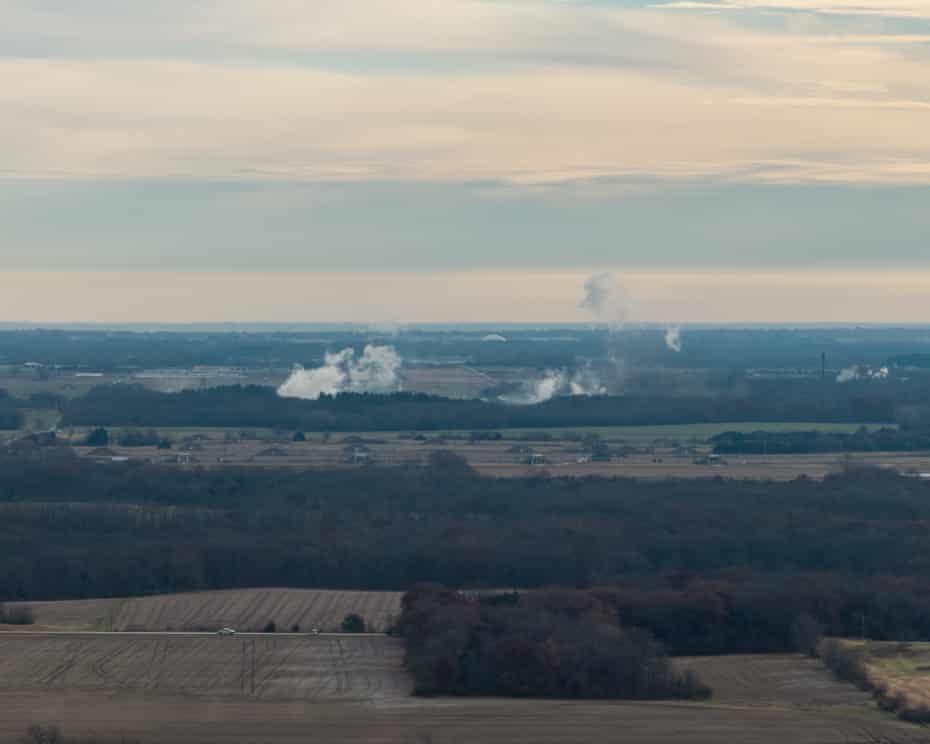
A federal appeals court ruling on Monday cleared the way for the Army to proceed after environmental groups sought to halt the operation.
After the detonation, US President Donald Trump noted on Truth Social, “Early reports from Iowa are that the Army’s mitigation efforts have far exceeded expectations.”

Missouri Governor Mike Kehoe also said preliminary assessments by federal partners and Iowa officials suggested that the safety measures had been effective.
“The initial analysis from our federal partners and Iowa officials indicates that the mitigation measures appear to have been successful and the explosion was well-contained. Our state agencies will continue monitoring efforts.”
Mike Kehoe
Deteriorating Explosives Prompt Destruction
The decision to destroy the stockpile followed an inspection in March, when staff at the Iowa ammunition plant discovered that the lead azide had partially crystallised.
The condition made the material increasingly sensitive to friction and cold temperatures, raising concerns that it could explode without warning.
The national stockpile had been transported to the Iowa facility from military bases across the United States in 2009. According to Robert Cekada, Director of the Bureau of Alcohol, Tobacco, Firearms and Explosives, the chemicals had been stored in barrels in case the military needed them for future use.
Following the discovery, the Army assembled a team of specialists to assess the risks and determine how the material could be safely disposed of.
Officials concluded that alternative methods, including thermal treatment and neutralising the contents of the drums, presented greater safety risks than a controlled explosion.
In a video released today, Assistant Secretary of the Army Jordan Gillis explained why the military had chosen the detonation.
“The choice that we faced here was between a spontaneous, uncontrolled detonation of dangerous material or a controlled detonation where we could choose the time, and place to optimize the conditions and deliver the best result not just for our operations, but for the safety of the public and the surrounding communities.”
Jordan Gillis
Major General Eric Shirley, who led the Army’s operation, also defended the decision, saying the risks associated with leaving the explosives in storage had become too serious to ignore. “Inaction is no longer an option,” he said.
The planned explosion prompted concerns about the potential release of lead dust and its effects on public health and the environment.
Lead exposure can pose serious health risks, particularly to children and pregnant women. Residents and environmental groups raised concerns that a toxic dust cloud could reach nearby homes, farms and other communities.
Officials encouraged people living within five miles (eight kilometres) of the ammunition plant to evacuate ahead of the operation to reduce their exposure to airborne lead.
The Army established two-storey sand barriers around the detonation bunkers and used ballistic gels and foams to absorb lead dust. It also planned to douse the materials with thousands of gallons of water to help limit the spread of the plume.
The operation faced legal opposition from environmental groups seeking to prevent the explosion over concerns about its potential consequences.
However, a federal appeals court ruled on Monday that the US Environmental Protection Agency had adequately incorporated safeguards intended to minimise the dispersal of lead dust, allowing the Army to proceed.
The detonation had initially been scheduled for the previous Friday but was postponed three times amid public opposition and efforts to allow additional safety preparations and more favourable weather conditions.
EPA Monitors Air, Land And Water
Weather conditions were an important consideration in determining when the explosion would take place.
Officials expected Wednesday’s winds to carry the resulting plume southwest towards Missouri and away from Burlington, a nearby city of fewer than 25,000 residents along the Mississippi River.
However, hundreds of homes and farms remained potentially exposed to the path of airborne lead particles, prompting continued concern among residents.
The Environmental Protection Agency said that it had collected more than 1,200 air, land and water samples around the ammunition plant before the explosion to establish baseline lead levels.
The agency also said it would continue testing during and after the detonation, with air quality measurements reported every five minutes.
According to the EPA, no lead had been detected in the air before the explosion, although officials anticipated a brief increase following the detonation.
Tom Croci, the agency’s Associate Administrator for national security and operations coordination, said protecting affected communities remained its main priority. “It is the top priority of this agency to ensure impacted residents can swiftly be and feel safe and comfortable in their homes, at their schools, in recreational spaces, and in their community,” Croci said.
The EPA also pledged to maintain its presence in Iowa. “EPA will continue our monitoring efforts during the scheduled, controlled detonation, along with immediate and continuous post-event sampling and subsequent remediation as necessary following the detonation,” the agency said.
Although preliminary statements from Trump and Kehoe indicated that the explosion had been contained, the environmental monitoring programme remains important in determining whether lead dust spread beyond the controlled site and whether further remediation will be required.
READ ALSO: CDD-Ghana: Corruption Steals Classrooms, Jobs and Opportunities From Ghanaian Youth