The number of confirmed Ebola cases in the Democratic Republic of Congo (DRC) has surpassed 12,000, with nearly 6,000 deaths recorded as health authorities and international responders struggle to contain the country’s second-largest and deadliest outbreak on record.
Recent government data show that confirmed infections have reached 12,021, while the death toll stands at 5,904.
The outbreak, caused by the rare Bundibugyo species of the Ebola virus, was declared in mid-May in Ituri province in northeastern DRC and has since spread to eight of the country’s 26 provinces, that is Ituri, North Kivu, South Kivu, Haut Uélé, Bas Uélé, Tshopo, North Ubangi and South Ubangi.
The current epidemic has become the second-largest and deadliest Ebola outbreak on record, surpassed only by the 2014–2016 West African epidemic, which infected more than 28,600 people and claimed over 11,000 lives in Guinea, Liberia and Sierra Leone, of which experts believe no lessons have been learnt even to date.
According to Prof. Catherine E. Bolten, an Ebola expert and researcher at the University of Notre Dame, “everything that went wrong in the West Africa outbreak is also going wrong in the DRC outbreak.”
The rapid spread of the Bundibugyo virus has been attributed to delayed detection, ongoing armed conflict and overstretched health services, which have complicated efforts to identify infections and isolate patients.
Unlike some other Ebola-causing virus species, Bundibugyo has no approved treatment or vaccine, leaving responders heavily reliant on public health measures to interrupt transmission.
Although virus activity reportedly peaked in August, confirmed cases have remained at approximately 460 to 480 per week since late September, indicating that transmission has not declined substantially.
Contact Tracing and Violence Hamper Response
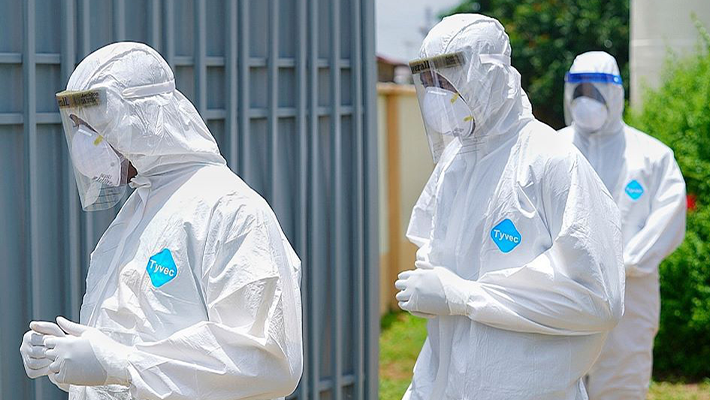
A major challenge confronting responders is the low proportion of new infections linked to people already known to health authorities.
According to data presented by Africa CDC earlier this month, only 15% of new cases were identified through known contacts, suggesting that many transmission chains continue to go undetected.
Earlier Africa CDC findings showed that just 11% of confirmed cases recorded between May and November had originated from contact lists, far below the agency’s target of 95%.
The failure to identify contacts early has made it difficult to monitor exposed individuals, isolate infections before they spread and establish where new cases are emerging.
Security conditions have further disrupted the response, with escalated violence in Ituri forcing health workers to shelter inside a hospital maternity ward and interrupting medical services.
WHO Director-General Tedros Adhanom Ghebreyesus had also stated that the violence had affected both hospital operations and the wider Ebola response, putting patients, families and healthcare workers at serious risk.
The World Health Organization (WHO) has also confirmed 87 attacks on healthcare workers and facilities in the DRC since January, with the frequency of attacks increasing since late October.
Vaccine Trials Offer Hope Amid Uncertainty

Meanwhile, scientists are working to develop vaccines against the Bundibugyo virus, with three vaccine candidates undergoing trials that could produce important progress in early 2027.
However, researchers have warned that insecurity and misinformation in affected areas could slow the enrolment of participants needed for large-scale studies.
Richard Hatchett, Chief Executive of the Coalition for Epidemic Preparedness Innovations (CEPI), has identified the security situation as a major obstacle to vaccine research.
He stated, “there’s lots of conflict, there’s lots of misinformation,” adding that the speed at which researchers could enrol the required number of participants remained a key uncertainty.
The vaccine trials include candidates developed by Oxford University and Moderna, alongside the Ervebo vaccine, which targets a different Ebola virus species.
Despite the potential for new vaccines, public health experts have stressed that medical advances alone will not bring the outbreak under control without stronger contact tracing, community engagement and improved access to healthcare.
The continued rise in infections and deaths demonstrates the urgency of addressing both the medical and security challenges facing responders, as the epidemic remains uncontrolled and transmission continues across affected communities.
READ ALSO: Mining Golden Age vs Galamsey Golden Age: Abu Jinapor Critizes Gov’t for Poor Mining Records