Ghanaian businesses looking to tap into China’s vast consumer market have been challenged to rethink their export strategies, strengthen market research and establish credible international trade relationships before pursuing opportunities under the Ghana-China zero-tariff arrangement.
Prudential Bank Limited is urging small and medium-sized enterprises (SMEs) to improve their export readiness, warning that access to a potentially lucrative market will mean little without proper preparation, reliable buyers and convincing business plans.
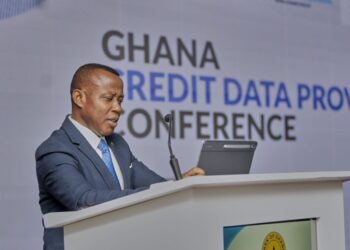
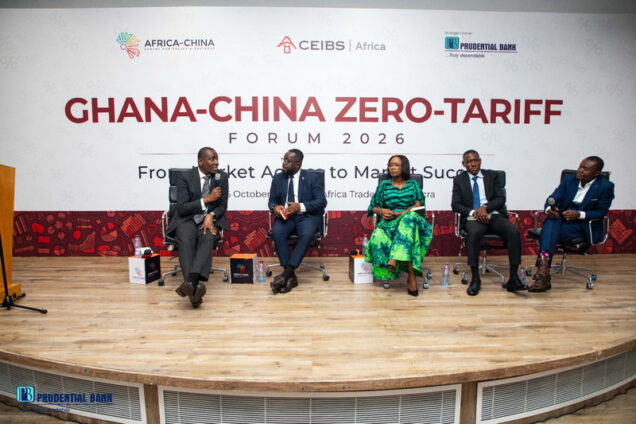
The Bank’s Acting Managing Director, Ebow Quayson, delivered the challenge during a panel discussion at the Ghana-China Zero Tariff Forum 2026, where policymakers, financial institutions and businesses examined how Ghanaian enterprises could benefit from the emerging trade opportunities.
His intervention highlighted a major obstacle confronting local exporters: many businesses have products with international potential but lack the financial records, conventional collateral and confirmed purchase orders required to secure export financing.
China’s Market Presents a Huge Opportunity
China’s enormous market offers significant possibilities for Ghanaian producers, particularly businesses seeking to expand beyond domestic demand. However, entering the market requires more than identifying products that could attract foreign buyers.
Mr Quayson stressed that businesses must undertake detailed research, understand consumer demand and develop commercially viable proposals before approaching financial institutions for support. “We want proper research, market study and a proper business case,” he said.
His comments point to a persistent challenge within Ghana’s SME sector, where promising businesses often struggle to translate production capacity into bankable export opportunities.
Without evidence of demand, credible buyers and a clear understanding of the destination market, securing financing becomes considerably more difficult.
Prudential Bank Questions Exporters’ China Strategy
Mr Quayson cautioned businesses against treating China as a single, straightforward export destination, arguing that its geographical size and diverse commercial markets require deliberate targeting. “China is vast. So where are you going? What do you want?” he asked.
The question captures the importance of identifying specific locations, customers and distribution channels rather than pursuing international opportunities without a defined commercial strategy.
Ghanaian exporters must understand which Chinese markets offer the strongest demand for their products, identify suitable buyers and establish relationships capable of supporting sustainable transactions.
Such preparation could help businesses avoid expensive mistakes, particularly when dealing with unfamiliar regulations, commercial practices and international payment arrangements.
Collective Export Strategy Could Unlock Bigger Deals
Beyond individual business preparation, the Prudential Bank executive proposed a more coordinated approach to Ghana’s export ambitions.
He discussed consolidating export volumes from multiple producers to create larger supplies capable of attracting major international buyers.
The proposal addresses one of the structural weaknesses affecting smaller Ghanaian producers. Many operate independently, limiting their ability to fulfil large orders, negotiate competitive prices and establish lasting relationships with international distributors.
Pooling production could improve bargaining power, strengthen supply consistency and make Ghanaian exporters more attractive to Chinese buyers.
Mr Quayson also proposed establishing a dedicated national export company to negotiate commercial arrangements and secure stronger access to the Chinese market.
“This company will go to the Chinese embassy, which has done market research, and negotiate. In that way, we can negotiate a better price and guarantee market access because the volumes look large.”
Ebow Quayson
The proposal introduces a potentially important conversation about whether Ghana needs a more organised export framework to help smaller producers compete internationally.
Cheaper Payments Could Support Ghana-China Trade
Financing is not the only concern facing businesses entering international markets. Payment costs and transaction arrangements can also affect profitability, particularly among SMEs operating with limited financial resources.
Mr Quayson referenced the Ghana Customs and Trade Act, describing its implementation as important to the broader trade ecosystem.
He also highlighted Prudential Bank’s UnionPay International (UPI) card as a payment option for businesses conducting transactions with Chinese partners. “Because UPI is widely accepted, the charges are far cheaper than using Visa or Mastercard,” he said.
Lower transaction charges could help businesses manage operating expenses while facilitating commercial activities involving Chinese suppliers and trading partners.
Prudential Bank Expands International Business Exposure
Prudential Bank also highlighted its efforts to expose Ghanaian businesses to international markets through direct engagement with potential partners.
Mr Quayson disclosed that the Bank had, over the past two years, taken businesses to Qatar, China and Dubai to meet prospective partners and traders while assessing commercial opportunities.
Such exposure can help business owners understand foreign market conditions, develop relationships and identify opportunities that may not emerge through domestic networking alone.
The Ghana-China Zero Tariff Forum 2026 provided another platform for examining how Ghanaian businesses could position themselves to benefit from the zero-tariff arrangement.
However, converting the opportunity into stronger export performance will require businesses to address financing constraints, improve production capacity and develop credible international partnerships.
China offers Ghanaian SMEs an enormous commercial opportunity, but accessing it will demand preparation, coordination and the ability to meet the expectations of international buyers.
READ ALSO: STEP-UP Programme Exposes Youth to Agribusiness Operations