Ghana’s effort to widen credit access for micro, small and medium-sized enterprises (MSMEs) is entering a critical phase.
The Bank of Ghana (BoG) has warned that poor information could undermine attempts to use digital transaction records to reach businesses traditionally excluded from formal lending.
The BoG wants lenders to use mobile money transactions, utility payments and supplier settlements alongside conventional credit histories. These records could reveal a business’s capacity to repay, but poor data and weak safeguards could create fresh risks.
Credit coverage rises, but access remains difficult
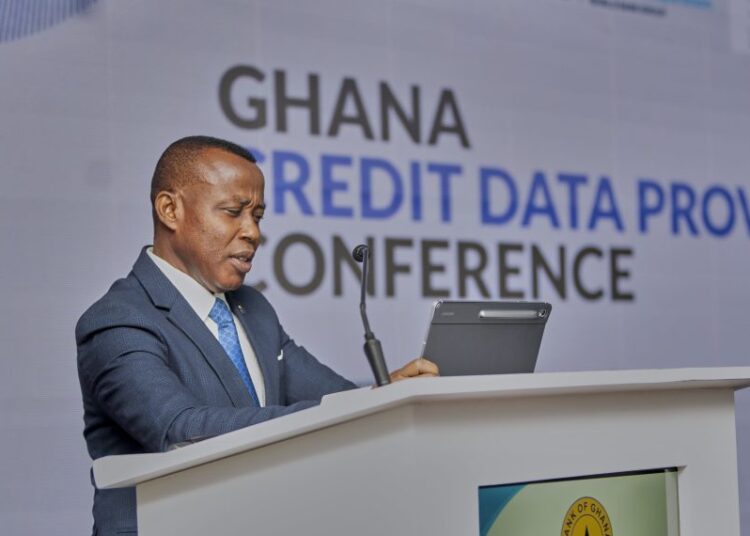
Dr Settor Kwabla Amediku, Special Aide to the Governor of the Bank of Ghana on Financial Stability, disclosed that credit bureau coverage increased from 33.20% in 2019 to approximately 60.00% by December 2025.
However, wider coverage has not automatically translated into easier access to loans. “Being counted in a database is not the same as being understood by a lender.”
Many small businesses lack the documentation banks traditionally require. A trader may receive mobile money payments and pay suppliers regularly, yet struggle to prove creditworthiness without a formal borrowing history.
Dr Amediku illustrated the problem with a trader at Accra’s Makola market who conducts regular business but cannot secure working capital because lenders lack a conventional credit record.
He described the cycle facing such enterprises: “A business cannot obtain credit because it has no credit history. It cannot build a credit history because it has never obtained credit.”
Poor data threatens alternative lending
The BoG believes alternative data can close this gap. Regular sales, inventory purchases, supplier payments and mobile money collections may offer lenders useful evidence of cash flow and repayment capacity.
But the central bank is not asking financial institutions to abandon prudent lending standards or approve loans simply because transaction records exist.
“We are not asking financial institutions to lower their credit standards. We are asking them to raise the quality of information which they use to assess borrowers.”
Dr Amediku
Dr Amediku stressed that alternative data cannot guarantee repayment. Its value lies in providing additional evidence for better-informed lending decisions and more accurate credit-risk assessments. He cited small traders who obtain modest digital loans, purchase merchandise, complete sales and repay within a single business day. Such products can reflect the cash-flow patterns of businesses better than conventional monthly repayment arrangements.
Poorly designed scoring systems could misjudge borrowers, encourage excessive debt or increase defaults across lenders’ portfolios.
The official identified data integrity, privacy, fairness, transparency, information security and responsible lending as essential safeguards. Inaccurate information could exclude deserving businesses, while poorly designed artificial intelligence and credit-scoring models could introduce discrimination.
Borrowers must be able to understand how their information is used, challenge errors and obtain timely corrections.
BoG and IFC study targets data gaps
Dr Amediku disclosed that the BoG, working with the International Finance Corporation (IFC), commissioned an alternative data ecosystem mapping study in March 2025.
Banks, mobile money operators, telecommunications companies, utility providers, fintech firms, credit bureaus and trade creditors could all contribute relevant information.
No single institution, he noted, has a complete picture of a borrower’s financial activities. Collaboration could help lenders identify viable businesses that remain invisible to conventional credit assessment systems. However, participation will require clear rules on consent, data sharing, security and accountability.
Dr Amediku cited Ghana Statistical Service data, referring to 78.30% to illustrate the importance of MSMEs to employment and economic activity. Better access to working capital could help traders replenish stock, producers finance operations, manufacturers purchase equipment and enterprises fulfil orders.
Declining interest rates and relative exchange-rate stability could also support more effective credit assessment and pricing.
BoG demands measurable results
Dr Amediku challenged stakeholders to agree on five practical outcomes: priority alternative data sources, stronger reporting participation, technical standards, institutional responsibilities and an implementation roadmap with measurable targets.
He called for progress to be assessed within a year, rather than allowing discussions to end without tangible changes. “Conferences, they do not transform economies.”
Ghana’s expanding digital payments activity could become a valuable source of credit intelligence, but only if institutions improve data quality while protecting consumers and financial stability. Credit bureau coverage has increased; the next test is whether better information helps viable small businesses obtain appropriate financing at sustainable costs.
READ ALSO: GoldBod Describes Foreign Partnerships as Efforts to Position Ghana as Investment Destination