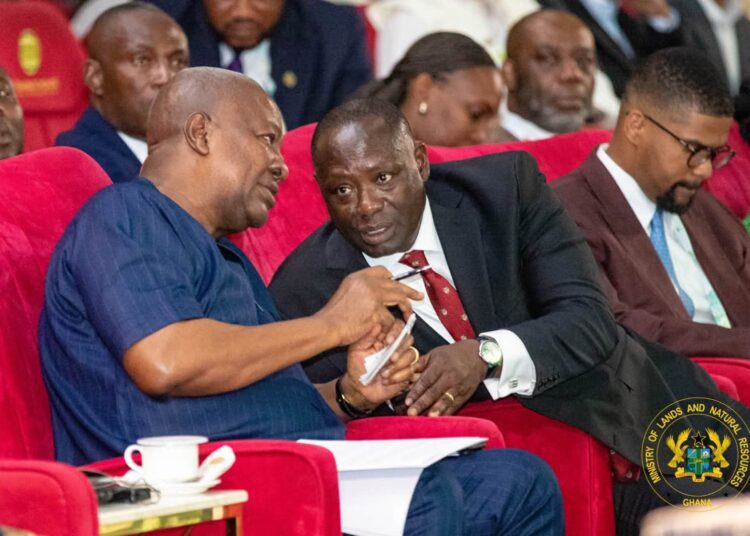
Honourable Emmanuel Armah-Kofi Buah, Minister for Lands and Natural Resources, has announced that the Government of Ghana is partnering with the World Gold Council to build a dedicated mineral processing facility aimed at supporting newly formalised small-scale mining cooperatives.
The disclosure underscores a strategic shift toward equipping artisanal miners with modern, compliant infrastructure to boost gold recovery without relying on destructive extraction methods.
“Your success in responsible and sustainable mining will pave the way for more cooperatives to be established in the area.”
Honourable Emmanuel Armah-Kofi Buah
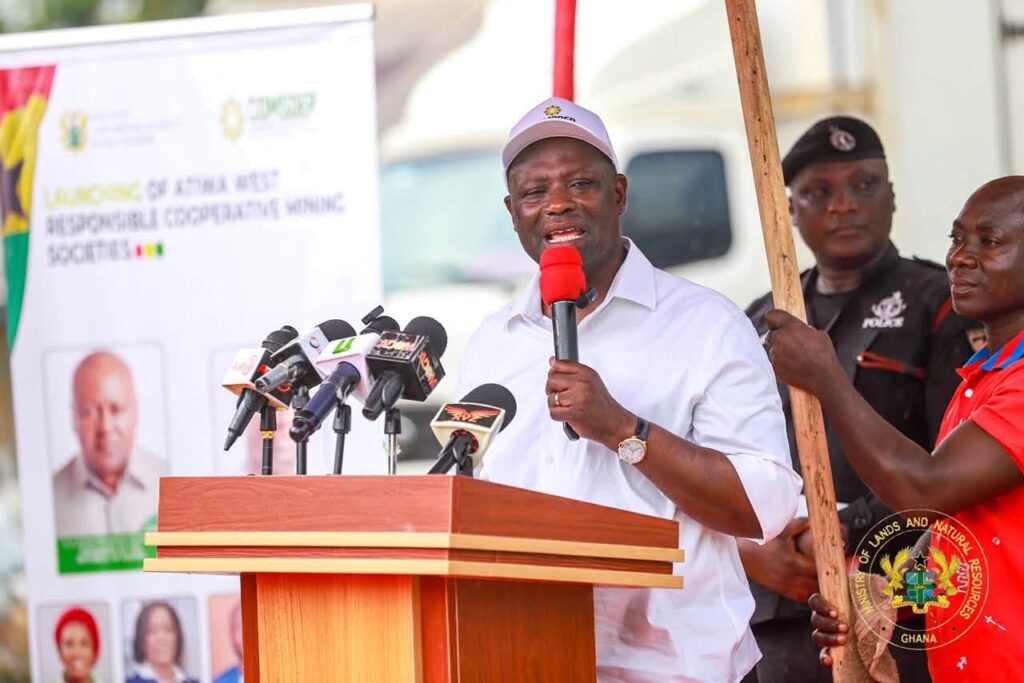
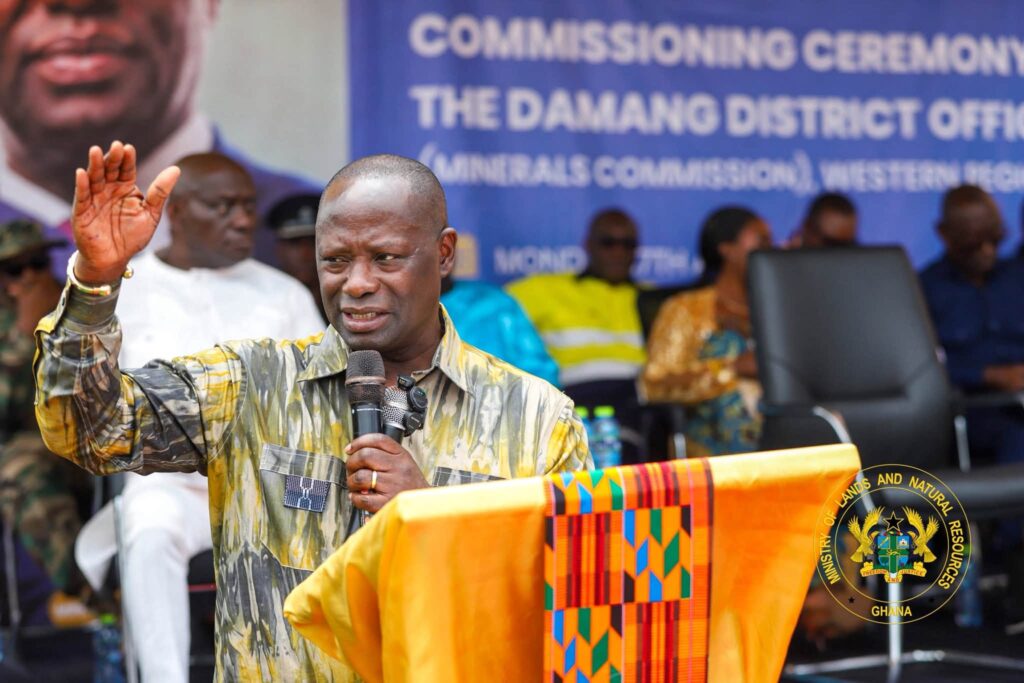
Addressing stakeholders at Kwabeng in the Eastern Region, during the official inauguration of the Atiwa West and Ankaase Gyadam Responsible Cooperative Mining Societies, the Minister outlined how the proposed plant forms part of a broader state-backed formalisation agenda.
At the ceremony, leadership from both societies received official operating permits and certificates granting them legal access to vetted concessions, while the Minister emphasised that the administration supports regulated mining that safeguards worker welfare and ecological integrity.
Bridging the Infrastructure Gap in Artisanal Gold Production
Across Ghana’s gold-bearing districts, artisanal and small-scale mining (ASGM) accounts for a substantial share of national bullion output, yet operations have historically been constrained by rudimentary processing techniques.
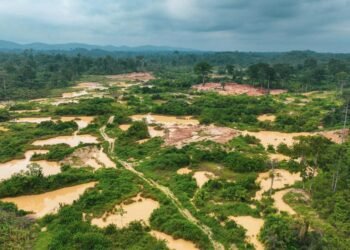
In areas such as Atiwa West which borders the ecologically sensitive Atewa Range Forest Reserve and major river basins inefficient ore processing often yields low gold recovery rates, driving operators to expand into unapproved lands and rely on hazardous chemicals like mercury.
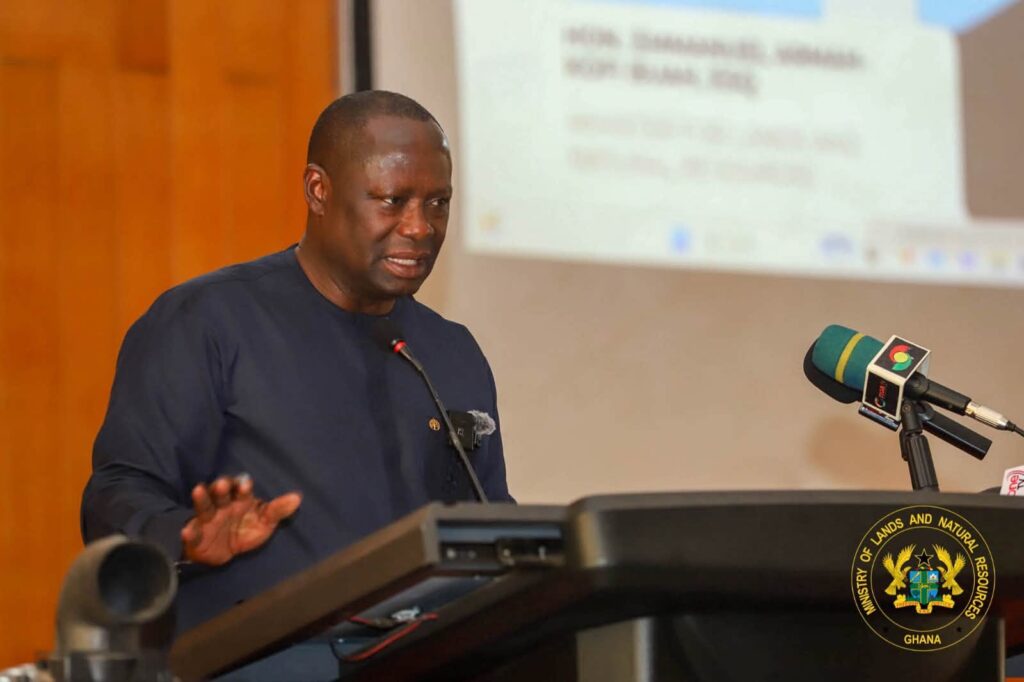
Establishing a centralised processing plant in partnership with the World Gold Council directly addresses this structural bottleneck.
Following a Memorandum of Understanding signed in July 2026 backed by an initial $250,000 development grant, the collaboration seeks to deploy mercury-free processing hubs and traceability technologies across cooperative zones.
By improving ore recovery efficiency and linking cooperatives to formal off-take channels, the facility reduces the economic pressure to encroach on protected forests while ensuring extracted bullion meets international responsible-sourcing benchmarks.
Strict Regulatory Oversight and Concession Boundaries
While state policy is expanding technical and infrastructural support for licensed groups, authorities have drawn a firm line against unauthorized extraction.
Speaking alongside the Minister at Kwabeng, Shehu Siddiq, Acting National Coordinator of the Responsible Cooperative Mining and Skills Development Programme (rCOMSDEP), warned beneficiaries that their newly issued permits carry strict territorial limits.
Mr. Siddiq cautioned cooperative executives against straying beyond demarcated boundaries, specifically flagging forest reserves and water bodies as absolute no-go zones.
To enforce discipline across the Eastern Region enclave, he confirmed that rCOMSDEP field teams will conduct mandatory monthly compliance audits, evaluating environmental management, concession adherence, and operational safety records.
The Minister reinforced this posture during his address, noting that while legitimate enterprise is welcomed, “Government will not tolerate illegal mining and environmental destruction,” reminding members that compliance remains the primary condition for retaining their licences.
Scaling the Cooperative Model Across Mining Districts
The launch of the Atiwa West and Ankaase Gyadam societies represents a critical test case for Ghana’s wider mineral sector reform.
Rather than relying solely on costly military taskforces to curb illicit operations, the Ministry of Lands and Natural Resources is betting on structured community ownership, skills training, and shared industrial infrastructure to transform rural mining economies.
When small-scale operators pool resources under legally recognised cooperative structures, regulators can more effectively deliver geological data, occupational health training, and access to modern processing facilities.
Furthermore, integrating traceability systems at the processing plant level helps curb gold smuggling and ensures that royalties and local development levies remain within host communities.
As Honourable Buah indicated to the gathered miners and traditional authorities at Kwabeng, demonstrating viable, environmentally sound production in Atiwa West will serve as the blueprint for replicating cooperative societies and shared processing hubs across other mineral-rich municipalities nationwide.
READ ALSO: Tullow’s Ghana Output Rises, But Cash Flow Forecast Falls