In recent years, the European Union (EU) has grappled with the challenge of irregular migration from African countries. Desperate to curb the influx of illegal immigrants, the EU devised a strategy that involved pouring billions of euros into these nations.
However, this approach, while well-intentioned, falls short of addressing the underlying issues driving migration.
Back in 2015, The EU’s flagship initiative, the Emergency Trust Fund for Africa, was established with the lofty goal of addressing the root causes of instability, forced displacement, and irregular migration in Africa.
With a staggering budget of €5 billion, it aimed to create a safer environment in African countries, thereby dissuading people from embarking on dangerous journeys to Europe.
Despite its grand ambitions, the EUTF’s allocation of funds reveals a stark reality. While the initial documents emphasized job creation and economic development, only 10% of the resources were dedicated to this objective.
The focus shifted swiftly to other areas, such as “return and reintegration,” “refugee management,” and “migration dialogues”. In essence, the EU’s strategy became more about managing the symptoms rather than addressing the root causes.
The Multifaceted Nature of Migration
To truly address irregular migration, the EU must acknowledge several key factors.
Economic desperation stands as a primary driver, with poverty, lack of employment opportunities, and economic instability compelling individuals to seek better prospects elsewhere.
Pouring financial aid into North African countries without addressing their underlying economic struggles is like applying a band-aid to a gaping wound.
Transitioning from economic causes, political instability emerges as another significant contributor to migration.
Many African nations grapple with political turmoil, corruption, and weak governance, prompting citizens to flee in search of stability and security.
Despite the European Union’s financial injections, these systemic issues remain largely unaddressed.
Moreover, climate change exacerbates migration pressures in the region, with environmental degradation, droughts, and desertification rendering livelihoods untenable.
People migrate when their survival is threatened by climate-related factors, and while the EU’s funds can offer short-term relief, they cannot reverse the impacts of climate change.
Additionally, conflict and violence drive substantial migration flows, as armed conflicts, terrorism, and civil wars force individuals to flee their homes.
The Illusion of Control
By funneling funds to especially North African countries, the EU perpetuates the illusion of control. Yet, irregular migration persists. Why? Because the EU’s approach lacks a holistic vision. It fails to engage in meaningful dialogue with African governments, civil society, and local communities.
It overlooks the need for sustainable development, education, promotion of governance, and human rights protection.
The European Union on Sunday, March 17 announced a 7.4 billion-euro ($8 billion) aid package for Egypt as concerns mount that economic pressure and conflicts in neighboring countries could drive more migrants to European shores.
The aid package includes both grants and loans over the next three years for Egypt.
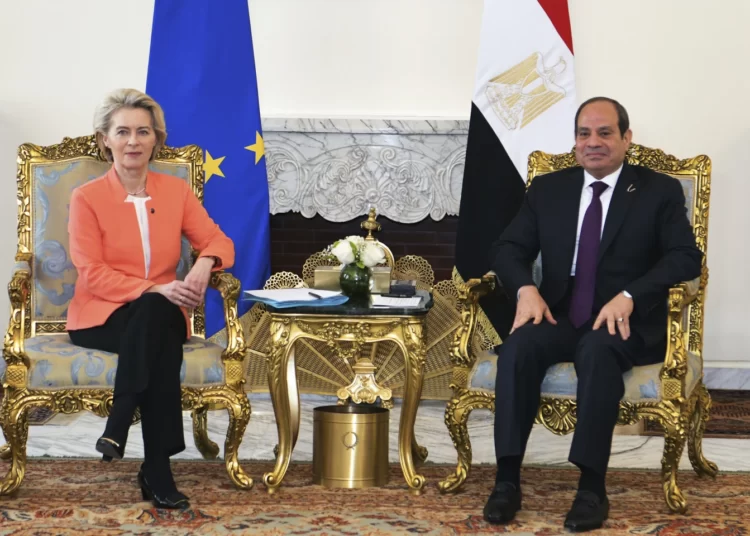
The deal dubbed Joint Declaration was signed in Cairo by Egyptian President Abdel Fattah el-Sissi and European Commission President Ursula von der Leyen. The ceremony was attended by leaders of Belgium, Italy, Austria, Cyprus and Greece.
Fattah el-Sissi said, “Your visit today represented a very important milestone in the relations between Egypt and the European Union.” He said the deal has achieved a “paradigm shift in our partnership.”
Furthermore, The EU would help Egypt’s government to fortify its borders, especially with Libya, a major transit point for migrants fleeing poverty and conflicts in Africa and the Middle East.
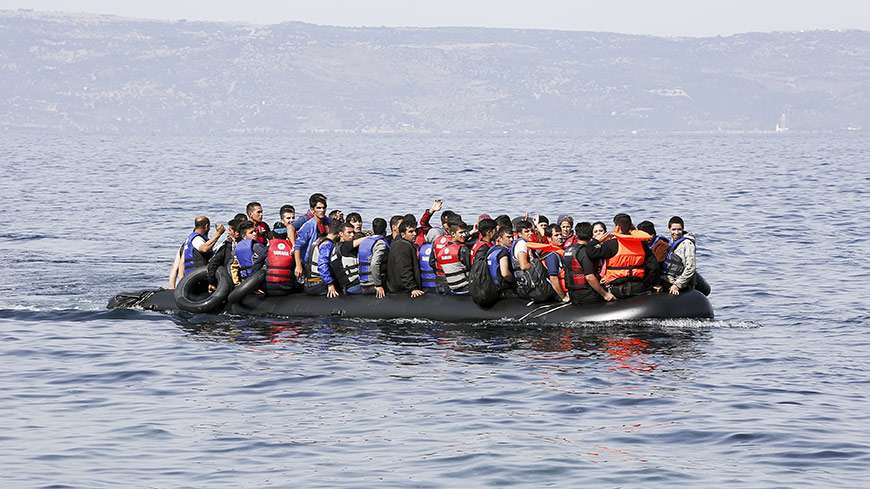
The EU would also support the government in hosting Sudanese who have fled nearly a year of fighting between rival generals in their country. Egypt received more than 460,000 Sudanese since April last year.
According to Egypt, there are 9 million migrants in the country, including about 480,000 who are registered refugees and asylum-seekers with the U.N. refugee agency.
For many years, Egypt has been a refuge for migrants from sub-Saharan Africa trying to escape war or poverty.
Many migrants choose Egypt because it’s the closest and easiest country for them to reach. For others, it’s a point of transit before attempting the dangerous Mediterranean Sea crossing to Europe.
While the aid brings temporary relief to Egypt, a country grappling with economic challenges, there are questions this deal raises.
Beyond immediate financial relief, what long-term impact does the EU hope to achieve through this aid? How will it contribute to sustainable development and stability in Egypt and the broader region?
Will this aid package inadvertently alter migration routes? How will the EU address this potential consequence?
Moreover, the Joint Declaration emphasized promoting democracy, fundamental freedoms, human rights, and gender equality. How will the EU ensure that these principles are upheld in Egypt, especially given existing concerns about civil liberties?
It is worth noting that the EU throwing in money alone without a strategic roadmap will not solve the migration crisis. Until the root causes — poverty, instability, climate change, and conflict are addressed — any strategy will remain a mere band-aid.