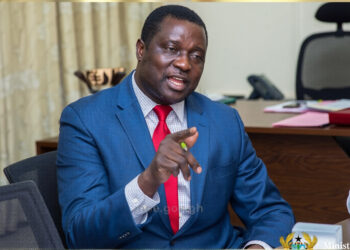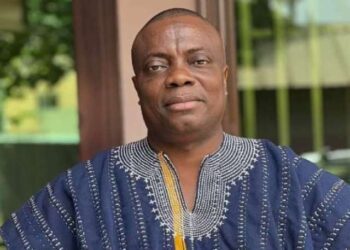
In the evolving conversation around judicial independence in Ghana, legal luminary and democracy advocate Prof. Stephen Kwaku Asare has pushed back against what he sees as a dangerous trend—shielding the highest judicial officers from public scrutiny.
His recent comments and actions, including a petition for the removal of the Chief Justice, raise fundamental questions about accountability at the top echelons of Ghana’s judiciary.
Prof. Asare, a Democracy and Development Fellow at CDD-Ghana, has taken a bold stance by arguing that while judicial independence is indispensable, it must be firmly anchored in a culture of accountability.
“Judicial independence is the cornerstone of every functioning democracy. It guarantees that courts remain impartial arbiters, immune from political or personal interference. Central to this ideal is the security of tenure enjoyed by judges—especially the Chief Justice, who serves not just as an administrator but as the guardian of the judiciary’s integrity.
“But independence without accountability is a dangerous proposition. A rogue Chief Justice, shielded from scrutiny, can unleash mayhem and bedlam on the judicial system—and, by extension, on the entire republic.”
Prof. Stephen Kwaku Asare
This statement, sharp and unapologetic, frames a growing unease about how allegations of judicial misconduct are handled—particularly when they implicate figures of national authority. Prof. Asare is not calling for chaos; he is invoking constitutional order.
Article 146 of Ghana’s Constitution lays out the lawful procedure for removing a Chief Justice due to “stated misbehavior, incompetence, or infirmity.”

This, according to Prof. Asare, is not an opening for partisan attack but “a safeguard for constitutional governance.”
In December 2024, Prof. Asare, under the banner of Good Governance Ghana (GOGO), submitted a petition seeking the removal of the Chief Justice.
His reasons? A troubling pattern of constitutional breaches and administrative overreach.
These included the “unilateral recommendation of five justices to the Supreme Court” and the reshuffling of court panels after arguments had been heard.
He also cited the issuance of directives without legal foundation and “unauthorized backchannel communications between the Chief Justice and the Presidency.”
Instead of initiating the constitutionally required committee of inquiry, former President Nana Akufo-Addo dismissed the petition outright, arguing it lacked a prima facie case.
That, according to Prof. Asare, was not just an error in judgment—it was “dangerously flawed—legally, procedurally, and constitutionally.”
First, he contended, the President applied the wrong threshold. “A prima facie determination is not a trial,” he said. It merely evaluates whether the allegations, if true, warrant further investigation.
Prof. Asare’s petition cited specific events, referenced official correspondence, named witnesses—including Justice Senyo Dzamefe—and made a compelling case for inquiry.
According to him, to dismiss such claims as “hearsay” was to “usurp the role of the constitutionally mandated investigative committee.”
Second, the President’s claim that the petition lacked evidence was, in Prof. Asare’s words, “plainly incorrect.”
He referenced a documented letter dated February 7, 2024, from the Chief Justice to the President requesting Supreme Court expansion—a letter the President denied receiving.
Additional allegations involved improper panel changes and questionable directives, all of which, Prof. Asare argued, merited scrutiny.
Dismissed Petition Flaws Judicial Independence
Prof. Stephen Asare further argued that the dismissal of his petition for allegedly lacking a prima facie case was itself deeply flawed as it contradicts the reasons for judicial independence.
He described the decision as riddled with “factual inaccuracies and legal missteps,” including baseless accusations that he had violated confidentiality or sought personal publicity.
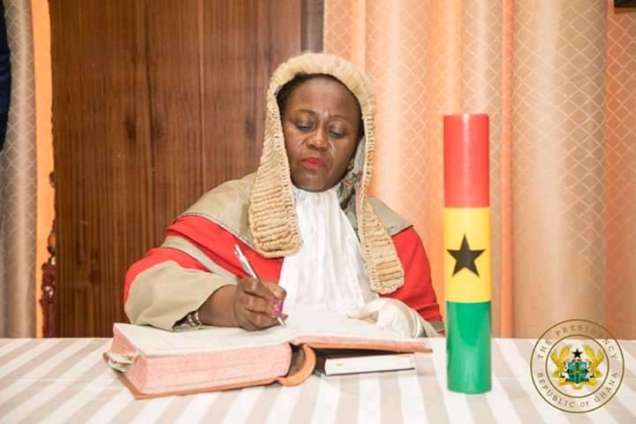
Even more troubling, the determination treated administrative actions—such as case transfers—as beyond review, directly contradicting the Agyei-Twum precedent, which clearly establishes that such acts by the Chief Justice can form grounds for removal under Article 146.
“Fourth, the tone and language of the determination betrayed a lack of impartiality. Describing me as a ‘self-acclaimed advocate for good governance’ and fixating on alleged breaches of decorum rather than addressing the substantive allegations cast the entire response in a defensive, politicized light.”
Prof. Stephen Kwaku Asare
Prof. Asare also pointed out inconsistencies in the application of Article 146. When a petition was lodged against former Electoral Commission Chair Charlotte Osei, procedural flaws were forgiven, and resubmission was allowed.
In contrast, his own petition, despite offering additional evidence and witness testimony, was given no such opportunity. “This disparity violates principles of equal treatment and administrative justice under Articles 23 and 296 of the Constitution.”
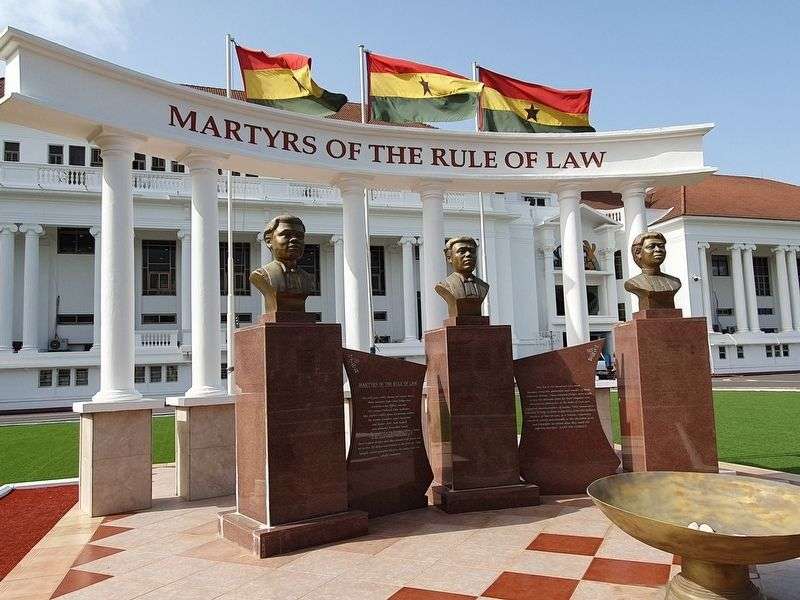
Perhaps most damning was his accusation that the President “overstepped his constitutional mandate.”
Article 146 confines the President’s role to determining whether a prima facie case exists—not passing judgment on the merits of the allegations. “By delving into the merits and defending the conduct of the Chief Justice, the former President assumed powers not granted to him under the Constitution.”
In doing so, Prof. Asare believes, he undermined the separation of powers and crippled the accountability mechanism embedded in the Constitution.
The consequences of ignoring such allegations, he warned, are far-reaching. “If these allegations are swept aside without investigation, we risk normalizing a dangerous precedent.”
It sends a signal that future Chief Justices may act with impunity while public trust in the judiciary collapses under the weight of unanswered questions and constitutional evasion.
“Let me be clear: I respect the office of the Chief Justice. I respect the Presidency. But respect must not become a shield for constitutional violations.”
Prof. Stephen Kwaku Asare
For Prof. Asare, this petition was not a political stunt—it was a civic duty. Just like his challenge against the dismissal of the Auditor General, this move was about defending the sanctity of the Constitution.
In a country that aspires to true constitutional democracy, he insisted, “no one—no matter how exalted—can be above accountability.”
Judicial independence is not merely about shielding judges from external influence—it also demands transparency and accountability at every level, including the highest.
Without it, the very foundation of justice and democracy is at risk of crumbling under unchecked power.
READ ALSO: PURC’s Decision, Bad News For Consumers – Energy Expert