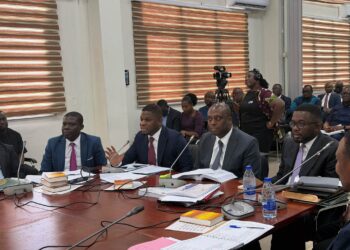
At an emergency Monetary Policy Committee (MPC) meeting held at the Bank of Ghana’s head office in Accra on July 17, 2025, Governor Dr. Johnson Asiama delivered a compelling call to action: protect the nation’s hard-won economic gains while supporting the momentum of recovery.
The governor’s stern caution comes at a time when Ghana’s economic indicators are pointing toward a rebound, yet remain vulnerable to internal and external shocks.
Dr. Asiama emphasized that the decisions taken by the MPC must be forward-looking and informed by Ghana’s current macroeconomic configuration. “The key question we must ask is whether the current macroeconomic environment permits a recalibration of the policy stance,” he noted in his opening remarks.
He underscored the importance of ensuring that inflation expectations remain anchored, investor confidence stays intact, and the country’s external buffers are preserved. “Our mandate requires a balanced decision that reinforces stability while enabling sustainable growth,” he stated emphatically.
Encouraging Signs of Recovery
Despite his cautious tone, Dr. Asiama acknowledged that Ghana is experiencing clear signs of economic recovery. Real GDP grew by 5.3% in the first quarter of 2025, driven largely by robust performance in the agriculture and services sectors. Non-oil GDP fared even better, rising by 6.8%.
Further buoying optimism, the Bank’s Composite Index of Economic Activity increased by 4.4% year-on-year in May, while Purchasing Managers’ Index (PMI) data pointed to rising business and consumer confidence. “Private sector credit growth has also improved, reaching 19.9 percent in April—nearly doubling from 10.8 percent recorded a year ago,” Dr. Asiama revealed.
On the external front, Ghana’s position has improved significantly, offering critical support to macroeconomic stability. A provisional trade surplus of US$5.6 billion was recorded in the first half of 2025, bolstered by strong gold and cocoa exports. The current account surplus has also widened to US$3.4 billion, driven by improved foreign exchange inflows and investor sentiment.
Dr. Asiama attributed these improvements partly to Ghana’s engagement with the IMF, which has enhanced the country’s credit ratings and market standing. “These gains have restored some degree of confidence in the cedi and helped reduce pressure on our foreign reserves,” he noted.
Lingering Fiscal and Liquidity Challenges
However, the governor warned that challenges remain. Ghana’s 2025 Budget reflects a strong commitment to fiscal consolidation, but the lingering effects of a 7.9% fiscal deficit in 2024 still weigh heavily on the economy.
Liquidity conditions remain tight, and the governor emphasized the need for the MPC to be attentive to how policies are being transmitted across credit channels and into productive sectors. “We must remain alert to the pace and breadth of policy transmission to ensure our measures reach the intended targets,” he advised.
Dr. Asiama also drew attention to the uncertain global economic environment. He highlighted that global growth is expected to decelerate to 2.8% in 2025, down from 3.3% in 2024. Tight financial conditions, elevated interest rates, and uneven disinflation are all contributing to this outlook. Oil prices have stabilized at around US$69.8 per barrel, but geopolitical tensions and trade disruptions still pose significant risks.
“These global headwinds mean that Ghana must proceed cautiously. Policy missteps at this point could unravel much of the progress we’ve achieved.”
Dr. Johnson Asiama
Dr. Asiama’s address made it clear that the MPC faces a delicate balancing act—one that demands both caution and clarity. While signs of recovery are encouraging, they are not yet immune to reversal. Inflation is under control, investor sentiment is improving, and credit growth is rebounding, but fiscal discipline and prudent policy decisions will be crucial in maintaining this upward trajectory.
“The road ahead will require credible guidance to markets and a policy stance rooted in both realism and ambition,” the governor concluded.
As Ghana’s economic managers reconvene to determine the next policy rate, all eyes will be on the MPC to see whether it will heed Dr. Asiama’s warning—and ensure that the country’s fragile progress is not put at risk.
READ ALSO: Education Minister Yields to Consult More on Scholarship Bill