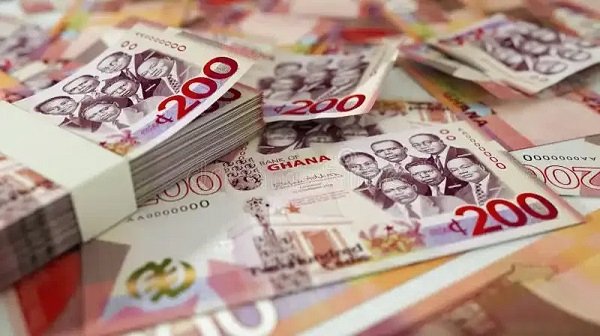
Ghana’s foreign exchange market has once again entered a period of turbulence as the cedi records notable declines against major global currencies despite strong intervention efforts by the Bank of Ghana.
Over the past three weeks, the local currency has come under renewed depreciation pressure driven by seasonal demand dynamics and cautious dollar supply from the central bank.
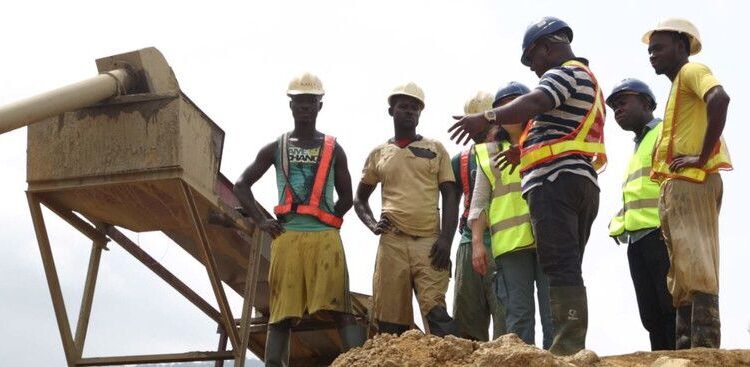
The situation raises questions about the sustainability of the cedi’s stability in the face of persistent structural challenges, even as the BoG pursues an aggressive foreign exchange intervention strategy supported by its Domestic Gold Purchase Programme.
The cedi’s recent performance reflects a convergence of seasonal demand pressures that typically emerge in the final quarter of the year. Importers ramp up demand for foreign currency ahead of the festive season, creating heightened pressure on the exchange rate. Within the last fortnight, the cedi lost modest ground across both the interbank and retail markets.
Currently, in the interbank market, the dollar to cedi pair closed at a midrate of GH¢11.41, marking a climb from GH¢11.12 two weeks earlier. Against the British pound and the euro, the cedi depreciated by 4.62 percent and 3.87 percent respectively, ending the period at GH¢15.26 and GH¢13.32.
The retail market showed similar trends, with the cedi dipping 0.41 percent against the dollar to close at GH¢12.05, while losing 0.94 percent against the pound and 1.08 percent against the euro.


These movements illustrate a clear tightening of forex conditions, especially as market participants brace for increased dollar needs in December. Although the BoG has consistently injected liquidity into the forex market, the scale of seasonal pressures has outpaced the central bank’s measured intervention strategy.
BoG’s Massive Forex Intervention and Its Impact
The Bank of Ghana has pumped an estimated 10 billion dollars into the forex market since January 2025. This injection represents the most significant FX support effort in recent years and has been a major pillar of the currency’s relative stability throughout the year.
Sources indicate that the BoG’s objective is not solely to defend the cedi at a particular rate but rather to satisfy genuine market dollar demand. The intervention has been financed largely through proceeds from the Domestic Gold Purchase Programme, which has enjoyed windfall gains as global gold prices soared.

Despite the heavy market support, the central bank has managed to maintain and even build up its international reserves. Ghana’s reserves stood at 9.1 billion dollars in December 2024 and climbed to 11.4 billion dollars by October 2025, with projections pointing to a year-end figure exceeding 12 billion dollars. This suggests that the FX interventions have not undermined the country’s reserve position, addressing a major concern among analysts.
In October alone, the BoG injected 1.15 billion dollars into the market under its FX Intermediation Programme. These interventions played a key role in the cedi’s exceptional appreciation of 13.9 percent against the dollar by the end of October and its 32.2 percent year-to-date gains.
New FX Operations Framework and Market Expectations
To enhance transparency and predictability in its FX interventions, the Bank of Ghana recently introduced a new Foreign Exchange Operations Framework. This framework outlines three core objectives: support reserve accumulation, minimize short-term market volatility and intermediate FX flows in a market-neutral manner.
Under the framework, the BoG will channel inflows from the Gold Purchase Programme and export surrender requirements into structured and transparent market operations. The central bank emphasizes that future interventions will follow a structured discretion under constraint approach. This implies that the regulator will not pursue specific exchange rate targets but will intervene only to correct market failures and respond to disorderly market conditions.
Analysts believe that while the framework improves clarity around policy direction, market conditions in the final quarter of the year will test its effectiveness. With rising seasonal pressures and global uncertainties, speculation and front-loading of FX demand could amplify volatility, forcing the central bank to strike a delicate balance between market support and reserve preservation.
The cedi’s recent depreciation highlights the complex interplay between seasonal demand, market expectations and foreign exchange supply. Although the Bank of Ghana has undertaken one of its most aggressive intervention programme in years, the currency continues to face intermittent pressures that require careful management.
The introduction of the new FX Operations Framework signals a strategic shift toward greater transparency, disciplined intervention and long-term stability. However, the coming weeks will determine whether these policy reforms can withstand heightened seasonal dynamics and restore confidence in Ghana’s cedi.
READ ALSO:World Bank Hails Ghana’s New Digital System as a Breakthrough for Smallholder Farmers