Chief Executive Officer of the Ghana Chamber of Mines, Ing. Kenneth Ashigbey, has issued a powerful and provocative call for the confiscation of all lands destroyed by illegal mining, locally known as “Galamsey,” from the traditional authorities responsible for them.
This demand, coming from a leading figure in the extractive industry, signals a profound shift in the strategy to combat the environmental and economic scourge that is devastating the country’s natural resources.
It places the burden of failure squarely on the door of the custodians of the land, proposing a radical legal measure to ensure accountability at the grassroots level.
This drastic proposal is rooted in the belief that the traditional institutions, which hold lands in trust for their people, have either been complicit in the destructive activities or have proven incompetent in their mandated role of policing and protecting these communal assets.
“The time has come for us to start confiscating every land that has been given for Galamsey. Confiscate that, reclaim that, restore that and give it to the state. Take it away from the chiefs. Because that chief, either he was complicit in the Galamsey or is incompetent to be able to police the land that have been given to him.”
Ing. Kenneth Ashigbey
Ashigbey further asserts that the legal framework must be invoked to reclaim, restore, and revert these “Galamsey” lands to the state, thereby revoking the customary rights of chiefs who have failed in their fiduciary duty.
The persistent collaboration between powerful political figures and local traditional leaders, a phenomenon Ashigbey refers to as a “merger” of “environmental criminals” transcending partisan divides (NPP and NDC), necessitates a non-partisan, uncompromising response to break the criminal network’s backbone.
The fight, he suggests, must move beyond political rhetoric to tangible, collective action from every citizen.
The Genesis of a National Crisis: Galamsey’s Historical Trajectory

Illegal mining is rooted in complex history spreading from rudimentary, small-scale artisanal operations into an existential threat to the nation’s environmental integrity and future economic stability.
While small-scale gold mining has been a local economic activity for centuries, the crisis escalated dramatically in recent decades, particularly following the liberalization of the mining sector in the 1980s and the subsequent rise in global gold prices.
The introduction of heavy machinery, often financed by foreign actors and fronted by local individuals, replaced the traditional methods.
This technological shift amplified the destruction, leading to the ferocious denuding of forest reserves and the catastrophic pollution of vital river systems with toxic chemicals like mercury and cyanide .
The Minerals and Mining Act, 2006 (Act 703) technically reserves small-scale mining for Ghanaian citizens and sets out regulatory controls, yet enforcement has been consistently weak, often undermined by political patronage, corruption, and the complicity of powerful figures.
The result is an unregulated, criminal industry that operates outside the legal framework, ravaging agricultural land and posing severe public health risks to surrounding communities.
The inability of successive governments to decisively curb the menace has led to widespread despair, but Ashigbey warns against such cynicism, stating, “Don’t believe the hype when they tell you that the situation is so bad nothing is going to change. That is what they want us to believe.”
Chieftaincy’s Dual Mandate and the Enforcement Paradox
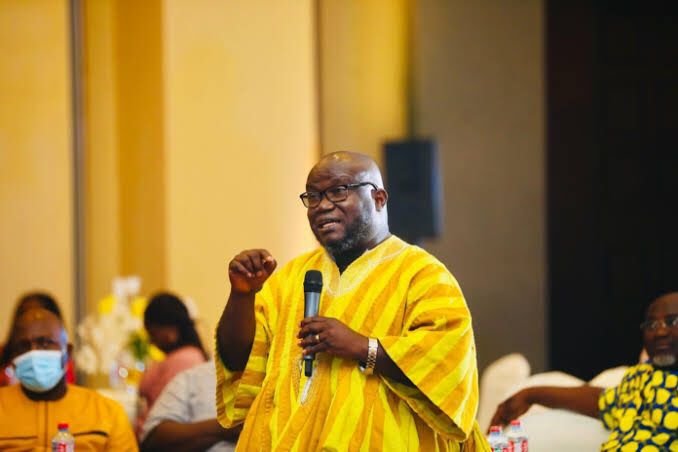
The customary role, enshrined in the 1992 Constitution and the Chieftaincy Act (2008, Act 759), imposes a duty on chiefs to protect the environment and manage the land on behalf of their people.
However, this critical role has become a major vulnerability in the fight against illegal mining. Research findings from various civil society organizations, repeatedly cited the “collusion and involvement of some chiefs” in facilitating Galamsey operations.
Traditional leaders are often the primary individuals who grant access to lands for mining, either through outright leases to illegal operators or by being willfully incompetent in policing their territory, thereby allowing criminal elements to flourish.
The proposal by Ing. Ashigbey to enforce accountability through land confiscation serves as a radical deterrent against this complicity or negligence.
By stripping the traditional authority of the very land they hold in trust, the state directly addresses the root enabler of the illegal activity.
The confiscation of lands from complicit chiefs, followed by reclamation and restoration efforts, is a crucial step that can profoundly curb the illegal mining menace in Ghana.
By removing the legal and customary protection these chiefs offer, the government can clear the legal pathway for full state control over the degraded areas.
READ ALSO: BoG Stuns Markets as December FX Supply Slashed to $800m Despite Record Cedi Gains