
Majority Leader in Parliament, Hon. Mahama Ayariga, has declared Ghana’s worsening sanitation situation a national crisis, warning that Accra alone generates far more waste than it can manage and exposing deep structural weaknesses in how the country finances sanitation infrastructure.
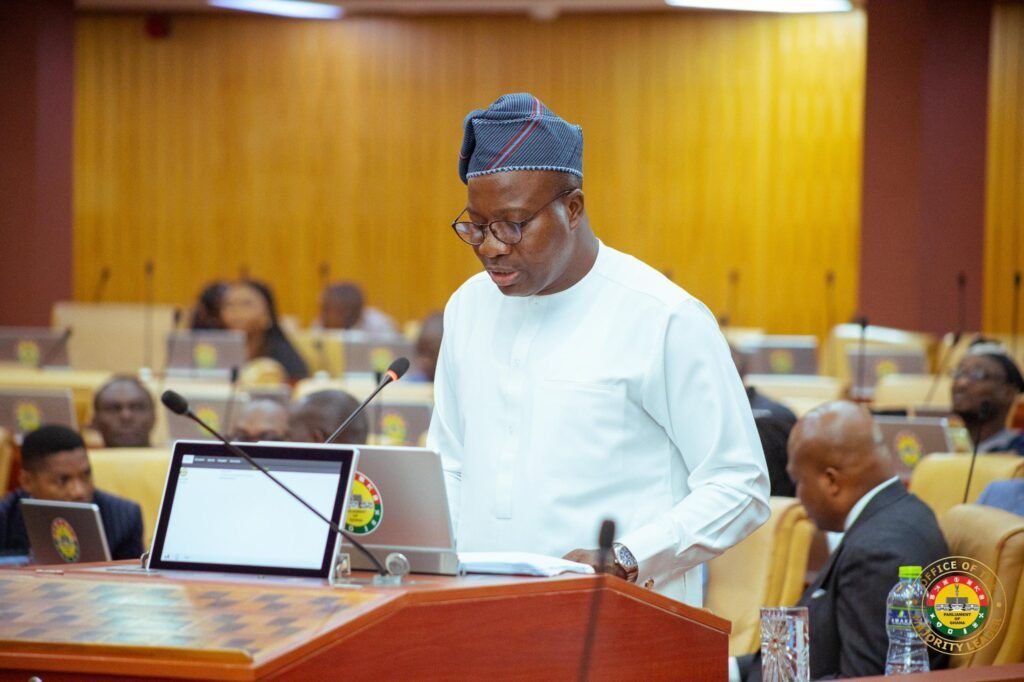
Addressing the House during deliberations on a committee report, Hon. Ayariga painted a troubling picture of a capital city producing about 4,000 tonnes of waste every day while possessing the capacity to properly manage only half of that volume.
Referring to findings contained in the committee’s report on the Greater Accra Region, the Majority Leader said the figures should alarm both lawmakers and the public. According to him, existing waste management facilities in the Accra Metropolitan Assembly can handle only about 2,000 tonnes daily, leaving an estimated 2,000 tonnes unaccounted for.
He questioned where the excess waste ends up and warned that the consequences of such a gap are already evident in the form of choking drains, overflowing landfills and mounting public health risks.
“This is a national crisis,” Hon. Ayariga stressed, arguing that if the country’s foremost metropolis is unable to manage half of the waste it produces each day, the situation in other urban centres is likely even worse.
He noted that Accra hosts the Presidency, Parliament, ministries, government agencies, major private sector offices and a significant proportion of Ghana’s elite population. For that reason, he said, the capital’s sanitation challenges should be treated as a red flag for the entire country.
Review of Common Fund Allocation on Sanitation
Drawing from his role as Chairperson of the Independent Constitutional Bodies Committee, Hon. Ayariga explained that Parliament has received several petitions calling for a review of how the District Assemblies Common Fund is allocated, particularly regarding sanitation.
He recalled that in the past, substantial portions of the Common Fund were set aside under a “national sanitation management” item to support waste management, especially in major cities.
However, he defended the current policy direction under which 80 percent of the Common Fund is paid directly into the accounts of metropolitan, municipal and district assemblies.
In his view, the old system was unfair because it allowed funds collected nationally to be disproportionately spent on sanitation infrastructure in Accra, Kumasi and Takoradi, effectively subsidised by residents of less developed districts.
“What it meant was that people in places like Bawku or Sandema were subsidising the lives of those living in Accra,” he said, adding that such an approach undermined equity in national development. Assemblies, he noted, are now permitted to use a portion of their allocations, about 10 percent, to manage sanitation within their jurisdictions.
Yet he acknowledged that this arrangement has not solved the problem, particularly in large urban centres where sanitation infrastructure is expensive to build and maintain.
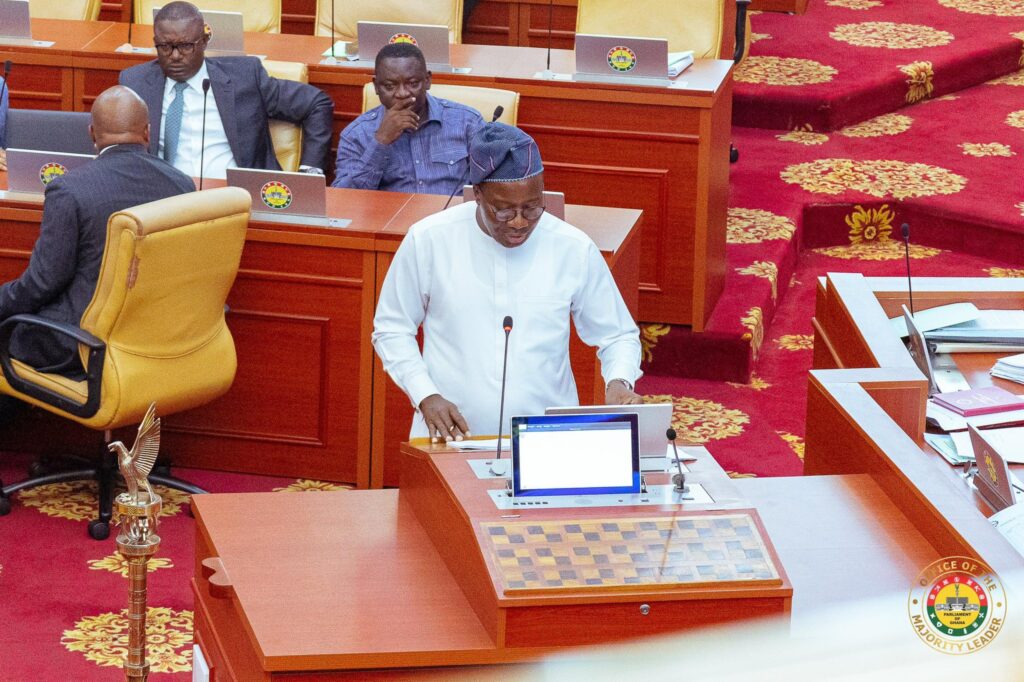
Hon. Ayariga admitted that despite supporting the policy of direct transfers to assemblies, there remains a critical need to invest heavily in sanitation infrastructure, especially in densely populated cities.
He argued that expecting metropolitan assemblies alone to finance and maintain major waste treatment plants is unrealistic, given the limited resources available to them under current allocations.
Property Tax Reforms
To address the funding gap, the Majority Leader championed property rate reforms as a sustainable solution. He argued that those who own and occupy properties in urban centres are the primary generators of waste and should therefore bear the cost of managing it. This, he said, aligns with the “polluter pays” principle.
“You cannot choose to live in Accra and then expect someone in Bawku to subsidise your waste management through the Common Fund,” he argued. According to him, experts estimate that Ghana could raise as much as 18 billion Ghana cedis annually if property rates were properly assessed and collected nationwide. Yet much of this potential revenue remains untapped.
Hon. Ayariga suggested that Greater Accra alone could generate not less than five billion Ghana cedis each year from property rates, given the high concentration of valuable properties in the region. He cited estimates indicating that the annual cost of managing Accra’s waste effectively is about one billion Ghana cedis.
If property rates were efficiently collected and even a fraction allocated to sanitation, he argued, the city could not only solve its waste crisis but also have resources left for other critical infrastructure, such as inner-city roads and drainage systems.
Beyond financing, the Majority Leader also called for a rethink of institutional responsibility for sanitation infrastructure. He argued that large-scale facilities such as major drains, waste transfer systems, treatment plants and landfills should be treated as public works infrastructure rather than the sole responsibility of local government authorities. In many countries, he observed, such infrastructure falls under ministries responsible for public works.
Increasing Budget Allocations
In that regard, Hon. Ayariga urged Parliament to advocate for increased budgetary allocations to the Ministry of Works and Housing to enable it to construct and maintain major sanitation infrastructure in heavily populated municipalities. He said district assemblies clearly lack the capacity to invest in such large-scale projects on their own, and expecting them to do so only deepens the crisis.
While acknowledging that the committee report raised several other important issues, the Majority Leader said time constraints prevented him from addressing them all on the floor.
He nevertheless commended the committee’s chairperson for what he described as diligent work and encouraged continued oversight visits to sanitation facilities across the country.
According to him, sustained parliamentary scrutiny and open debate are essential to crafting practical solutions and making informed recommendations to the Executive.

Hon. Ayariga concluded by reiterating that Ghana’s sanitation crisis demands urgent but thoughtful action. He cautioned against what he described as “lazy solutions” that rely on dipping into the Common Fund without addressing the real sources of waste and the failure to collect existing revenues.
For him, property rate reform, stronger institutional coordination and targeted investment in infrastructure offer a more equitable and sustainable path to restoring sanitation in Accra and preventing a broader national breakdown.
READ ALSO: Ghana’s Rapid Economic Rebound Redraws Africa’s Post-Crisis Recovery League Table