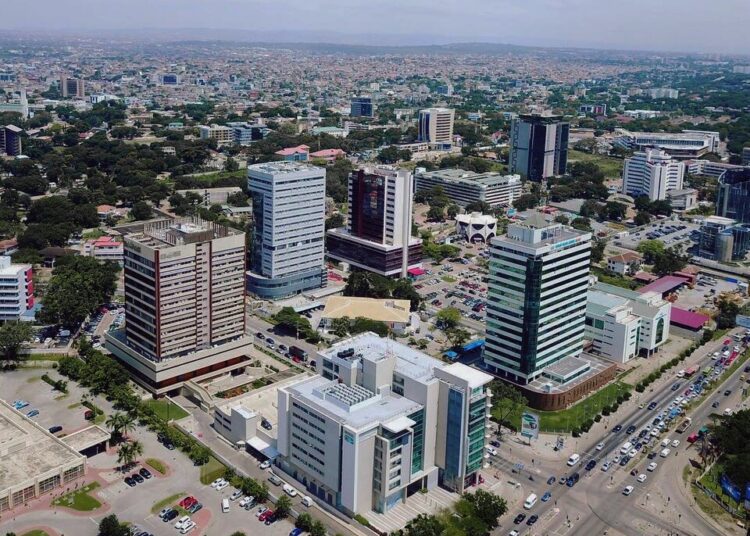
Following its impressive economic performance in the 2025 fiscal year so far, Ghana’s post-crisis recovery has emerged as one of the most compelling turnaround stories on the African continent.
Just two years after a bruising 2022–2023 debt default that rattled confidence, disrupted growth and pushed inflation to historic highs, the economy has staged a rebound that few analysts predicted would be so swift.
The combination of fiscal discipline, easing inflationary pressures, renewed investor confidence and improving growth dynamics has effectively repositioned Ghana within Africa’s post-crisis recovery rankings.
Growth Momentum Reasserts Itself
At the heart of Ghana’s rebound is a sharp acceleration in economic growth. Quarterly data for 2025 show expansion rates exceeding five to six percent, with overall growth reaching about 6.1 percent in the first three quarters of the year.
This resurgence has been driven not only by commodities but also by a broad-based recovery in non-oil sectors, signalling renewed domestic activity.
Such performance places Ghana comfortably above the Sub-Saharan Africa average, even if it still trails a few East African high-flyers that are benefiting from longer-term structural momentum.
Inflation Tamed and Currency Strength Restored
Equally striking has been the rapid disinflation. From peaks above 50 percent during the crisis period, inflation has fallen to around 6.3 percent in 2025, significantly outperforming earlier forecasts.
This sharp decline has restored purchasing power, stabilised expectations and allowed for more flexible monetary conditions. Reinforcing this trend is the strength of the cedi, which has appreciated by roughly 32 percent against the US dollar in the first eleven months of 2025.

The currency’s resurgence reflects improved external balances, stronger export earnings and renewed confidence following debt restructuring.
Fiscal Discipline Anchors the Recovery
Fiscal consolidation has provided the backbone of Ghana’s recovery. By mid-2025, the country had achieved a primary fiscal surplus of about 11.1 percent of GDP, far exceeding the original target of 0.4 percent.
This achievement underscores a dramatic turnaround in public finances and signals a strong commitment to macroeconomic stability.
The overall fiscal deficit has also narrowed sharply to around 0.7 percent of GDP, well below projections. Such outcomes have drawn praise from institutions including the International Monetary Fund, reinforcing credibility and strengthening Ghana’s medium-term outlook.
Debt Restructuring as a Turning Point
A defining element of Ghana’s rebound has been the speed and efficiency of its debt restructuring under the G20 Common Framework.
Compared with peers such as Zambia, whose process dragged on for years, Ghana completed its restructuring in roughly half the time, restoring market confidence more quickly.
The inclusion of domestic debt and a relatively balanced burden-sharing arrangement helped accelerate negotiations and reassure investors.

In contrast to countries like Ethiopia, where restructuring remains slow amid broader challenges, Ghana’s approach has reduced uncertainty and allowed policymakers to refocus on growth.
How Ghana Compares Across Africa
Measured against regional benchmarks, Ghana’s performance stands out. Sub-Saharan Africa growth in 2025 is projected between 3.5 and 4.2 percent by institutions such as the World Bank, making Ghana’s five to six percent expansion notably stronger.
However, some East African economies, including Senegal, Rwanda and Ethiopia, are projected to grow even faster, driven by new oil and gas production, infrastructure investment and post-conflict reforms. West African peer Côte d’Ivoire is also expected to record growth of six to seven percent, while Kenya’s recovery is anchored in services and macro stability.
By contrast, larger economies such as Nigeria and Egypt remain constrained by inflation, debt pressures and structural bottlenecks, while South Africa continues to struggle with low growth.
What Sets Ghana Apart
What distinguishes Ghana is not necessarily being the fastest-growing economy, but the speed and stability of its recovery. The swift resolution of debt issues, a credible fiscal anchor and the boost from commodities such as gold and cocoa have combined to deliver a V-shaped rebound.
Importantly, non-oil GDP growth of around six to seven percent points to diversification rather than reliance on a single sector. Political continuity after elections has further supported reform implementation, reducing policy uncertainty at a critical juncture.
Ghana’s experience offers important lessons for other African economies emerging from crisis. Decisive fiscal discipline, inclusive and transparent debt restructuring, and close alignment with multilateral partners can significantly shorten recovery timelines.
While challenges remain, including industrial capacity constraints, youth unemployment and climate risks, Ghana’s trajectory demonstrates that debt distress does not inevitably condemn economies to prolonged stagnation.
Overall, Ghana ranks among Africa’s stronger post-crisis recoveries in 2025. It may not top the growth charts dominated by East African economies with higher long-term ceilings, but it stands out for transforming a severe debt crisis into renewed stability and confidence.
In redrawing Africa’s recovery league table, Ghana has firmly established itself as a benchmark for rapid and credible economic turnaround in the region.
READ ALSO: Removal Petition Against Justice Kulendi Thrown Out