
President John Dramani Mahama has committed his administration to a comprehensive effort to reverse what he described as years of neglect in Ghana’s basic education sector, outlining wide ranging reforms aimed at strengthening foundational learning across the country.
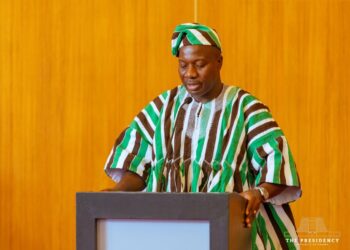
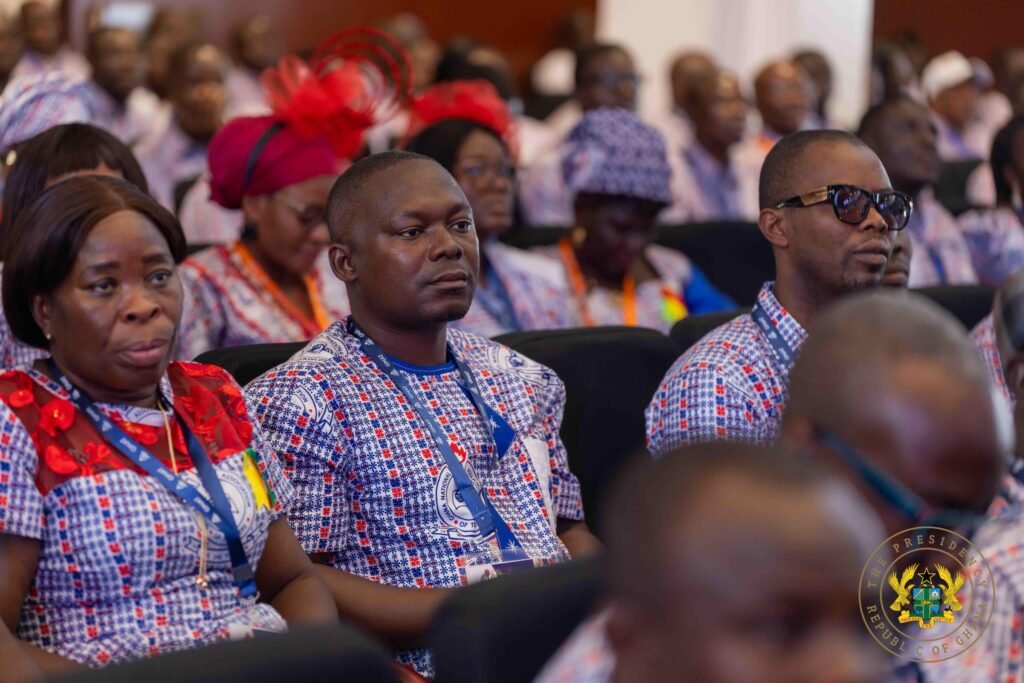
Speaking at the 7th Quadrennial National Delegates Conference of the Ghana National Association of Teachers, the President said weak outcomes at the basic level continue to undermine performance at higher levels of education and must be urgently addressed.
According to President Mahama, deficiencies in teaching and learning materials, irregular payment of Capitation Grants, limited teacher retraining opportunities and poor school infrastructure have combined to weaken numeracy, literacy and critical thinking skills among pupils completing basic education.
“We must therefore strengthen foundational learning in our basic schools to achieve better outcomes in later years of study, the secondary and tertiary levels.”
President John Dramani Mahama
The President recalled that many of these challenges were extensively discussed at the National Education Consultative Forum held in Ho in February last year. That forum brought together key education stakeholders to assess the state of Ghana’s education system and propose reforms.
President Mahama said his government intends to implement the recommendations contained in the forum’s final report over the next three years as part of a broader education reset agenda.
He emphasized that while access to secondary education remains important, quality at the foundational level must not be sacrificed, as it forms the bedrock of the entire education system.

Massive Infrastructure Rollout
As part of immediate infrastructure interventions, President Mahama announced plans to construct 200 kindergartens, 200 primary schools and 200 junior high schools across the country.
He explained that these projects would be undertaken through a combination of funding from the Ministry of Education and the District Assemblies Common Fund.
In addition, district assemblies are expected to build two basic schools and two junior high schools annually, including kindergartens, to help expand access and reduce overcrowding.
The President also highlighted measures to improve teacher welfare, particularly in rural communities where accommodation challenges often discourage postings and affect retention.
Expansion of Teachers’ Accommodations
Under the Teacher Dabr3 Initiative, the government plans to construct 400 four unit teacher bungalows nationwide, with priority given to underserved and remote areas.
“This is just the beginning. We’re going to increase the numbers over the next few years, so that every teacher can find a place to stay and give their best in their schools”.
President John Dramani Mahama
In addressing the shortage of learning materials, President Mahama announced that millions of curriculum based textbooks would soon be distributed to schools nationwide.
He said access to relevant textbooks remains critical to improving teaching quality and learning outcomes, particularly at the basic level where pupils rely heavily on guided instruction.
Alongside textbooks, schools and education directorates are expected to receive buses, pickup trucks, and other administrative vehicles to improve supervision, monitoring, and service delivery across the education sector.
According to the President, procurement processes for these vehicles have already begun, signaling an effort to move swiftly from policy commitments to implementation.
He added that strengthening logistics at the district and regional levels would enhance coordination and accountability within the education system.

Ending No Desk Syndrome
One of the most pressing issues President Mahama addressed was inadequate furniture in basic schools, particularly in rural areas. He described the sight of children sitting on stones or lying on the floor to read and write as unacceptable in a country aspiring to inclusive development.
To address this, the government plans to procure approximately two million steel dual desks to ensure that every Ghanaian child has a proper place to sit and learn.
President Mahama said funding for the desks and other infrastructure initiatives would be supported through allocations from the Ghana Education Trust Fund.
He expressed confidence that these interventions, once fully implemented, would significantly improve the learning environment and restore dignity to basic education, especially in deprived communities.
He emphasized that the measures outlined at the conference represent the start of a longer journey to rebuild confidence in public basic education.

The President called on teachers, education managers and local authorities to work closely with government to ensure that investments translate into real improvements in classrooms.
He reaffirmed his belief that strengthening basic education is essential not only for academic success but also for national development and social equity.
READ ALSO: Oil Prices Slip Despite Venezuela Shock