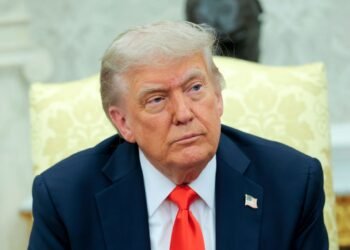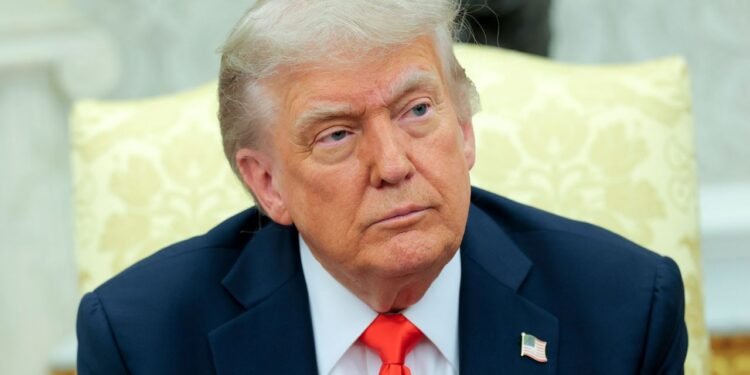
US President, Donald Trump has increased pressure on Tehran, saying that countries that engage in trade with Iran will face a new 25 percent tariff.
The announcement appears to mean goods from China, a major trading partner of both Iran and the United States, would become significantly more expensive to import.
“Effective immediately, any Country doing business with the Islamic Republic of Iran will pay a Tariff of 25% on any and all business being done with the United States of America. This Order is final and conclusive.”
Donald Trump
Trump’s Truth Social post did not define what qualifies as “doing business” with Iran. The post raised a number of questions, including how these additional tariffs could work, which countries would be targeted and whether services and not just goods would face higher duties.
The new tariff could mean a minimum 45% tariff rate on goods from China versus the current rate of 20%. In the first 11 months of 2025, China exported $6.2 billion worth of goods to Iran and imported $2.85 billion, according to Chinese customs data.
That’s before accounting for oil purchases, which China doesn’t publicly disclose. Analysts estimate that China has accounted for more than 90% of Iran’s oil trade in recent years, imported through intermediaries.
In addition to China, India, the United Arab Emirates, and Turkey are considered major trading partners with Iran.Trump doubled duties
A trade war between the United States and China last year rocked global markets, with Trump raising tariffs on Chinese goods to a peak of 145% last year. The current tariff rate came about after lengthy negotiations.
Trump doubled duties on goods from India this summer to a minimum 50% tariff, seeking to punish the country for buying Russian oil. He threatened to impose similar tariffs on other countries that purchase Russian oil, including China, its largest customer.
Throughout Trump’s second term, he has relied on a law known as the International Emergency Economic Powers Act to push import tax rates. His novel use of the law, however, is being challenged in the Supreme Court, with a verdict expected this month.
If the justices find Trump lacked the legal authority to impose such tariffs, not only will he lose his ability to adjust countries’ levies without virtually any restrictions, but US could be on the hook to refund at least $130 billion in tariff revenue.
Trump’s announcement comes as he has floated US military intervention to “rescue” anti-government protesters in Iran, hundreds of whom have been killed. An ongoing communications shutdown, imposed by authorities on Thursday, has mostly isolated people in the country from the outside world.The new tariff
Iran is seeing its biggest anti-government demonstrations in years. The demonstrations evolved from complaints about dire economic hardships to defiant calls for the fall of the deeply entrenched clerical establishment.
Trump has said that the US may meet Iranian officials and that he was in contact with Iran’s opposition, while piling pressure on its leaders, including threatening military action.
Tehran said on Monday that it was keeping communication channels with Washington open as Trump considered how to respond to the situation in Iran, which has posed one of the gravest tests of clerical rule in the country since the Islamic Revolution in 1979.
China Slam Latest US Tariff Over Iran Trade
China criticised the Trump administration’s approach to Iran warning against unilateral pressure as tensions continue to rise during protests across the country.
In a statement issued in Washington, DC, the Chinese embassy said that Beijing “firmly opposes any illicit unilateral sanctions and long-arm jurisdiction”, and will take “all necessary measures” to safeguard its interests.
An embassy Spokesperson said that China’s position against the “indiscriminate imposition of tariffs is consistent and clear,” adding, “Tariff wars and trade wars have no winners, and coercion and pressure cannot solve problems.”
Japan and South Korea, which agreed on trade deals with the US last year, said that they are closely monitoring the development. “We … plan to take any necessary measures once the specific actions of the US government become clear,” South Korea’s trade ministry said in a statement.
Japan’s Deputy Chief Cabinet Secretary Masanao Ozaki told reporters that Tokyo will “carefully examine the specific content of any measures as they become clear, as well as their potential impact on Japan, and will respond appropriately.”
READ ALSO: GNFS Records Over 5,000 Fire Outbreaks As Chief Fire Officer Demands Prosecutorial Powers