Former Minister for Lands and Natural Resources, Hon. Samuel Abu Jinapor, has sounded a clarion call regarding the deteriorating state of Ghana’s ecological landscape, asserting that the nation’s land, forest reserves, and water bodies remain under a sustained attack.
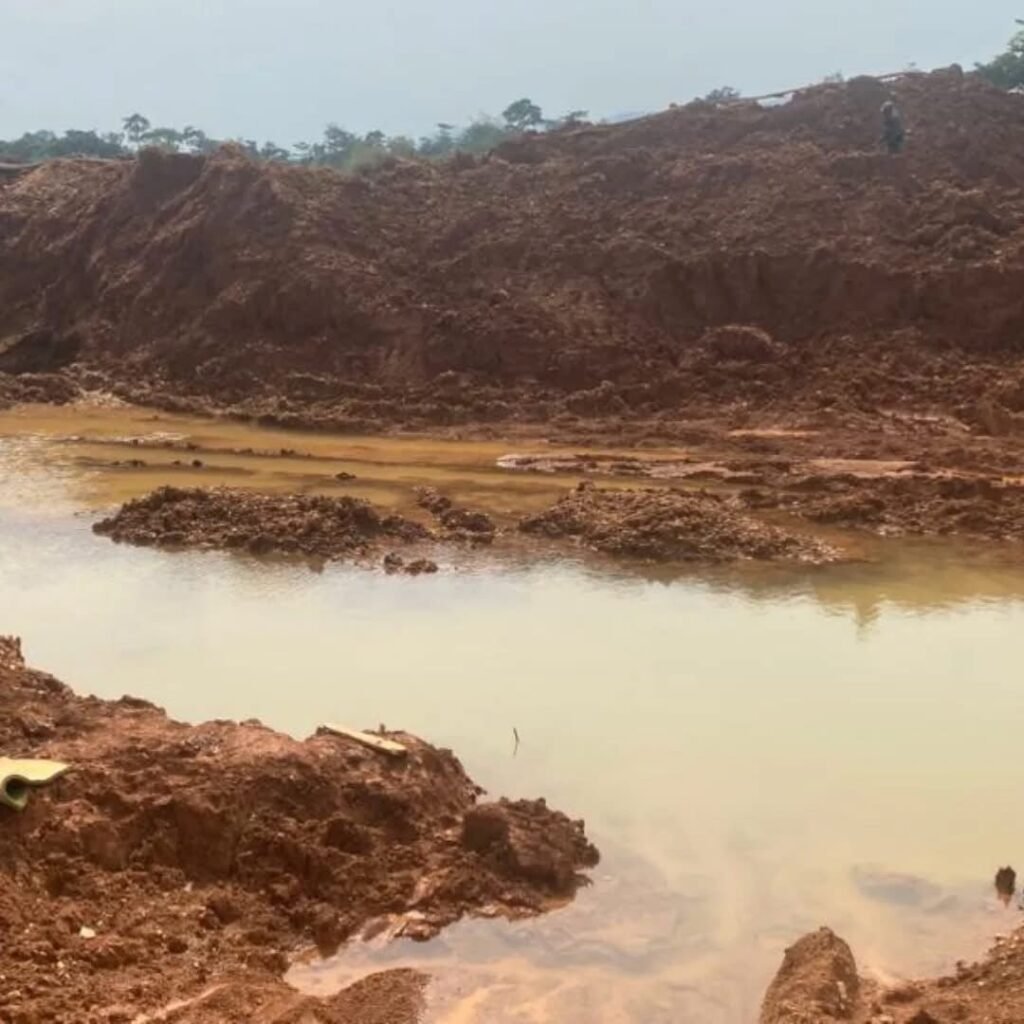
Despite a litany of government-led interventions designed to curb illegal small-scale mining, the former Minister suggests that the “menace” has proved resilient, with destruction remaining visible across protected zones.
This assessment highlights a significant disconnect between official policy objectives and the reality of environmental degradation, as the “deep-seated challenges” within the extractive sector continue to undermine national security and water safety.
“It is one year gone; if you ask me a pointed question about whether the fight against illegal small-scale mining has been better, I will say a big no. Menace is still out there, the forest reserves of our country are still under attack, the river bodies of our country are not better, and clearly, there is a lot more that has to be done.”
Hon. Samuel Abu Jinapor
The persistence of these illicit operations, according to the former Minister, indicates that existing regulatory and enforcement frameworks have not been “sufficiently effective” in deterring perpetrators or halting their machinery.
While President John Mahama has offered a more optimistic outlook, citing “encouraging results” and the gradual clearing of previously turbid water bodies, Hon. Jinapor maintainef that the evidence of failure is overwhelming and visible to the naked eye.
The discourse has now shifted toward the necessity of “consistency” in state response, including the debated declaration of a state of emergency, as experts warn that without a radical shift in strategy, the country’s “river bodies and forest reserves” face irreversible ruin.
The Anatomy of Defiance: Why Current Measures Fail

The current state of the extractive sector reveals a sophisticated evolution of illegal mining that has largely outpaced the state’s “Operation Halt” initiatives.
Despite the deployment of military personnel and river guards, illegal miners have moved deeper into the “high-forest zones,” often utilizing heavy earth-moving equipment under the cover of night.
This defiance is symptomatic of a “high-profit, low-risk” environment where the lack of stringent prosecution acts as a green light for repeat offenders.
Statistics from the Forestry Commission suggest that thousands of hectares in the Apamprama and Odaw forest reserves are currently being stripped of topsoil, leading to massive siltation in the Pra and Ankobra basins, which directly compromises the intake capacity of Ghana Water treatment plants.
Strategic Paradigms for Total Eradication
To eliminate the galamsey menace once and for all, a move toward “technological surveillance and decentralization” of mining oversight is imperative.
Experts suggest that rather than sporadic military raids, the government must implement a “real-time monitoring system” using satellite imagery and high-altitude drones to detect land disturbances in prohibited areas instantaneously.
Furthermore, the “legalization of livelihoods” through the Community Mining Scheme must be decoupled from political patronage to ensure that artisanal miners are properly licensed, trained in mercury-free extraction, and held to strict “land reclamation bonds.”
This approach ensures that the “economic desperation” driving the youth is addressed while maintaining the “ecological integrity” of the mining districts through localized accountability and strict ESG compliance.
Institutional Synergy and the Path to Restoration

Ending the “sustained attack” on Ghana’s natural resources requires an unprecedented level of institutional synergy between the Minerals Commission, the Environmental Protection Agency (EPA), and traditional authorities.
The “fragmented governance” currently seen in the extractive sector allows illegal actors to exploit jurisdictional gaps; therefore, a unified “National Mining Taskforce” with independent prosecutorial powers is necessary to bypass local interference.
Additionally, a massive “National Reclamation Project” must be launched to restore the 2.5 million hectares of degraded land, utilizing the “polluter pays principle” to fund the reforestation of devastated pits.
Only by fostering a culture of “institutional transparency” and ensuring that “political will” meets community-led enforcement can Ghana hope to turn the tide against galamsey and preserve its “liquid and green gold” for the generations to come.
READ ALSO: Credit War Errupts as Ghana Publishing Dismisses Former MD’s “Self-Serving” Claims