
Vice President Professor Naana Jane Opoku-Agyemang has moved to calm rising public anxiety over Ghana’s urban transport crisis, announcing an aggressive government plan to flood the roads with new high-occupancy buses.
During a series of high-stakes stakeholder engagements, the Vice President assured both public and private operators that the era of chronic vehicle shortages and commuter exploitation is being met with a decisive “reset.”
“His excellency has asked me to assure all of you that he will give support to Metro Mass, Ayalolo and the private sector with new high occupancy buses in order to augment the services in the medium term.
“We also have plans to ensure that those that need to be repaired, the processes will be expedited to ensure they can put more buses on the road as soon as possible”
Vice President Professor Naana Jane Opoku-Agyemang
The intervention comes at a critical time for the Greater Accra Region, where peak-hour commutes have transformed into an endurance test for workers and students. Long queues at major terminals like Madina, Circle, and Kaneshie, combined with reports of drivers charging double the approved fares, have placed immense pressure on the Jubilee House to deliver immediate relief.

For the Vice President, the solution lies in a two-pronged approach: the procurement of a fresh fleet and the urgent resuscitation of grounded assets.
A central pillar of the Vice President’s mission was a visit to the management and staff of Metro Mass Transit Limited (MMT). The state-owned giant, once the backbone of affordable urban mobility, has seen its operational capacity dwindle over the last decade due to a shrinking fleet and deteriorating infrastructure.
Prof. Opoku-Agyemang reiterated that the government is ready to retool the company to serve as the primary engine for the 24-hour economy initiative.
However, she coupled this promise of new equipment with a stern lecture on the “maintenance culture,” that has historically plagued state institutions, arguing that while the government will play its role in supply, the longevity of these multi-million dollar assets rests solely on the shoulders of the workers and the commuting public.
Protecting the Public
Adding up to the logistical challenges, the Vice President expressed personal concern over the social cost of the transport breakdown.
She noted that the daily sight of massive queues is a sign of systemic inefficiency that robs citizens of their time and dignity. As such, the engagement was designed not only to talk at operators but to listen to the grievances of those who navigate the gridlock every day.

“Our goal is to modernise and expand transport services, improving access, affordability, and safety for everyone using our roads,” she added.
The Vice President’s remarks were also a subtle nudge to the private sector. By announcing that high-occupancy buses would also be extended to private unions, she signaled that the government is looking for a collaborative “fair fare environment.”
This follows recent accusations by government spokespersons that some private drivers have been creating artificial shortages to justify illegal fare hikes during the evening rush.
The conclusion of the day’s activities centered on the moral responsibility of transport providers. Prof. Opoku-Agyemang urged operators to treat passengers with the respect they deserve, reminding them that the transport sector is the “vital lifeline,” for the nation’s economic productivity.
“By upholding high standards and treating passengers with respect, we can strengthen trust in Ghana’s transport sector. We must take good care of property that comes from the government because it belongs to all citizens. The current turnaround and expansion of our fleet will prioritize affordability and safety for the motoring public”
Vice President Professor Naana Jane Opoku-Agyemang
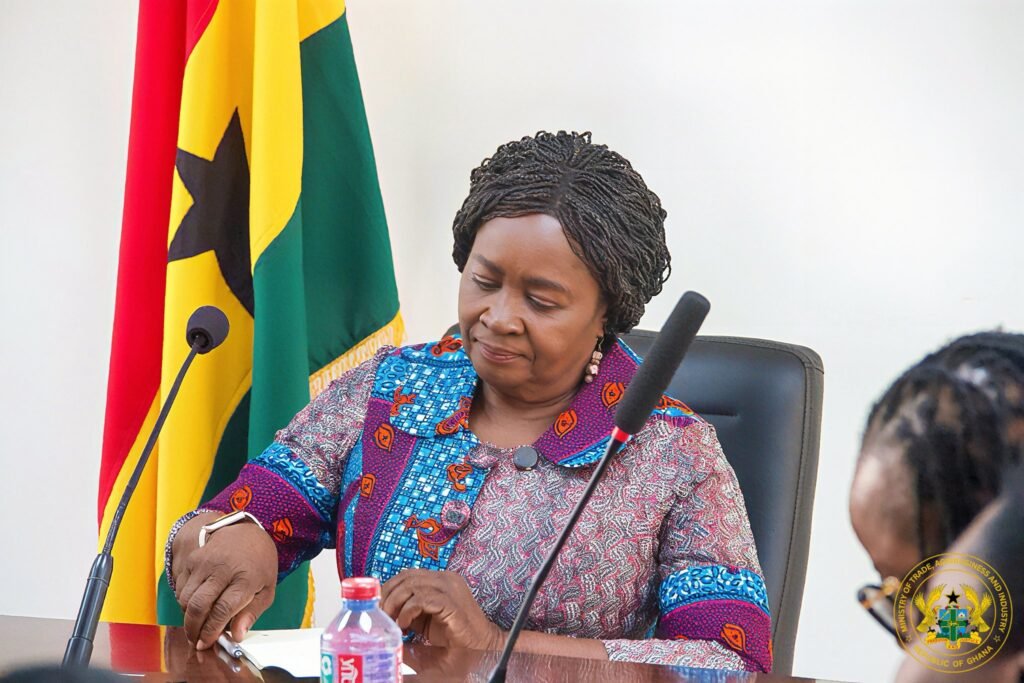
According to the Vice President, by prioritizing high-occupancy vehicles – capable of moving more people with fewer engines – the administration hopes to reduce the sheer volume of trotros on the road, thereby easing the traffic congestion that unions like the Ghana Private Road Transport Union (GPRTU) have blamed for the current crisis.
READ ALSO: IMF Gives Ghana a Surprise Thumbs-Up as 2025 Economic Performance Beats Forecasts