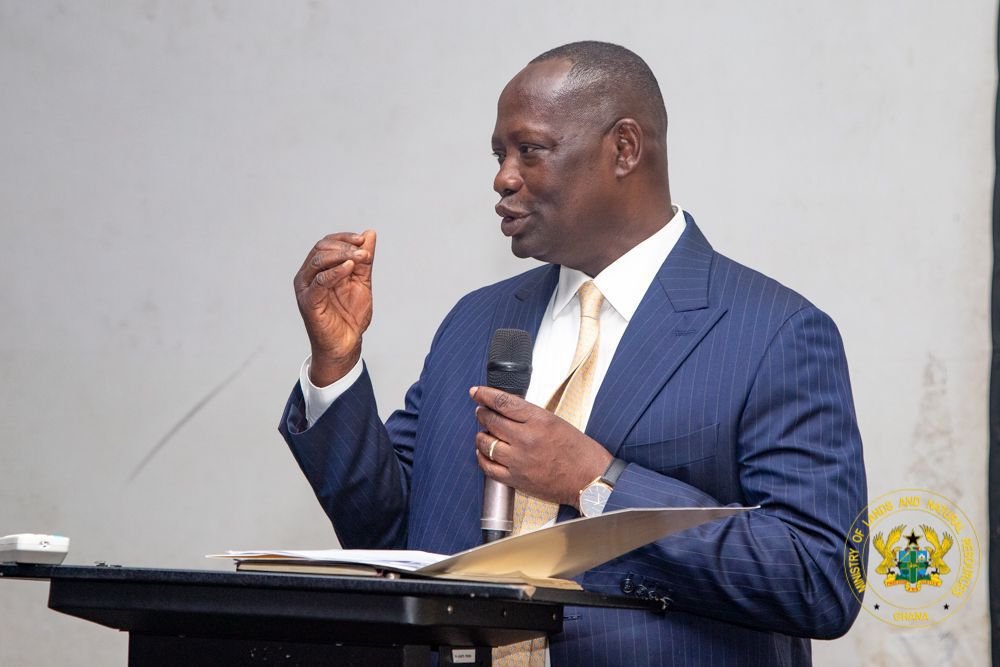
Mining consultant, Ing. Wisdom Gomashie has raised critical concerns regarding the current communication and management style of the Ghana Integrated Aluminium Development Corporation (GIADEC), warning that a culture of “self-flattering” could undermine the industry’s progress.
He cautioned that the current leadership appears to be monopolizing the credit for the corporation’s recent milestones while failing to acknowledge the foundational work of previous administrations.
This lack of appropriate credit attribution, according to Gomashie, poses a threat to the bipartisan support and institutional continuity required to sustain the ambitious Integrated Aluminium Industry (IAI) masterplan through political transitions.
“And there must be some level of caution if not credit sharing, by the current leaders of Ghana Integrated Aluminium Development Corporation in making it appear they did all this, and the previous administration did nothing. The next episodes will unravel how the masterplan played out until a new government took over in 2025.”
Ing. Wisdom Gomashie
The expert’s intervention comes at a pivotal moment as Ghana navigates a transition following the 2025 change in government, highlighting the need for “some level of caution” in how state achievements are presented to the public.
The GIADEC masterplan, which includes the Awaso mine expansion (Project 1), the Nyinahin-Mpasaaso partnership with Rocksure International (Project 2), the Kyebi-Mytilineos S.A. venture (Project 3), and the VALCO modernization (Project 4), was built on a series of strategic legislative and technical steps.
Ing. Gomashie argued that ignoring this historical trajectory makes it “appear they did all this, and the previous administration did nothing,” a narrative he believes could lead to friction with the new leadership and hunter the efficiency of these multi-billion-dollar extractive projects.
Risks of Institutional Hubris in the Extractive Sector
The tendency for state-owned entities to engage in exclusive self-praise often creates a fragile environment for long-term industrialization.
In the mining sector, where projects span decades and multiple political cycles, the “self–flattering” identified by Ing.
Ing. Gomashie can act as a catalyst for policy reversal or contract re-examination when a new government takes office. Research suggests that when a leadership fails to practice “credit sharing,” it erodes the perceived legitimacy of existing agreements, potentially stalling critical infrastructure such as the refinery solutions at Awaso and Nyinahin.
By framing the current 370 million metric tonne appraisal at Nyinahin as a solitary victory rather than an evolution of “historic data of 250 million,” GIADEC risks alienating the very stakeholders needed to maintain the “versatile & strategic” momentum of the IAI.
Navigating the 2025 Transition with Credit Attribution
Maintaining the efficiency of GIADEC’s four thematic projects requires a deliberate shift toward inclusive reporting that honors the contributions of the “previous government” and its role in the corporation’s enactment.
As the new administration of 2025 begins its oversight of the sector, the need for “appropriate credit attribution” becomes a safeguard against the “winner-takes-all” political culture that has historically plagued Ghana’s extractive industries.
Industry analysts suggest that GIADEC’s leadership must recognize that the “masterplan played out” successfully because of a foundation that predates their tenure.
This professional humility is essential to ensure that “retrofitting” the VALCO smelter and developing new bauxite mines remain national priorities rather than partisan projects, thereby shielding the corporation from the “hunter” of political volatility.
Ensuring Continuity for Projects 1 Through 4

The sustainable development of an Integrated Aluminium Industry relies on the stability of partnerships with firms like Rocksure International and Mytilineos S.A., which are currently under the spotlight.
Ing. Gomashie’s warning serves as a reminder that the “versatile & strategic CEO” and his team must balance their performance metrics with a respect for the “journey to the development” that started long before the current cycle.
For GIADEC to succeed in transforming Ghana into a bauxite-to-aluminium powerhouse, it must move beyond the “self-flattering” narrative and adopt a more collaborative stance.
Such an approach will not only secure the future of Project 3A at Kyebi but also ensure that the modernization of VALCO continues to boost efficiency without being derailed by the shifting tides of the 2025 political landscape.
READ ALSO: IFC Injects $300M into Cocoa Supply Chain