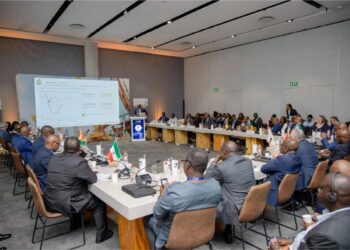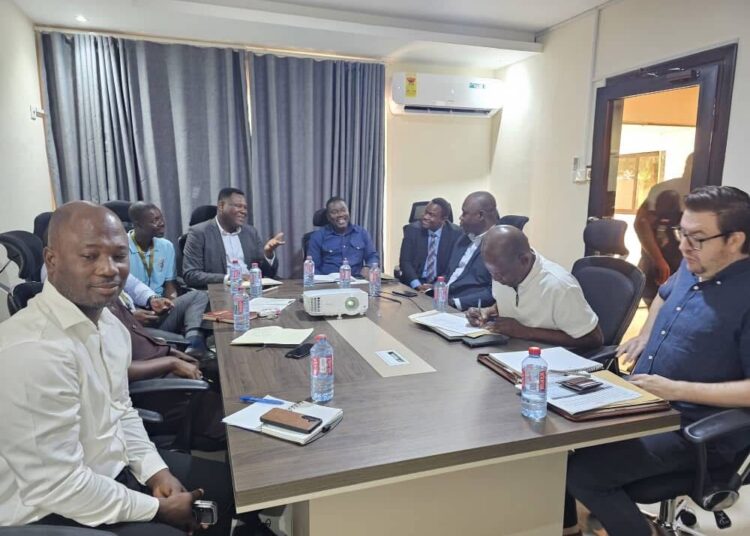
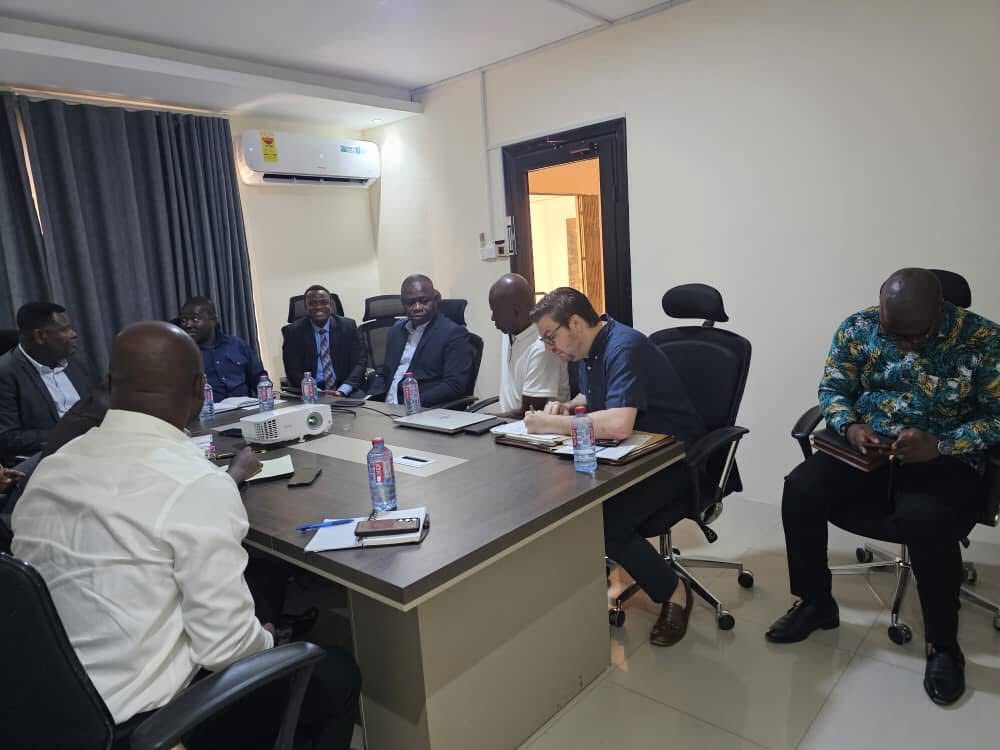
Minerals Commission of Ghana has initiated a high-level strategic engagement with the UK-Ghana Gold Programme (UKGGP) to review a comprehensive study report focused on the willingness of Artisanal and Small-scale Miners (ASM) to pay mineral royalties.
This consultative exercise is central to the government’s broader agenda of formalizing the ASM sub-sector while simultaneously aligning with the ongoing national review of Ghana’s minerals and mining policy and legal frameworks.
By collaborating with international partners and internal stakeholders, the Commission seeks to elicit critical input required to frame a feasible and effective royalty regime that balances the operational realities of small-scale miners with the state’s fiscal requirements.
“The Commission is engaging with such relevant institutions and stakeholders to elicit their input in framing feasible and effective royalty regime for the ASM sub-sector. This strategic move is to further enhanced the legitimacy and streamline the operations of ASM in the country.”
Minerals Commission
This collaborative effort is designed to further enhance the legitimacy of small-scale operations and streamline the administrative processes that govern the extractive industry.
Historically, the ASM sector has been plagued by informality, making it difficult for the state to implement a structured revenue collection mechanism that ensures a fair return on the country’s natural wealth.
Through this engagement, the Commission and the UKGGP aim to develop a royalty model that is not only robust but also carries the consensus of the miners themselves to ensure high compliance rates.
Such a move is expected to integrate thousands of informal operators into the mainstream economy, thereby mitigating the risks associated with unregulated mining activities.
Economic Leakages and the Royalty Gap
Ghana continues to face significant deprivation regarding its deserving mineral royalties, primarily due to the vast informal nature of the artisanal and small-scale mining sector.
While the ASM sub-sector contributes approximately 35% to 40% of the country’s total gold production, a substantial portion of this output bypasses official channels, leading to a massive “royalty gap.”
Research suggests that Ghana loses billions of dollars annually to illegal gold trade and smuggling, which directly translates into lost mineral royalties that should have funded national development.
Unlike large-scale mining companies that operate under strict fiscal oversight, many small-scale miners function without the necessary permits, meaning their production is neither tracked nor taxed appropriately.
This persistent leakage has a debilitating effect on the country’s economic strength and its ability to maintain a stable fiscal balance.
Mineral royalties are a primary source of domestic revenue, intended to provide the “economic rent” needed for infrastructure, healthcare, and education in mining-affected communities.
When a significant portion of the extractive sector remains outside the royalty net, the government is forced to rely on external borrowing or increased taxes on other sectors to bridge the deficit.
This lack of revenue also limits the capacity of the Minerals Commission and other regulatory bodies to invest in the very technology and personnel needed to police the sector effectively, creating a cycle of under-regulation and financial loss.
Bridging the Gap through Strategic Formalization

The current engagement between the Minerals Commission and the UK-Ghana Gold Programme represents a critical turning point in bridging this royalty gap.
By conducting a detailed study on the “willingness to pay,” the government is moving away from a top-down enforcement approach toward a participatory fiscal model.
If this engagement materializes into a concrete policy, it will create a simplified and incentivized tax structure that encourages miners to declare their full production.
This shift is essential because a “feasible and effective royalty regime” must account for the high operational costs and lack of financing that often drive small-scale miners into the informal “galamsey” trade.
Furthermore, formalizing the royalty regime through the UKGGP framework will likely unlock international market access for Ghanaian small-scale miners.
Responsible sourcing certifications, such as those provided by the London Bullion Market Association (LBMA), are often contingent on legal compliance and fiscal transparency.
As these miners transition into the formal sector, the increase in captured gold production will provide a more accurate reflection of Ghana’s mineral wealth, strengthen the local currency and improve the nation’s creditworthiness.
Ultimately, this strategic move transforms the ASM sub-sector from a source of environmental and fiscal concern into a reliable pillar of Ghana’s macroeconomic stability and industrial growth.
READ ALSO: Kennedy Agyapong on Course to Win NPP Primaries – Survey