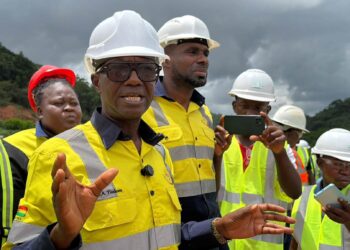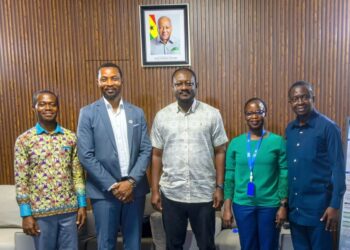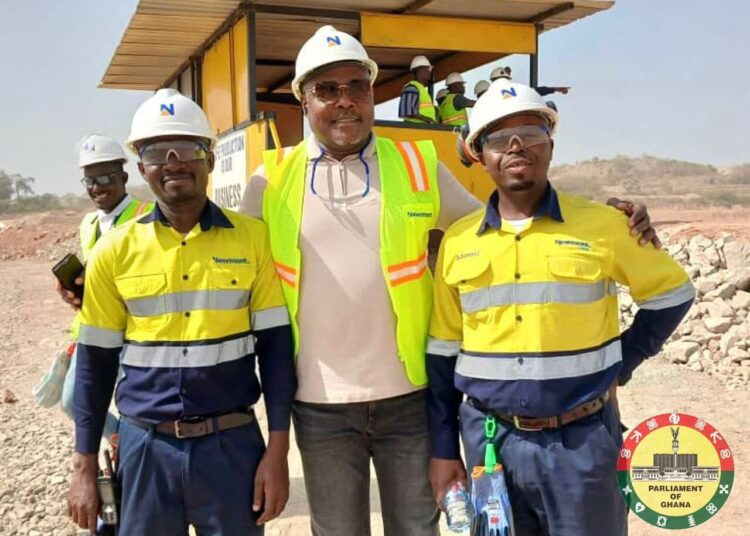
Parliament’s Select Committee on Environment, Science, and Technology has commended Newmont Ghana for its unwavering commitment to rigorous environmental safety protocols and world-class operational standards.
During a strategic working visit to the company’s concessions in the Ahafo Region, the parliamentary delegation expressed profound satisfaction with the comprehensive safeguards designed to protect both human health and the natural ecosystem.
The high-level assessment underscored the critical role of corporate accountability in the extractive sector, highlighting Newmont’s proactive alignment with the Environmental Protection Agency (EPA) and other statutory regulatory bodies.
By prioritizing the reduction of carbon footprints and fostering sustainable livelihoods, the mining giant has demonstrated that industrial excellence can coexist with environmental stewardship.
“The Committee was satisfied with the safety measures and protocols put in place after a tour of the facility. The visit forms part of the oversight responsibilities to ensure that the environment is safeguarded and human health is protected. Reducing carbon emissions is beneficial for sustainable livelihoods and the protection of natural resources.”
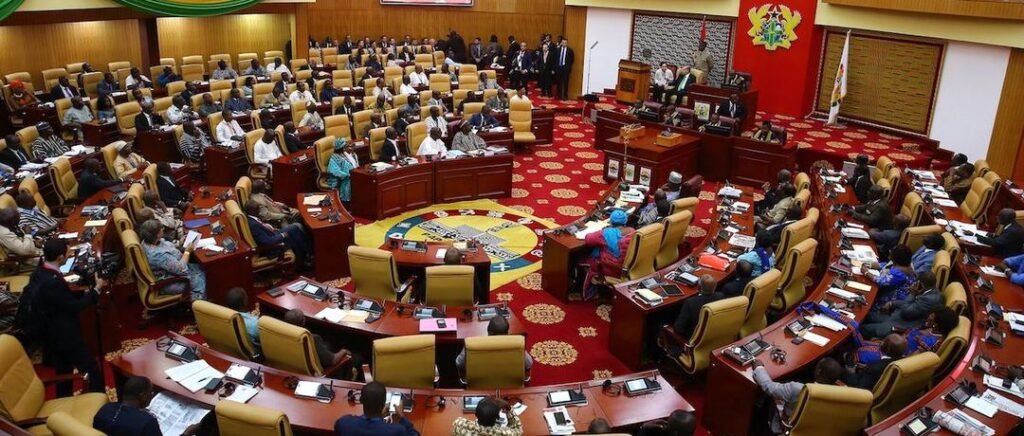
Parliament of Ghana

The committee’s leadership emphasized that such oversight visits are fundamental to ensuring that Ghana’s mineral wealth is extracted without compromising the well-being of future generations.
Hon. Prof. Hamza Adam, who led the delegation, noted that the integration of modern science and technology in Newmont’s operations is pivotal for mitigating climate change and protecting the country’s diverse natural resources.
“A policy document is being developed by the Minerals Commission for all mining concessions to adopt and have a comprehensive and structured alternative livelihood for the host communities,” Hon. Hamza added.
Newmont’s General Manager, Mr. Samuel Noi, welcomed the delegation’s feedback, noting that the company’s recent accolades including being adjudged the best in mining performance and a top performer in environmental management for 2024 reflect a deep-seated culture of safety and excellence.
Integrating Innovation for Environmental Stewardship

Newmont Ghana’s operational success is anchored in the “Global Industry Standard on Tailings Management (GISTM),” a framework that ensures the structural integrity of waste storage facilities.
By employing real-time monitoring and advanced filtration technologies, the company effectively mitigates the risks of groundwater contamination and chemical seepage.
Furthermore, their “Concurrent Reclamation” strategy whereby disturbed land is rehabilitated simultaneously with active mining sets a high bar for the industry.
This approach involves meticulous soil management and the planting of native tree species to restore biodiversity long before the mine reaches its closure phase.
Strengthening Community Resilience Through Policy
Beyond technical safety, Newmont’s social license to operate is bolstered by the Newmont Ahafo Development Foundation (NADeF).
This initiative, which directs a portion of gold sales and net profits into community projects, serves as a blueprint for the Minerals Commission’s forthcoming policy on alternative livelihoods.
By shifting from a “cash-for-land” model to sustainable human capital development such as the $300,000 training program in welding and fabrication for former artisanal miners the company addresses the root causes of local economic instability.
These measures not only reduce dependence on the mine but also provide a buffer against the socioeconomic shocks often associated with large-scale extractive activities.
Navigating Threats to Sustainable Mining

Despite these milestones, the General Manager, Mr. Samuel Noi, appealed to Parliament to advocate for stronger legal protections against systemic threats.
Challenges such as illegal mining encroachments, bushfires, and incidents of vandalism continue to jeopardize both environmental gains and operational safety.
While Emulating Newmont is recommendable, it also requires a transition toward “Nature Positive” mining, where technological investment and community transparency are treated as core business imperatives rather than peripheral corporate social responsibility tasks.
This holistic commitment to “Environmental, Social, and Governance (ESG)” principles remains the only viable path for the future of the African extractive industry.
READ ALSO: Ghana Defies IMF, Eyes 6% Expansion