
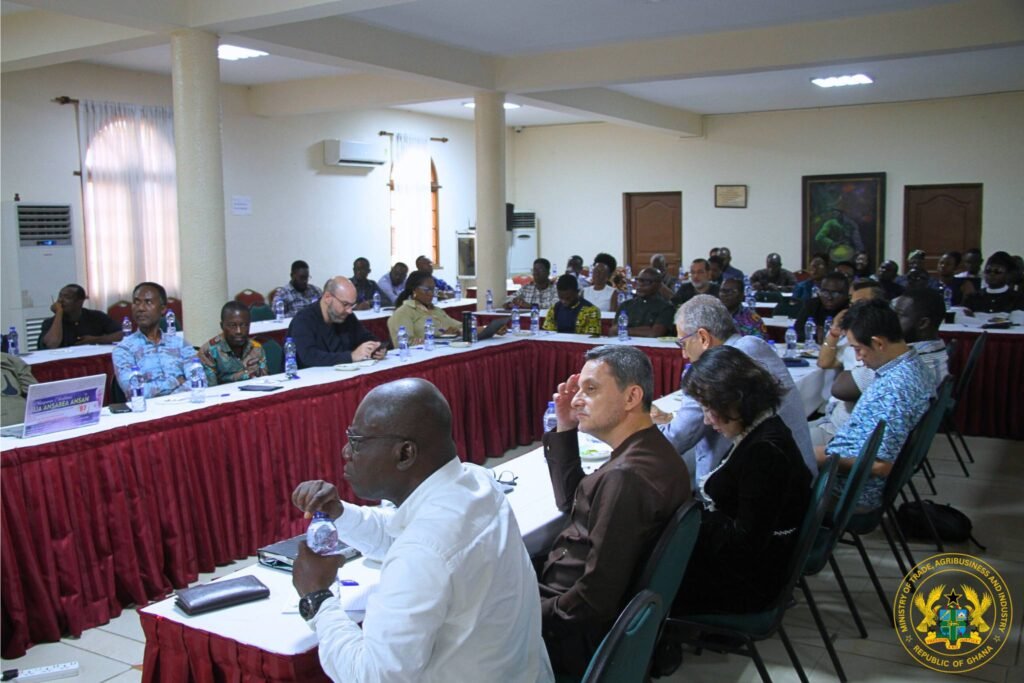
In a decisive move to anchor Ghana as West Africa’s primary automotive hub, the Ministry of Trade, Agribusiness and Industry (MoTAI) has unveiled the second phase of the Ghana Automotive Development Policy (GADP II) at a high-level stakeholder engagement in Accra.
Representing the MoTAI’s leadership, Kwesi Ofori Antwi, Head of Textiles and Garments, made it clear that while the 2019 foundation successfully brought eight global assembly plants to Ghana’s shores, the next frontier belongs to Electric Vehicles (EVs) and the localization of the entire supply chain.
“The objective of the revised policy is not disruption, but diversification and future-proofing of Ghana’s automotive industry. GADP II seeks to explicitly incorporate electric vehicles as well as two- and three-wheelers into the assembly and localisation framework while maintaining stability for existing internal combustion vehicle investments.
“We are building a framework that is commercially viable, technologically relevant, and globally competitive”
Kwesi Ofori Antwi, MoTAI’s Head of Textiles and Garments
Mr. Antwi noted that by explicitly incorporating two- and three-wheelers alongside electric cars, the government is targeting the “mobility of the future.” For the Ministry, this is about ensuring that the Ghanaian automotive worker is not just an assembler of foreign parts, but a pioneer in a green, modular manufacturing ecosystem.
Mr. Antwi further revealed that the most ambitious component of GADP II is the roadmap for Electric Vehicles.
The policy introduces clear fiscal incentives for EV assembly, addressing the “chicken and egg,” dilemma of charging infrastructure. By establishing regulatory certainty on safety and environmental standards, MoTAI is signaling to global Original Equipment Manufacturers (OEMs) that Ghana is ready for the EV revolution.
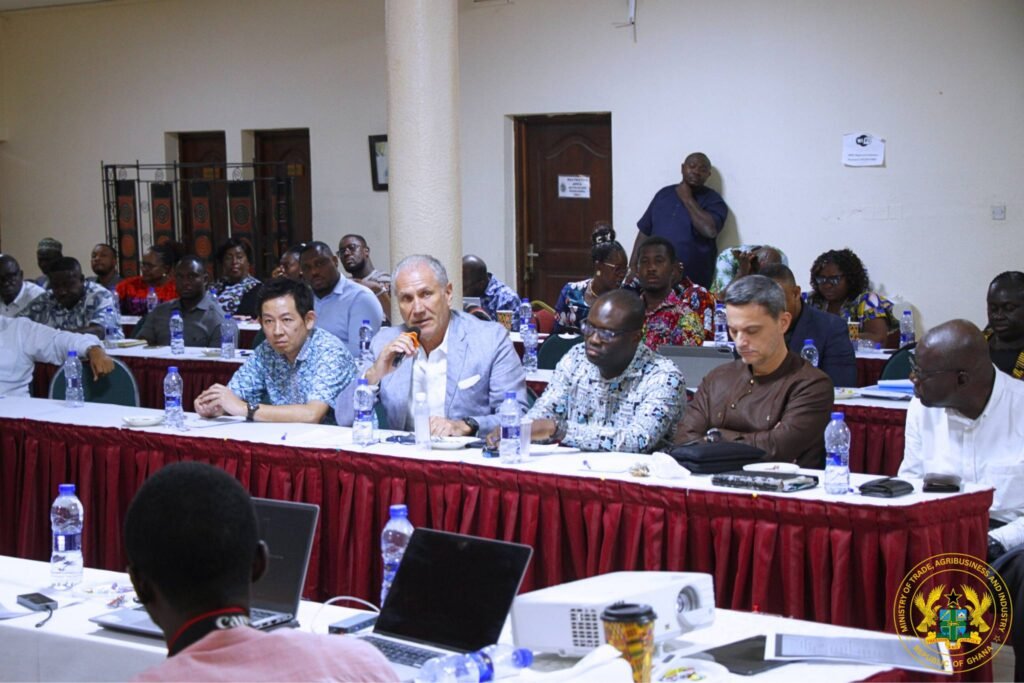
The discussions during the workshop’s “Way Forward,” session were robust, focusing on the definition of knock-down kits specifically for EVs and the phasing of duty and VAT structures to favor sustainable transport.
According to MoTAI, the goal is to ensure that by the time the African Continental Free Trade Area (AfCFTA) reaches its full potential, Ghana-made electric buses and motorcycles are the preferred choice for the continent’s burgeoning urban centers.
“The revised policy will provide clear incentives for EV and two-wheeler assembly, predictable tariff and fiscal regimes to support phased localisation, and regulatory certainty on environmental standards.
“We are looking at opportunities for developing local supplier ecosystems in areas such as battery assembly, wiring harnesses, and digital systems. This is how we integrate our SMEs into the global automotive value chain”
Kwesi Ofori Antwi, MoTAI’s Head of Textiles and Garments
Strategic Partnerships
A key highlight of the engagement was the role of international collaboration. Eugene Sangmortey, Team Lead at GHANA JET – a UK-government-funded initiative – reaffirmed that his organization remains a primary engine for this industrial transformation.
The synergy between GHANA JET and the Ministry’s 24H+ Programme (24-Hour Accelerated Export Development) is designed to ensure that assembly plants operate at maximum capacity, utilizing off-peak energy rates to lower production costs.
This “24-Hour” approach is vital for the localization of parts. By encouraging local firms to manufacture plastics, metal fabrication, and wiring harnesses around the clock, Ghana can significantly reduce the cost of Fully Built Units (FBUs) and make locally assembled cars more affordable for the domestic market.
Ultimately, GADP II is Ghana’s play for regional dominance. By aligning national standards with international trade obligations, the Ministry is positioning the country as an export powerhouse.
The inter-ministerial collaboration between Trade, Energy, and Finance ensures that the fiscal incentives are balanced with the physical infrastructure – like a national charging grid – required to sustain an EV market.
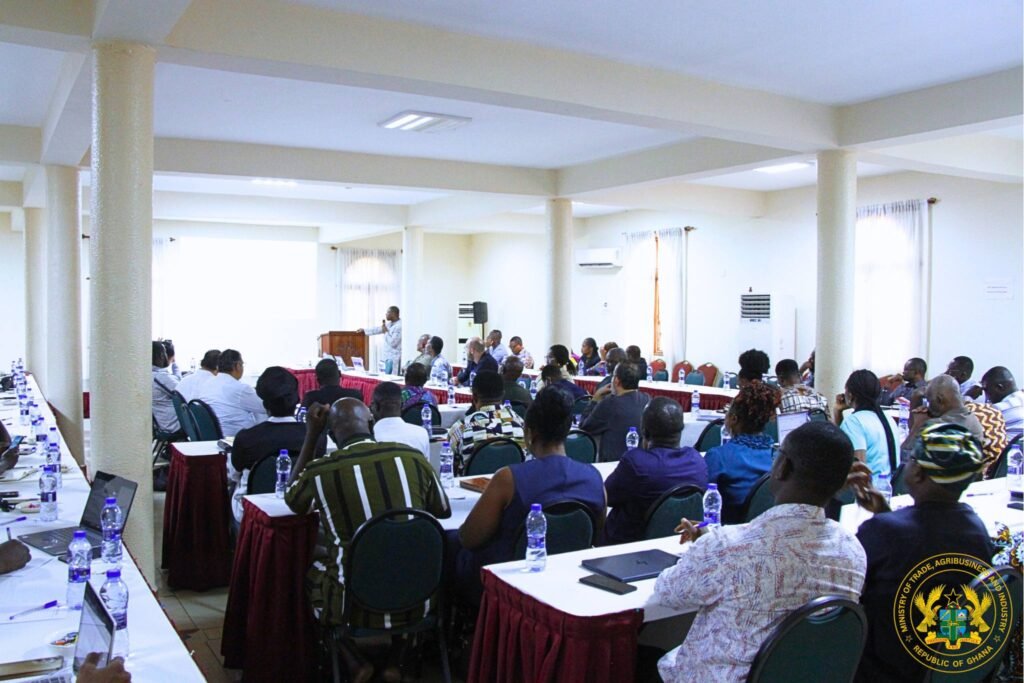
“We are strengthening our regional position under the AfCFTA by serving as a competitive assembly and export hub for affordable and sustainable mobility solutions. Through inter-ministerial collaboration, we are addressing EV charging infrastructure and fiscal incentives while ensuring affordability.
“This forms part of our ongoing commitment to finalise a policy that works for every stakeholder in the Ghanaian automotive value chain”
Kwesi Ofori Antwi, MoTAI’s Head of Textiles and Garments
As the consultations conclude, the message to investors is unambiguous: Ghana is no longer just looking to replace imported used cars; it is building a sustainable, high-tech industrial base that will define West African mobility for the next century.
READ ALSO: Minnesota Holds Strike To Protest ICE Surge