The United States has issued a new wave of sanctions against Iran, targeting ships that it said are selling Iranian oil to help fund the country’s ballistic missile programme.
The US has been intensifying sanctions against Iran as it amasses military assets, including two aircraft carriers and large fleets of fighter jets, in the region in apparent preparation for war.
Today’s penalties targeted 12 vessels, as well as several companies and individuals that the US said are involved in Iran’s oil sales and weapons acquisition.
The US Treasury Department statement asserted that the 12 shadow fleet vessels and their respective owners or operators that have collectively transported hundreds of millions of dollars’ worth of Iranian petroleum and petrochemical products.
“Instead of allocating this revenue for the benefit of the Iranian people, the regime ultimately siphons it off to fund regional terrorist proxies, weapons programs, and repressive security services, rather than the basic economic needs the Iranian people have repeatedly and courageously demanded.”
US Treasury Department
The new sanctions will freeze targeted assets of the designated firms and individuals in the US and make it mostly illegal for American citizens to engage in financial transactions with them.
The sanctions also targeted multiple networks that enable Iran’s Islamic Revolutionary Guard Corps (IRGC) and Ministry of Defense and Armed Forces Logistics (MODAFL) to secure the precursor materials and sensitive machinery required to reconstitute ballistic missile and ACW production capacity, as well as proliferate unmanned aerial vehicles (UAVs) to third countries.
The statement emphasised that the new measure is in furtherance of the US President’s National Security Presidential Memorandum 2 (NSPM-2), which undergirds Treasury’s continued campaign of maximum economic pressure against Iran’s shadow banking, money laundering, weapons proliferation, and sanctions evasion networks and has impacted the Iranian regime’s ability to sell its petroleum to support its destabilizing behavior and recoup those funds. “In 2025, OFAC sanctioned more than 875 persons, vessels, and aircraft as part of this campaign,” it added.
The penalties come after President Donald Trump renewed his threats against Iran in his State of the Union address.
Washington has been piling such sanctions on the Iranian economy since Trump nixed the multilateral nuclear deal with Tehran in 2018 during his first term.
That agreement, known as the Joint Comprehensive Plan of Action (JCPOA), saw Iran scale back its nuclear programme in exchange for the release of international sanctions.
After returning to the White House in 2025, Trump reignited his economic maximum pressure campaign against Tehran with the goal of choking off Iran’s oil exports.
Still, the two countries have been engaging in diplomacy to avert the looming conflict. US and Iranian negotiators are set to meet in Geneva tomorrow, Thursday, February 26, 2026, for their third round of negotiations this year.
US To Heap More Pressure On Iran
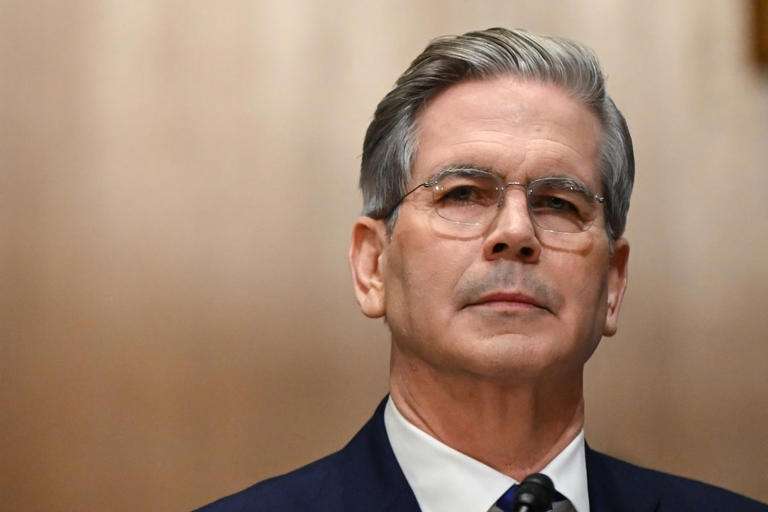
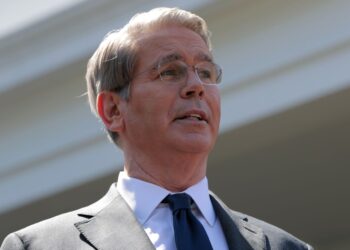
US Secretary of the Treasury, Scott Bessent said in a statement that Iran exploits financial systems to sell “illicit oil, launder the proceeds, procure components for its nuclear and conventional weapons programs, and support its terrorist proxies.”
“Under President Trump’s strong leadership, Treasury will continue to put maximum pressure on Iran to target the regime’s weapons capabilities and support for terrorism, which it has prioritised over the lives of the Iranian people.”
Scott Bessent
While the US describes the Iranian oil trade as “illicit,” Iran, which is selling its own petroleum products, describes the crackdown on its energy sector as piracy.
Violations of US sanctions may result in the imposition of civil or criminal penalties on US and foreign persons.
READ ALSO: Orbán Accuses Ukraine of Targeting Hungary’s Energy System