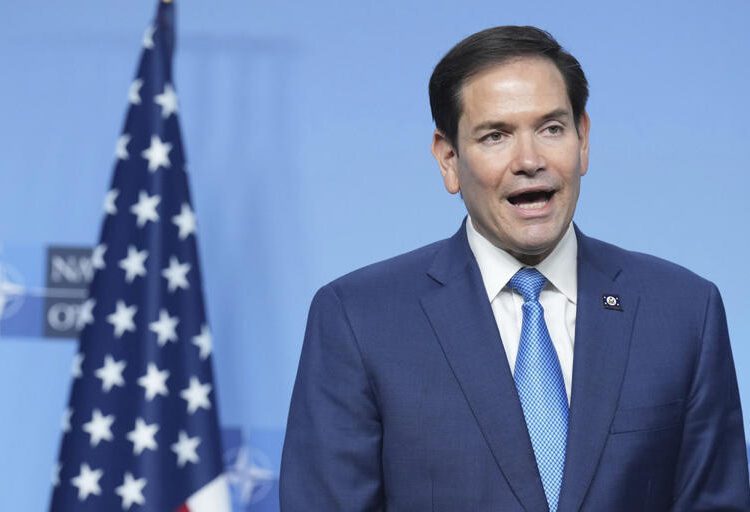
The United States and the European Union have taken a step toward strengthening cooperation on strategic resources, with US Secretary of State Marco Rubio and EU Trade Commissioner Maros Sefcovic participating in a Memorandum of Understanding signing ceremony focused on critical minerals and supply chain resilience.
The agreement reflects growing concerns among Western allies about the security and sustainability of global supply chains, particularly in sectors tied to advanced technology, energy transition, and national defense. By formalizing cooperation through the memorandum, both sides signaled a shared intent to reduce vulnerabilities associated with the sourcing and distribution of essential raw materials.
Speaking during the ceremony, Rubio emphasized that the initiative underscores a broader shift in how governments are approaching economic security. He described the partnership as evidence of “a growing awareness and commitment throughout the world, particularly with our allies in Europe,” to address challenges linked to critical minerals and supply chains. “These resources are central to the success of our economies and our national security,” Rubio said, highlighting the strategic importance of materials used in manufacturing, energy systems, and emerging technologies.
His remarks point to increasing recognition among policymakers that economic competitiveness and national security are closely intertwined, especially in industries reliant on scarce or geographically concentrated resources.
The memorandum comes at a time when supply chain disruptions and geopolitical tensions have prompted governments to rethink reliance on a limited number of suppliers. Critical minerals, including those used in batteries, electronics, and renewable energy infrastructure, are often extracted and processed in a small number of countries, creating potential risks for nations that depend on imports.
Rubio addressed this issue directly, warning that the current structure of global supply chains poses significant challenges. “The over-concentration of these resources—the fact that they’re dominated by one or two places—is an unacceptable risk,” he said.
Rubio’s remarks highlight the urgency of these efforts, as well as the broader implications for economic stability and security. By emphasizing the need to address over-concentration, he pointed to a shared concern that reliance on a narrow set of suppliers could leave economies vulnerable to disruption, whether due to political tensions, trade restrictions, or other unforeseen events.
The involvement of Sefcovic in the signing ceremony underscores the EU’s commitment to addressing these challenges through international cooperation. As Trade Commissioner, he has been closely involved in shaping the bloc’s trade and industrial strategies, particularly in areas linked to supply chain resilience and sustainability.
The focus on critical minerals has become a defining feature of global economic policy discussions, with governments increasingly viewing these resources as strategic assets rather than purely commercial commodities. The partnership between the United States and the European Union illustrates how major economies are working together to mitigate risks associated with supply chain concentration.
Rubio Asserts Need To Diversify Sources Of Critical Minerals
Moreover, Rubio asserted the need for diversity in US and EU supply chains, adding, “diversity in the places we get critical minerals.”
“And this Memorandum of Understanding, which isn’t just going to be a piece of paper – it’s going to be brought to life through real action. These are going to be important for the economic vibrancy of all of our economies, the global economy really, but also to the security of our countries.”
Marco Rubio
By entering into this partnership, the United States and the European Union aim to coordinate efforts to diversify sources of critical minerals, improve supply chain transparency, and enhance resilience against disruptions. While the memorandum does not necessarily establish binding commitments, it provides a framework for collaboration, information sharing, and potential joint initiatives.
The agreement also reflects a broader alignment between Washington and Brussels on economic security priorities. Both have increasingly focused on reducing strategic dependencies and strengthening cooperation with trusted partners. This includes investing in domestic production, supporting responsible sourcing practices, and fostering partnerships with countries that can provide alternative supply routes.
For the European Union, the partnership complements ongoing efforts to secure access to raw materials essential for its industrial and environmental goals. For the United States, it aligns with policies aimed at bolstering domestic industries while ensuring stable access to key inputs required for innovation and defense.
The memorandum signals an intent to move toward a more diversified and resilient system, though achieving that goal will likely require sustained coordination and investment.
As global demand for critical minerals continues to rise, partnerships such as this are expected to play an increasingly important role in shaping the future of supply chains. For now, the agreement represents a step toward closer transatlantic cooperation on a challenge that is both economic and strategic in nature.