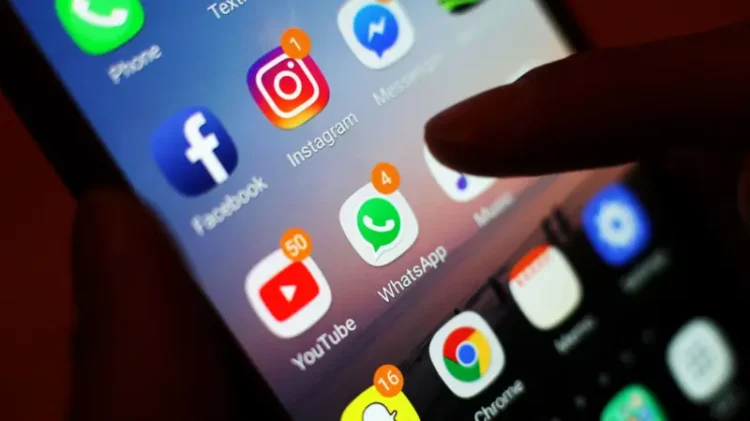
Indonesia has unveiled plans to ban children under the age of 16 from accessing social media platforms.
With implementation set to begin March 28, the plan marks a significant step in the country’s effort to protect young users from the growing risks associated with the digital world.
Minister in charge of Communication and Digital Affairs, Meutya Hafid announced that she signed a regulation barring under-16s from accounts on high-risk platforms. These platforms include YouTube, TikTok, Facebook, Instagram, Threads, X and Bigo Live.
Meutya Hafid
“The basis is clear. Our children face increasingly real threats. From exposure to pornography, cyberbullying, online fraud, and most importantly, addiction. The government is here so that parents no longer have to fight alone against the giant of algorithms.”
If implemented, Indonesia would be among the most assertive governments globally in restricting social media access for minors, affecting millions of young users in a rapidly growing digital market.
Last year, Australia banned social media for those under 16. Social media companies revoked access to about 4.7 million accounts identified as belonging to children in Australia.
Malaysia, Indonesia’s neighboring country, also announced that it will prohibit social media for anyone under 16 in 2026.
While the UK is considering barring young teens from social media as it tightens regulations intended to safeguard youngsters from hazardous content and excessive screen time, Denmark has adopted similar legislation to prohibit access to social media for anyone under 15.
France has also approved a bill banning social media for children under 15, paving the way for the measure to take effect at the start of the next school year in September.
The bill would also ban the use of mobile phones in high schools. Spain is also set to join the growing number of European countries banning the use of social media for children under 16.
All these moves are designed to shield young people from the harms of online content, and Indonesia is no exception.
Indonesia’s Digital Landscape
Internet access has expanded rapidly in Indonesia over the years. This has changed how millions of young people connect, learn, and spend time online.
With more accessible cellphones and fast-growing digital platforms, social media is now a major part of daily life, especially for children and teens. Social media use has risen sharply in the last decade.
Indonesia has about 280 million people. An Indonesian Internet Service Providers Association survey of 8,700 people found internet penetration reached 79.5% in 2024.
The survey showed that 48% of children under 12 had internet access. Some in that age group use Facebook, Instagram, and TikTok. Internet penetration for Gen Z users aged 12 to 27 was 87%.
The surge in the use of digital platforms has made Indonesia one of the world’s largest digital marketplaces.These trends have raised public concern, prompting the government to intervene and address the growing risks.
Hafid acknowledged the process may be gradual and initially challenging for both young users and families, and emphasized that “the implementation of this regulation may cause some discomfort at first.” Hafid added that children may complain, “and parents may be confused about how to respond to their children’s complaints.”
Nevertheless, the government believes that the long-term benefits outweigh the temporary disruption.
Impacts of Indonesia’s Social Media Restriction
The policy aims to force technology companies to strengthen safeguards for younger users. Platforms are required to implement stronger age verification systems, improve content moderation, and develop child-friendly digital environments.
Earlier this week, Indonesia’s Ministry of Communication and Digital Affairs conducted a surprise inspection of Meta Platforms over concerns about its handling of harmful content on its platforms.
The ministry, in a statement, said that through this inspection, the Minister of Communication and Information Technology issued a stern warning regarding Meta’s low level of compliance with national regulations.
As residents and parents embrace the government’s restrictions on social media access. Others suggest that the government should also block other harmful websites.
One of the parents said,“as parents, we hope that online gambling and pornography websites can also be removed,” adding, “so, in a sense, the government must also be fair.” “This is for the sake of the people themselves, for the children, and for the children’s growth and development,” the parent said.
Finally, this initiative could greatly help address social media addiction and help reduce children’s exposure to explicit material online.
Policymakers in Indonesia believe limiting access to social media can help children and teenagers form healthier relationships with technology and reduce digital dependency.
READ ALSO: Strait of Hormuz Closure Strands Oil Tankers, Threatens Energy Security