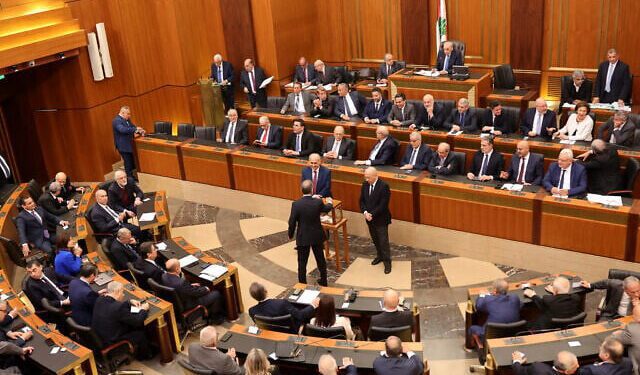
Lebanon’s parliament has voted to extend its own term by two years, delaying scheduled elections as the country grapples with a sharp escalation in violence linked to the broader US–Israel war with Iran and intensified hostilities with the militant group Hezbollah.
The country’s state news agency disclosed that 76 legislators voted in favor, 41 voted against, and four abstained. Hezbollah’s 13-member bloc in parliament voted in favor of the extension. The parliamentary elections were initially due to be held in May.
MPs convened today including Mohammed Raad, Head of Hezbollah’s parliamentary bloc, even as Israeli warplanes flew above the nearby southern suburbs of Beirut.
The decision, taken today in Beirut, reflects deep unease among lawmakers about the feasibility of holding a free and fair election amid widespread instability and conflict.
The leadership of the assembly cited the ongoing war, fueled by cross-border violence between Hezbollah and Israeli forces, and by the wider regional conflict involving the United States and Iran, as the primary reason for the delay.
Intense combat, including airstrikes and rocket fire, has disrupted daily life in many parts of Lebanon and has raised serious questions about the country’s ability to conduct a credible electoral process under such conditions.
Hezbollah’s backing of the extension underscores the complex role the group plays in Lebanese politics. While it remains a powerful political force within parliament, its involvement in regional conflict has drawn scrutiny and concern from various domestic and international actors.
The decision to align with the extension motion may reflect strategic calculations about the group’s political standing amid hostilities.
Lebanon’s parliament has taken a firm step to delay electoral contests in the face of ongoing war and uncertainty. Whether this extension will help stabilize the nation, or contribute to deeper political divisions, remains a defining question for its leaders and its people as they contend with both internal and external pressures in a region marked by escalating conflict.
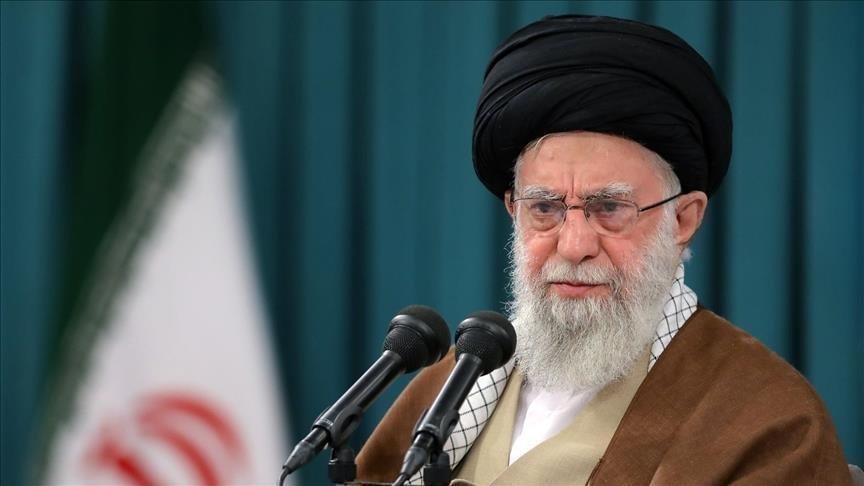
Lebanon was drawn into the Middle East war last week when Hezbollah attacked Israel in response to the killing of Iranian Supreme Leader Ali Khamenei during US-Israeli strikes.
The ongoing war with Israel that began last week has displaced over half a million people and made it difficult to hold a vote in large parts of the country.
However, it shows no sign of ending as Israel steps up its attacks on Lebanon.
Today, the Israeli military said that it was targeting Hezbollah’s financial arm, al-Qard Al-Hasan, while its ground forces in Lebanon’s south launched “focused raids” against what it called the group’s infrastructure.
Meanwhile, the human rights group Human Rights Watch said in a report that the Israeli military “unlawfully” hit a village in southern Lebanon with shells containing white phosphorus, a controversial incendiary munition.
Human Rights Watch said that Israel fired white phosphorus using artillery at residential areas in the southern Lebanese village of Yohmor. It happened hours after the Israeli military warned the residents of the village and dozens of others in southern Lebanon to evacuate.
Human rights advocates say the use of white phosphorus is illegal under international law when the white-hot chemical substance is fired into populated areas.
It can set buildings on fire and burn human flesh down to the bone. Survivors are at risk of infections and organ or respiratory failure, even if their burns are small.
UNICEF Says 83 Children Killed In Lebanon
The UN agency for children, UNICEF, said that at least 83 children have been killed and 254 injured in Lebanon since March 2 as the war between Israel and Hezbollah intensified.
A statement published on the UNICEF website said, “On average, more than 10 children have been killed every day across Lebanon over the past week, with approximately 36 children injured each day.”
The statement added that in the last 28 months, 329 children have reportedly been killed in Lebanon and 1,632 were injured.
“These figures are staggering. They are a stark testament to the toll that conflict is taking on children. Mass displacement across Lebanon has forced nearly 700,000 people – including around 200,000 children – from their homes, adding to the tens of thousands already uprooted from previous escalations.”
UNICEF
The agency called on all parties to protect civilians and civilian infrastructure, including schools and shelters, and to uphold their obligations under international humanitarian law.
UNICEF also urged immediate efforts to de-escalate the situation and prevent further harm to children.
READ ALSO: Glasgow Fire Poses Major Challenge Across Scotland